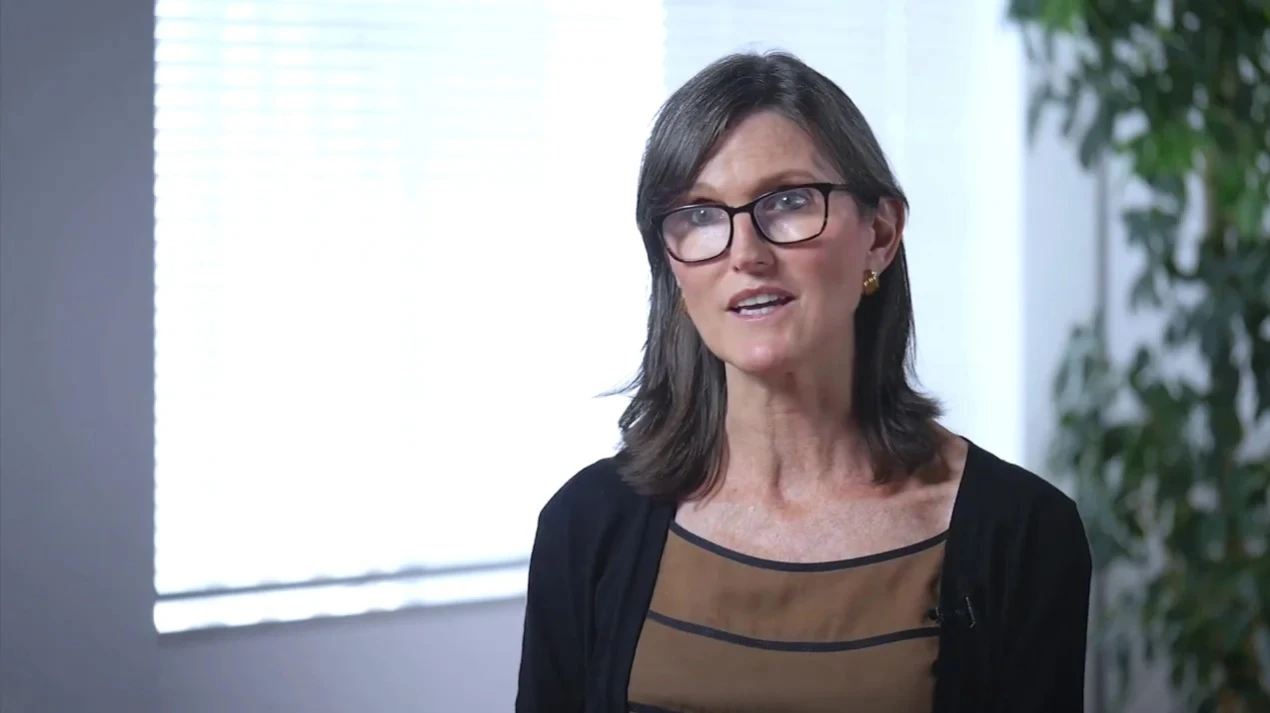
'Reaganomics on steroids': what Cathie Wood expects from gold, bitcoin and stocks
The head of ARK Invest explains why an accelerating U.S. economy will crash protective asset prices and where the market bubble is actually inflating

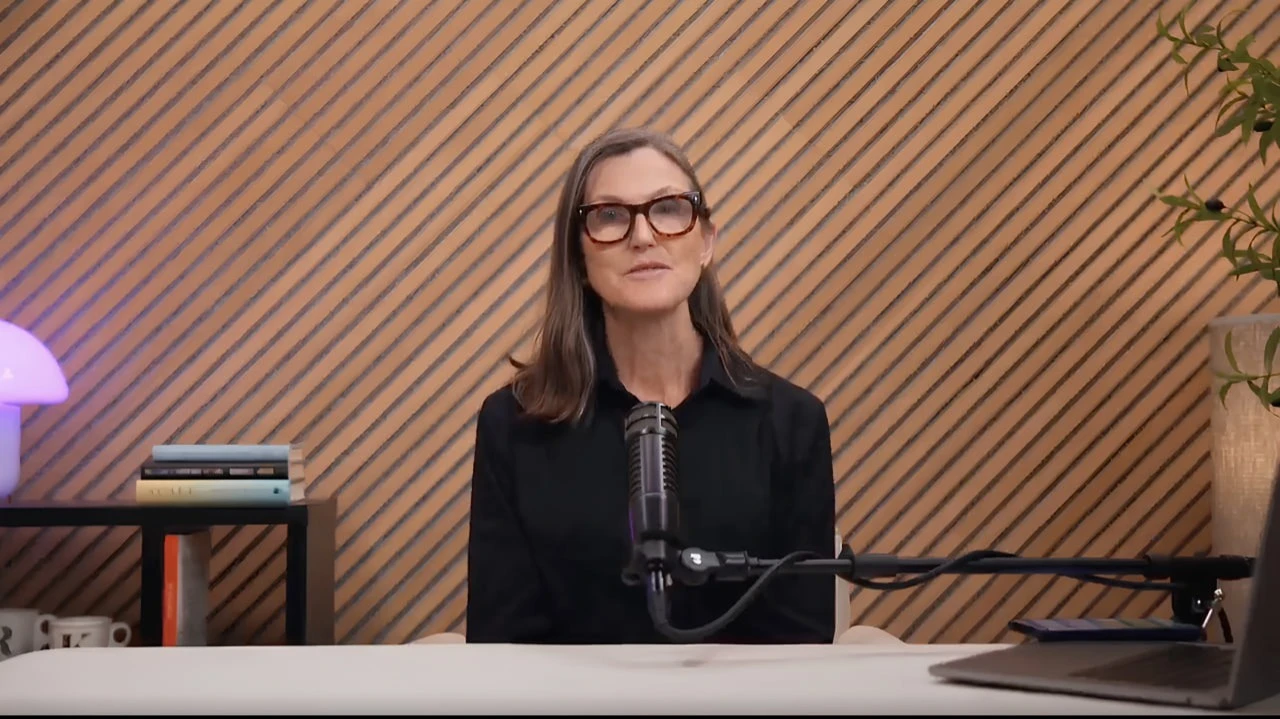
The economy is returning to the norm, which investors have managed to forget about over the past three years, says the head of ARK Invest Cathie Wood. She warns: in this environment, bets on capital protection against inflation, made out of inertia, will not work. What is her advice to investors?
The paradox of growth
"The biggest misconception right now is the belief that economic growth means inflation. That's absolutely false," says Wood. U.S. history over the past 45 years - if you exclude the pandemic - shows that economic acceleration, on the contrary, dampens price increases. The reason for this paradox is rising labor productivity, which reduces business costs faster than demand accelerates.
In the new cycle, this effect will be unprecedented due to the merging of technologies: artificial intelligence, DNA sequencing, robotics, energy storage and blockchain. Wood calls their coming together "highly deflationary." "It's deflationary in a good way," the ARK CEO explains. - When you lower the price of something [through technology], you get more demand for it."
The market is ignoring this transition from scarcity to abundance because of the "scars" left on investors after the pandemic. "This three-year shock was the most unexpected," Wood reminds us. Because of it, investors inertially expect shortages and rising prices, not realizing that the anomaly was over. Now, Wood believes the economy is returning to the norm, where technology dictates lower prices, not higher.
Gold at risk
Wood considers gold one of the most vulnerable protective assets. The head of ARK highlights an indicator that is rarely at the center of discussions - the ratio of metal price to money supply M2. According to her, "this indicator is now so high that it is comparable only to the period of the Great Depression", which calls into question the potential for further growth.
She cites two historical examples. In 1980, the price of gold reached $850. "But then "dropped 67% - because Reaganomics was working. Inflation was falling, the dollar was strengthening, and investors switched to stocks and bonds." A similar scenario occurred after 2011, when the price of gold failed to hold around $1900, and the metal nearly halved in price in four years.
Wood believes that history is not just repeating itself, but intensifying. "We're heading toward a scenario that could be called Reaganomics on steroids," Wood asserts. She believes that the current stimulus - from deregulation to tax cuts - will surpass the reforms of the 1980s in scale. This creates an environment in which capital will inevitably begin to migrate from the safe haven of gold to risk assets to keep up with the growth wave.
Bitcoin is under pressure
Unlike gold, which is getting cheaper because of a fundamentally stronger economy, Wood attributes bitcoin's fall to a technical factor - a temporary shortage of free money in the system. "The fall has been sharper than we expected. It was due to liquidity constraints, but we believe this effect is temporary," she says.
According to Wood, bitcoin's future dynamics will depend on the Fed's policy shift. When the pressure on liquidity eases and more money becomes available in the system, bitcoin, according to Wood, will again grow faster than gold, which is how digital assets usually behave in the phase of money supply expansion.
"Wall of Fear" and a real bubble.
Wood describes the dynamics of the S&P 500 as "climbing the wall of fear". For ARK, this is an exceptionally bullish signal: a rally that no one believes in usually lives the longest.
Wood's main argument against a bubble in stocks is precisely this fear. She points to the rising cost of credit default swaps (CDS) for tech giants like Oracle and Apple. Investors have been actively buying up these "insurance policies," fearing that trillion-dollar data center spending won't pay off. "We like that concern," Wood says. Bubbles are inflating in an atmosphere of general carelessness, she continues, and the current skepticism and risk hedging are insuring the AI sector from overheating.
Wood sees the real threat in private credit and bonds. There, unlike the wary equity market, there is a dangerous calm. In the pursuit of yield, capital is willing to lend to businesses at a minimal risk premium, ignoring the reality of the situation. "Perhaps the bubble today is exactly where too much money is looking for yield, not in AI stocks," Wood warns.
Tip from Cathie Wood.
The only recommendation Cathie Wood makes is not about protective assets and investments, but about how people should behave in uncertain times. She suggests channeling times of uncertainty into learning AI tools that allow you to launch products and projects without deep technical skills.
"You can go to ChatGPT, Cursor, Replit, Gemini or Grok, describe a business idea - from mission to pitch deck - and get help step-by-step," she notes. The cost of the tools - from free versions to subscriptions at $20 to $200 a month - makes the path affordable, and the moment itself, Wood says, unique: "It's the perfect moment to be on the side of change."
This article was AI-translated and verified by a human editor