Rio Tinto has resumed talks to buy Glencore. Why are investors concerned?
The deal will turn Rio Tinto into the world's most expensive mining company

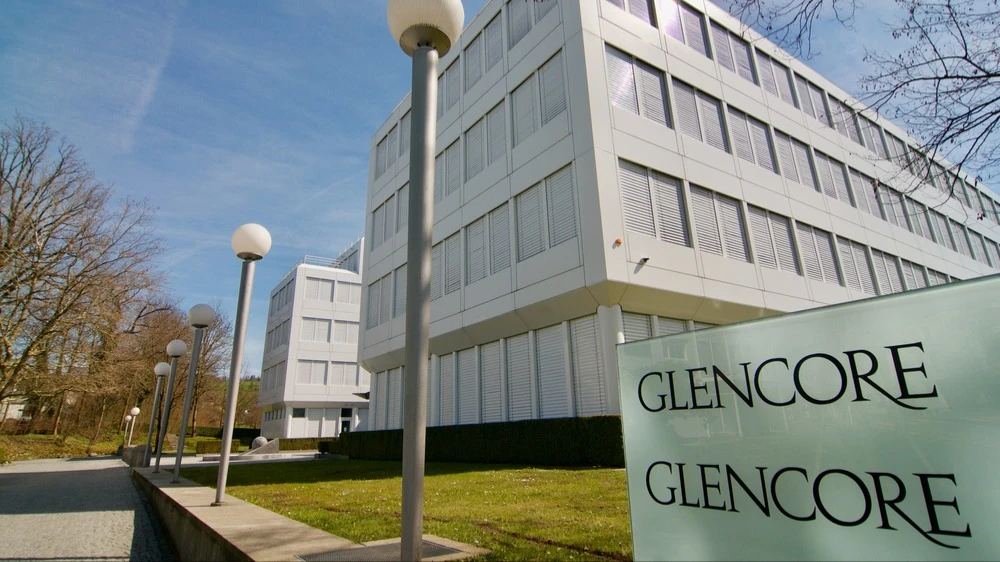
Rio Tinto and Glencore have resumed talks on a possible merger. The deal could lead to the creation of the world's largest mining company with a total capitalization of more than $200 billion. The market reacted to the news with the largest sell-off in Rio Tinto shares since the summer of 2022 amid concerns about possible overpayment for Glencore's business.
Details
Rio Tinto and Glencore said they are in preliminary talks involving Rio Tinto buying out "part or all" of Glencore's business with full payment in shares. The companies did not disclose which assets might be part of the deal. They also did not say whether a takeover premium is expected and who will lead the combined company in the event of completion of the largest ever deal in the mining sector, notes Reuters. Under British law, Rio Tinto has until February 5 to make a formal offer to Glencore or declare a rejection of the deal.
The market value of Rio Tinto, the world's largest iron ore producer, is about $142 billion. Glencore, one of the world's largest producers of non-ferrous metals, was valued at $65 billion at the closing price of trading on January 8. The takeover of Glencore will allow Rio Tinto to surpass the capitalization of Australian mining giant BHP, whose valuation is now $161 billion, states Reuters.
Glencore's American Depositary Receipts (ADRs), traded on the over-the-counter market in the US, soared 8.8% after the announcement of the talks. Shares of Rio Tinto on the Australian exchange collapsed by 7% in the moment, despite the growth of the broad market. The company has not experienced such a sharp collapse of quotations since July 2022. BHP's shares rose by 0.8% in Sydney.
What investors are saying
Rio Tinto and Glencore are refocusing their strategies on the copper market, a metal for which demand is forecast to grow amid the global energy transition and the spread of energy-intensive AI technologies. In the context of interest in copper, questions about the takeover include the future fate of Glencore's coal assets - Rio Tinto completely withdrew from this business back in 2018, selling its last coal operations to Glencore, writes Reuters.
"To get the support of Australian shareholders [Rio Tinto], the coal assets will have to be sold," said John Ayoub, a portfolio manager at Wilson Asset Management, which invests in Rio Tinto. He described Rio Tinto as a "relatively simple story" built on iron ore, copper, aluminum and lithium. "Adding other [areas] dilutes that story," the financier emphasized.
Investment firm Allan Gray, also a Rio Tinto shareholder, warned of the risk of overpaying. "It comes down to price, but if they have to pay a big premium, there is a risk that the deal destroys some of the shareholder value," said Allan Gray analyst Tim Hillier. "Rio has a strong portfolio of domestic high-growth projects. It's not clear why they would look for outside activity," he added.
Context
The current negotiations between Rio Tinto and Glencore are the second in just over a year: in late 2024, Glencore already approached Rio Tinto with a proposal for a deal, which ultimately failed. According to the agency's source, the companies resumed discussions at the end of 2025. By that time, the situation had changed: Jakob Stausholm, who rejected Glencore's first proposal, gave up his position as head of Rio Tinto to Simon Trott, who is more open to large-scale deals.
This article was AI-translated and verified by a human editor