'Risk of lasting shocks': Dimon warned of war's impact on US economy

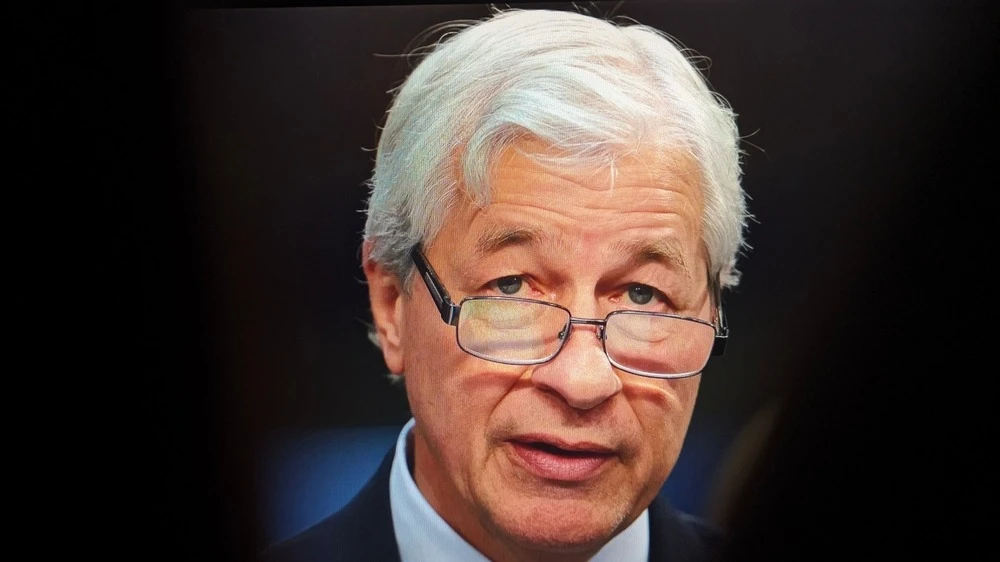
JPMorgan Chase CEO said that war with Iran could raise US interest rates above market expectations / Photo: FotoField / Shutterstock
War in the Middle East could lead to a larger increase in U.S. interest rates than the market expects, JPMorgan Chase CEO Jamie Dimon said in his annual letter to shareholders on April 6. He estimates that a war with Iran could trigger oil and commodity price shocks and reshape global supply chains, which in turn would keep inflation elevated.
Details
Dimon's statements came a day after U.S. President Donald Trump stepped up pressure on Tehran, threatening strikes on energy infrastructure and bridges if Iran did not open the Strait of Hormuz, a key route for the world's oil supplies, by the evening of April 7.
"Now, because of the war with Iran, we additionally face the risk of significant and prolonged oil and commodity price shocks, as well as a realignment of global supply chains, which could lead to more persistent inflation and ultimately - higher interest rates than currently expected," Dimon noted, emphasizing that the challenges now facing U.S. markets "remain significant." In particular, the head of JPMorgan pointed to geopolitical risks, including the war in Ukraine, escalating conflict in the Middle East and tensions with China.
Dimon added that it is too early to assess whether war with Iran will achieve U.S. objectives, while emphasizing that the key risk from Iran remains the threat of nuclear proliferation.
What else Dimon said about the U.S. economy
At the same time, despite the current threats, the U.S. economy remains resilient, says the head of JPMorgan: consumers continue to earn and spend, although recently there has been some weakening, and business in general remains stable.
He cautioned, however, that growth in the U.S. economy has been largely supported by government spending and previous stimulus measures, while the need for additional infrastructure investment continues to grow.
Among the positive factors for the U.S. economy, Dimon highlighted the fiscal stimulus from Donald Trump's Big, Beautiful Bill initiative (a "Big, Beautiful Bill" involving, among other things, the extension of tax breaks and increased defense spending), "deregulation policies," and investments related to the development of artificial intelligence.
Dimon - on private lending
The roughly $1.8 trillion private credit sector, according to Dimon, "probably" does not pose a systemic risk to the U.S. market - as it is still relatively small. The JPMorgan executive expressed this view against the backdrop of recent - in some cases "unprecedented " - outflows from private credit funds due to concerns about lending standards, as well as fears about the impact of AI on borrowers (many of whom are software developers).
Once the current credit cycle eases, losses on all types of leveraged lending are likely to be higher than expected, Dimon warned, noting that this could happen amid a general loosening of lending standards. Banks and funds are more likely to use more optimistic estimates of borrowers' incomes, relax loan terms and use schemes to defer interest payments, he said.
In addition, pointed out the head of JPMorgan, the private credit market is generally characterized by low transparency and lack of strict revaluation of assets, which increases the likelihood of sell-offs when sentiment deteriorates, even if actual losses are limited. That said, actual losses are already slightly higher than expected, and rising interest rates could add to the pressure on borrowers due to more expensive refinancing, Dimon said. Going forward, he estimates this could lead to tighter regulation, including stricter rating and capital requirements for borrowers. Dimon added that not all participants in the private credit market have sufficient expertise, and retail investors may be more likely to go to court in case of problems, which poses additional risks for asset managers.
Context
Concerns about rising inflation amid war in the Middle East have led markets to largely rule out a U.S. interest rate cut this year after monetary easing in the States last year helped push the stock market to fresh records, Reuters notes.
Since the beginning of the year, the benchmark S&P 500 index has experienced its worst quarter since 2022, having been under pressure since late February due to the war and the resulting spike in energy prices. The Nasdaq Composite and Dow Jones entered correction territory in March. For 2025, the S&P 500 added about 16%, the Nasdaq Composite more than 21%, and the Dow Jones more than 15%.
At the trading on April 6, May futures for Mark WTI crude oil are trading at $110.97 per barrel. June contracts for the benchmark Mark Brent cost $108.5. Since the start of the war in the Middle East, oil prices have added about 60%.
This article was AI-translated and verified by a human editor