Rivian has developed its own AI chip for robotaxis. What does this mean for Nvidia?
Rivian has ordered chips from Nvidia for 50,000 electric vehicles in 2025

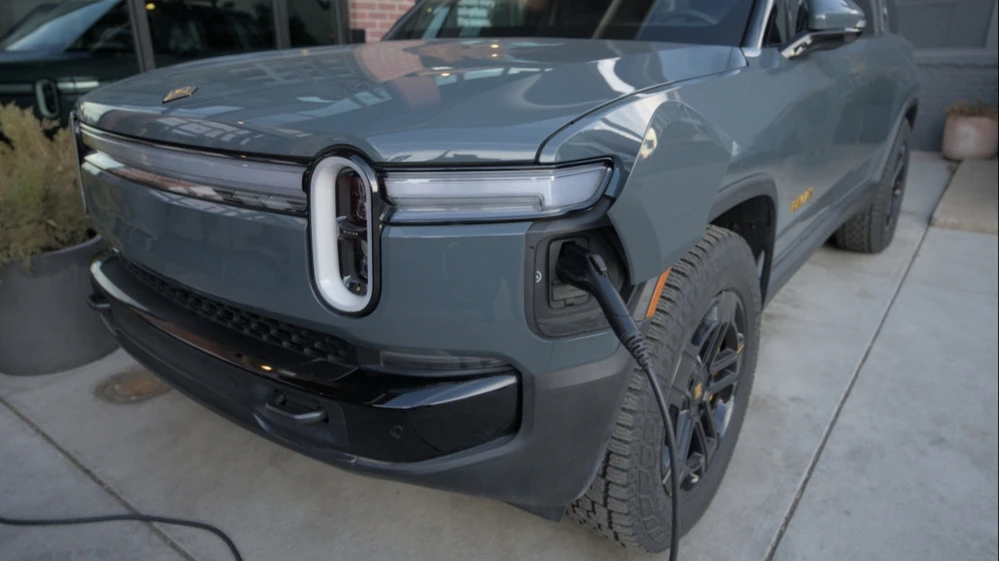
Electric car maker Rivian Automotive has unveiled its own AI chip for an autonomous driving system that will replace Nvidia's solutions in its new SUVs. Rivian's ultimate goal is to enter the market for autonomous driving systems as an independent player. For Nvidia, this could mean not only the loss of a customer who ordered chips for 50,000 electric cars in 2025, but also the possible emergence of a competitor in the automotive semiconductor market.
Details
The new Rivian R2 SUVs will be equipped with the Rivian Autonomy Processor 1 (RAP1) chip and a new lidar, the company announced on December 11. The chips will be manufactured by contract manufacturer Taiwan Semiconductor Manufacturing Co. (TSMC). As expected, the combination of its own AI chip, lidar and updated software will allow Rivian to eventually realize the function of autonomous driving, Bloomberg writes.
Two RAP1 chips will be used in the new Autonomy Compute Module 3 on-board system. It is capable of processing 5 billion pixels per second and will provide four times the performance of the current Nvidia chip-based platform used in Rivian R1 models. The company now offers driver assistance systems that require constant monitoring.
In its third-quarter report, the company predicted that its annual deliveries would be 41,500-43,500 vehicles. Most of them are just R1 pickup trucks. Series production of the R2 will begin in the first half of 2026, but the first cars will be produced without the RAP1 chip and lidar, and therefore will be limited in automated driving capabilities, Bloomberg notes. Starting in 2027, Rivian will begin phasing in software that allows cars to move from point-to-point without the driver having to keep their hands on the wheel and eyes on the road. At first, such features will be available only on highways, then on other types of roads. The company intends to make the autopilot service a paid service, with a monthly subscription half the price of Tesla's: $49.99 vs. $99.
Rivian's ultimate goal is to enter the unmanned transportation market, and sell software on a subscription basis, CNBC writes. This corresponds to the level of technology Waymo from Google and Tesla Robotaxi.
What this means for Nvidia
Most automakers developing autonomous driving systems have relied on third-party chips such as Nvidia, Mobileye or Qualcomm, as creating their own solution is expensive and technologically challenging, Bloomberg notes. Only Tesla, which produces its own AI chips for electric cars, does not depend on third-party manufacturers.
Nvidia dominates the data center semiconductor market, and its automotive business brings it less than 1% of revenue, but the company is actively trying to grow that share. In its third-quarter report, Nvidia said its automotive and robotics chip revenue totaled $592 million, up 32% year-over-year.
MarketsandMarkets estimates that the global automotive semiconductor market will grow from $77.4 billion in 2025 to $133 billion by 2030, making the sector strategically important for all AI solution providers.
How's Rivian doing
Rivian went public in 2021 in one of the largest IPOs in U.S. history. The company was seen as a potential competitor to Tesla, ahead of older automakers in launching full-size electric pickup trucks and SUVs, Bloomberg recalls. But then Rivian ran into operational difficulties: its sole plant in Illinois will produce fewer than 50,000 vehicles in 2025 - only a fraction of its design capacity.
Amid ongoing capital burn, the company has repeatedly laid off staff and its shares have fallen more than 80% from their peaks just after listing. Still, Volkswagen has invested nearly $6 billion in a joint venture with Rivian to leverage the partner's expertise in software and electronics. The companies are now developing models and platforms under Rivian and VW Group Technology.
In March, Rivian announced the startup Also, which will develop and produce compact electric vehicles designed for short distances.
What about the stock
In trading Thursday, Rivian shares plunged 6% to $16.6. They have risen more than 25% since the beginning of the year. According to MarketWatch, of the 27 analysts tracking the automaker's securities, 14 have a neutral stance, seven advise buying them and six advise selling them. The Wall Street consensus price target is $14.9, down nearly 10% from the close of trading on Dec. 11.
Nvidia shares lost about 1.5% - amid a general sell-off in the AI sector after Oracle's report disappointed the market.
This article was AI-translated and verified by a human editor