Robot vacuum maker iRobot files for bankruptcy; shares plunge 80%

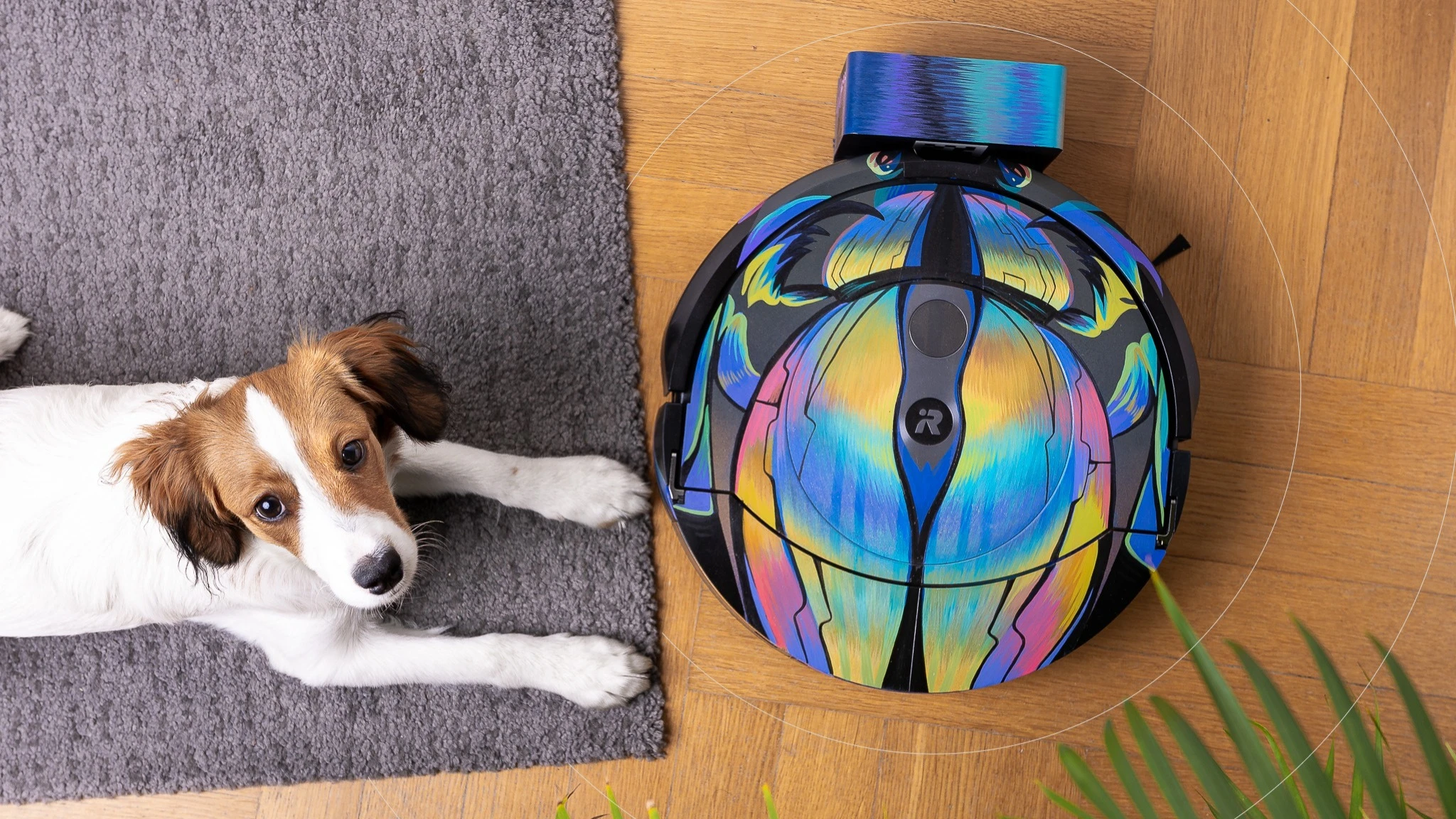
Shares of robotic vacuum cleaner maker iRobot have plunged about 83% in early trading on Monday, December 15, after the pioneering company announced it had filed for bankruptcy and agreed to sell the business to its main creditor.
Details
iRobot shares are down nearly 83% at $0.74 per share in Monday's pre-market trading to hit an all-time low.
The selloff followed the company’s announcement that it would be acquired by China’s Shenzhen PICEA Robotics, its largest creditor and primary contract manufacturer. To complete the transaction, iRobot and several of its subsidiaries have voluntarily filed for Chapter 11 bankruptcy, a process the company expects to conclude by February 2026, according to the press release.
Under the terms of the agreement, Shenzhen PICEA Robotics will receive 100% of iRobot’s equity in exchange for a restructuring of the company’s debt. As of end-September, iRobot owed creditors $197 million. The deal is intended to reduce the debt burden and allow the company to continue operating in the ordinary course, pursue product development, and maintain its global footprint, iRobot said.
Once the transaction is approved by the court, iRobot’s shares will be delisted, and existing shareholders will receive no recovery.
About iRobot
iRobot was founded in 1990 by MIT roboticist Rodney Brooks and his former students Colin Angle and Helen Greiner. The idea behind the business emerged from Brooks’ observations of insects: he sought to understand how simple systems could produce complex behaviors, TechCrunch writes.
In the early 2000s, the company transformed the market for household cleaning devices with the launch of the Roomba, which quickly became synonymous with autonomous robot vacuum cleaners, according to Bloomberg.
Early versions of Roomba had only a handful of sensors and an extremely limited "Merkwelt" – a term used to describe an organism’s way of perceiving the world. Those sensors could detect obstacles, drops in floor height, and so-called “virtual walls” set by users to block off certain areas of the home, Brooks explained in a 2017 blog post.
“These Roombas were rather like Godfrey-Smith’s discussion of insects,” Brooks wrote. “If some part of them failed, if one of the drive wheels failed for instance, they just continued on blissfully unaware of their failure... They had no awareness of self, and no awareness that they were cleaning, or 'feeding,' in any sense; no sense or internal representation of agency... Even the 2,000-neuron flatworms that exist today modify their behaviors based on experience.”
Over time, iRobot added new sensors that allowed the machines to orient themselves in space, recognize visual features, and estimate the distance they had traveled. That estimate was imperfect, Brooks noted, as even the direction ("nap") of a carpet, let alone turns, could distort it. Still, these advances allowed Roombas to avoid repeating the same mistakes, such as running into the same obstacle in the same place.
Later, the introduction of machine-vision technology gave the robots a form of episodic memory, enabling them to build simple maps of rooms. “The Roomba uses the map that it creates to check off areas that it has spent time in so that it is able to spread out its limited cleaning time,” Brooks wrote. “It also allows it to go in straight lines as customers seem to want that, as though they are not aware of the way they, humans, vacuum a room, with lots of back and forth motions, and certainly no straight line driving the vacuum cleaner up and back along a room.”
Even so, Brooks argued, robots’ awareness of the geometry of the world remains far weaker than that of birds, mammals, or octopuses. Looking ahead, Brooks suggested that future generations of domestic robots would perceive the world in a fundamentally different way than humans – one shaped by technology rather than biology. He described this emerging view as “technological,” dependent on signals from smartphones, Bluetooth devices, Wi-Fi networks, and other connected gadgets.
Headwinds
iRobot initially grew with the help of private capital, raising $38 million, including funding from Carlyle Group. In 2005, the company went public on the Nasdaq, raising $103.2 million.
The company’s difficulties began in the post-Covid period as supply chain disruptions intensified and cheaper competitors entered the market, Bloomberg reports. In 2022, Amazon agreed to acquire iRobot in a deal valued at $1.7 billion, but the transaction collapsed in early 2024 after objections from EU antitrust regulators. News of the deal’s termination triggered a sharp decline in iRobot’s share price.
About a year ago, the company issued a warning to investors that "there is substantial doubt about the Company's ability to continue as a going concern for a period of at least 12 months from the date of the issuance of its consolidated 2024 financial statements." This further accelerated the selloff.
iRobot received more than $90 million in compensation following the collapse of the Amazon deal, but used much of the money to pay advisory fees and repay part of a $200 million loan from Carlyle Group, Bloomberg notes. Last month, a subsidiary of Shenzhen PICEA Robotics acquired $191 million in outstanding debt from Carlyle, including principal and interest, becoming iRobot’s largest creditor.
The company was unable to reverse its decline. According to its most recent financial results released in November, revenue fell nearly 25% year over year in the third quarter to $145.8 million. “Revenue fell well below our internal expectations due to continuing market headwinds, ongoing production delays, and unforeseen shipping disruptions," CEO Gary Cohen remarked in the earnings release.
The company reported a net loss of $0.23 per share, versus a net profit of $0.03 per share in the same period a year earlier.