S&P 500 posted its worst week since November: statisticians faced with AI fears
Amazon's stock drop was the longest in nearly 20 years
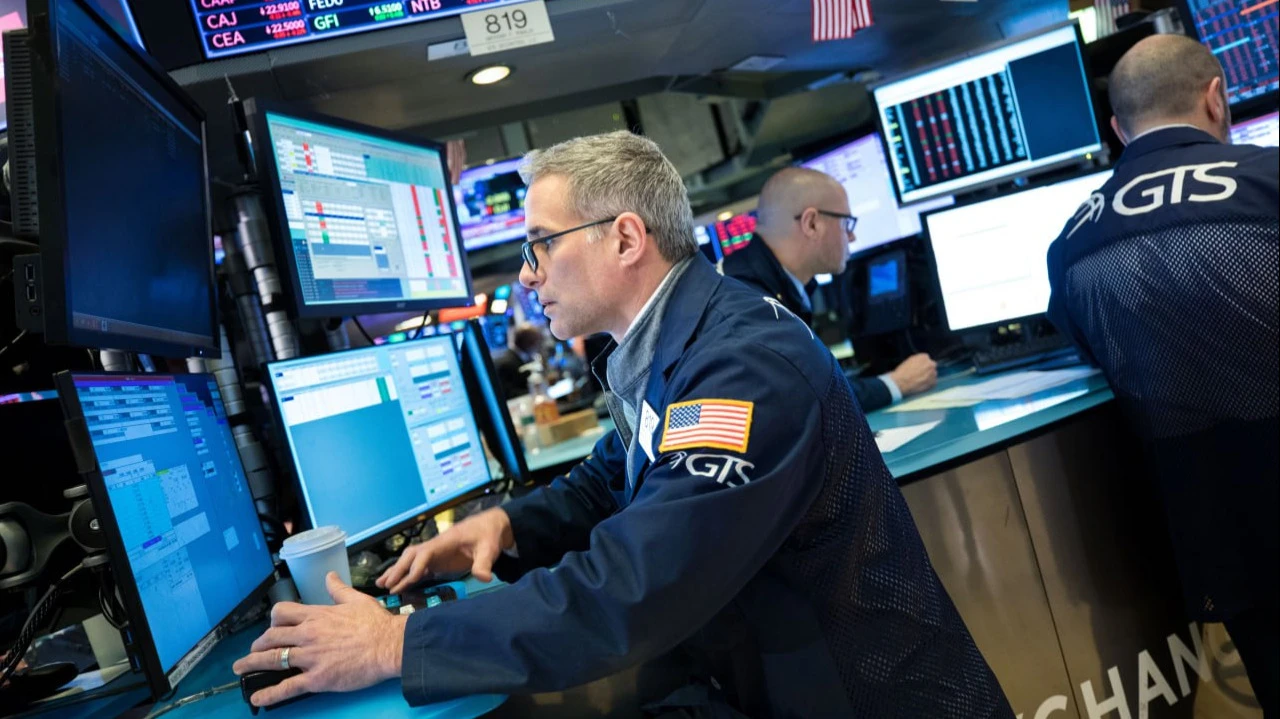
Photo: X / NYSE
Wall Street felt some relief after the moderate inflation data released on February 13: it gave the market more confidence in the Fed's interest rate cuts. Most stocks in the S&P 500 index rose on Friday, but the week as a whole was its worst in about three months. Investor fears that artificial intelligence will disrupt the business models of many companies from different fields outweighed the good statistics.
Details
- About 370 stocks in the broad market index S&P 500 rose on Friday, Bloomberg calculated. But the index itself remained almost unchanged, adding a symbolic 0.05%. At the end of the last five sessions, it lost 1.4% - it was the worst week for it since November 2025, the agency said. The index fell for the second week in a row.
- The Nasdaq Composite Technology Sector Index was down 0.22% on Friday. It has lost 2.1% since the close of trading last Friday. The index fell for the fifth week in a row, Barron's noted. Shares of Amazon fell 0.4%: the series of their fall is now the longest in almost 20 years, writes Bloomberg.
- The index of "blue chips" Dow Jones Industrial Average rose by 49 points, or 0.1%. At the end of the week, it fell by 1.2%.
- The Russell 2000 index of small-cap stocks rose 1.2% on Friday and lost 0.8% for the week.
- Yields on two-year U.S. government bonds have fallen to near their lowest levels since 2022, Bloomberg notes.
- Gold returned to above $5,000 thanks to a 2.4% gain on Friday.
- Spot silver prices also rose, up 2.8% to $77.4.
- Bitcoin jumped 4 percent to over $69,000 on Feb. 13.
What influenced the stock
Consumer Price Index (CPI) in the U.S. rose in January by 0.2% in monthly terms or 2.4% in annual terms. Economists surveyed by Dow Jones expected an increase of 0.3% and 2.5% respectively, CNBC writes. The rise in the benchmark index (excluding volatile food and energy prices) was the weakest since 2021, Bloomberg notes. This has given traders more confidence that the Fed will cut rates more than twice this year, the agency writes.
Also, data this week showed that the number of U.S. jobs rose in January at the fastest pace in more than a year and the unemployment rate unexpectedly fell. This indicates that the labor market continued to stabilize in early 2026.
On the other hand, concerns about the disruptive effect of AI on companies' businesses expanded this week and spread beyond the sell-off in the software developer sector: to real estate, trucking and financial services. For example, shares of financial services firms Charles Schwab and Morgan Stanley ended the week down 10.8% and 4.9%, respectively, while software company Workday lost 11%. Shares of CBRE, which manages commercial real estate, fell 16%. These concerns spread to the media industry: for example, Netflix securities lost 6% of their value.
What the analysts are saying
- January's CPI inflation report was "moderate" compared to fears of a "hot start" to the year, but not enough to motivate the Fed to cut rates anytime soon given the strong jobs report, said Evercore vice chairman Krishna Guha in a Bloomberg story. But the fresh data raises the possibility that inflation will be on a downward trajectory by June and the Fed could cut rates in June or July, the analyst added.
- "[The CPI data] should be positive news for markets and for likely new Fed chief Kevin Warsh," Osaic chief market strategist Phil Blancato told CNBC. - It's only one month's worth of data, but if the trend continues, it could open the door to lower interest rates and subdued inflation."
- CPI is also linked to existing investor concerns that artificial intelligence will disrupt revenue potential across industries, says Globalt Investments senior portfolio manager Keith Buchanan. While CPI is "not directly related to what we expect" in terms of disrupting familiar business models, the market is still trying to understand what AI and its adoption across the economy really means, the analyst explains. AI is creating "upward pressure on unemployment" and simultaneously "downward pressure on inflation," he said. "Why did we decide that everybody wins and there are no losers?" said Buchanan.
- "Investors are showing no mercy to those deemed 'losers' from AI. The list grows daily, reinforcing the divergence between the new and old economy sectors, and between the U.S. market and the rest of the world," Barclays analyst Emmanuel Ko told CNBC. - Amid sharp price swings and concerns that AI's disruptive impact on industries could spill over into broader macro or credit risk, the fundamentals - growth, rates and earnings - remain broadly acceptable."
- The "fighters against the disruptive potential of AI" have been active again this week, outlining new targets, but the initial reaction to the story may be "overstated" as many industries and individual companies may well prove to be beneficiaries of AI in the long term, according to Daniel Skelly, head of market research and strategy at Morgan Stanley Wealth Management.
- There's no need to worry about the S&P 500 declining for a second straight week, says Nationwide strategist Mark Hackett. "After the powerful rally that began last April, some consolidation in a typically weak February is not something unhealthy," he told Bloomberg. - Valuations have become more moderate, earnings expectations continue to improve and bond yields are falling. The fundamental backdrop continues to support this bull market." He noted, however, that market leadership is changing, with investors finding a more attractive risk/return ratio in international paper, value stocks and small-cap companies.
This article was AI-translated and verified by a human editor