Salesforce earnings beat expectations, but the stock fell 5%. What spooked investors?
Salesforce will target $50 billion to buy back its shares from the market, deeming its current price low

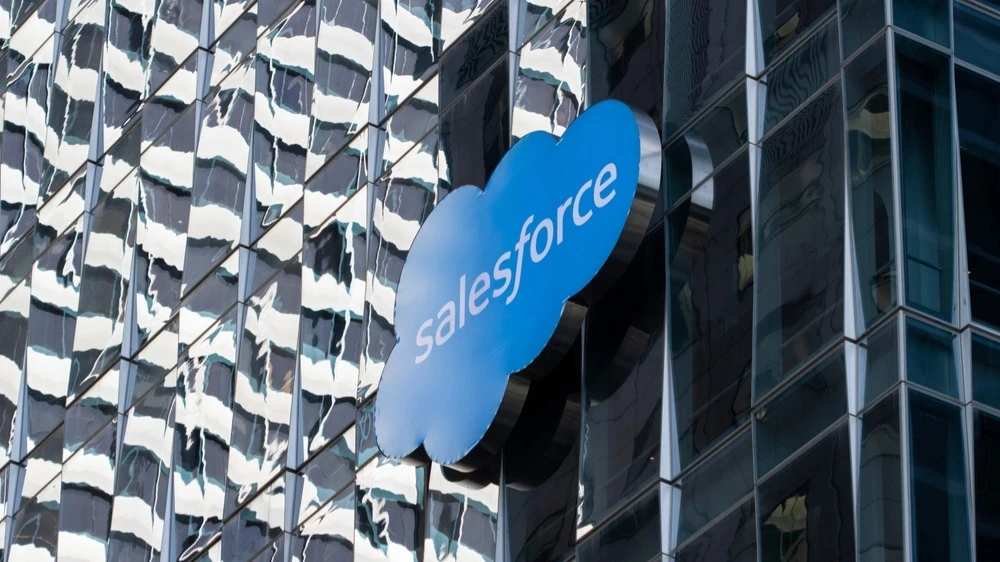
Salesforce shares are down 28% since the start of 2026 / Photo: Tada Images/Shutterstock.com
Sales and profits of the American Salesforce, one of the leaders of the business software market, for the last quarter were higher than the average expectations of Wall Street analysts. Despite this, the company's shares collapsed. Investors were disappointed by a weak full-year revenue forecast and slowing subscription growth. At the same time, Salesforce announced a $50 billion buyback of its shares.
Details
For the fourth quarter of fiscal 2026, which ended in January, Salesforce recorded revenue of $11.2 billion (up 12% year-over-year), slightly beating consensus estimates ($11.18 billion). Adjusted earnings came in at $3.81 per share, also beating Wall Street expectations. For the current quarter, the company projected sales in the range of $11.03 billion to $11.08 billion with a consensus of $10.99 billion. The cloud software developer also raised its 2030 revenue target to $63 billion from its previous estimate of more than $60 billion. Autonomous virtual agents using artificial intelligence should be the catalyst, Salesforce said.
Despite this, shares of the American company fell by 4.6% at the postmarket in New York, and in the morning of February 26, the drawdown persists in over-the-counter trading. Investors were concerned about Salesforce's forecast for the current fiscal year, according to which annual revenue will be between $45.8 billion and $46.2 billion. The middle of this range was slightly below the LSEG consensus forecast ($46.06 billion). This indicates that demand for enterprise software remains under pressure from global macroeconomic uncertainty: companies are cutting IT budgets, preferring to focus on critical expenses and cost optimization, states Reuters.
In addition, investors' sentiment may have been worsened by weak revenue from Salesforce's two largest product lines - sales and customer service solutions. Adjusted for currency fluctuations, it grew by 8% and 7%, respectively. As Bloomberg notes, both figures fell slightly short of Wall Street's consensus forecasts.
What the analysts are saying
There are growing fears in the market that the development of artificial intelligence could undermine Salesforce's traditional business model of selling cloud software on a subscription basis (SaaS). Under these conditions, Salesforce must prove to investors its ability to convert initial customer interest in its AI developments into their mass adoption at the level of large corporations, Reuters quotes Rebecca Wettemann, head of analyst firm Valoir, as saying.
"Given the forecast of 8% organic subscription growth, we are not surprised to see Salesforce's stock price decline slightly in the postmarket," MarketWatch quoted Evercore ISI analyst Kirk Matern as saying in a note. He said it will be critical for Salesforce to re-accelerate organic subscription growth back to 10% to restore investor confidence.
Do I buy out the drawdown?
Salesforce shares have fallen 28% since the beginning of 2026. Its competitors, including Intuit, Workday and ServiceNow, have also seen their quotes decline. On February 25, Salesforce CEO Marc Benioff told analysts that the company has launched a new $50 billion share buyback program because "prices are pretty low," CNBC reported.
According to FactSet, 45 analysts out of 58 recommend buying Salesforce shares (Buy and Overweight ratings). 12 experts advise to hold (Hold) the company's securities and only one - to sell (Underweight). The average target price of $305.09, calculated by the service, implies a 59% growth in quotes in the next year.
Context
Salesforce is under investor pressure amid a market sell-off caused by a threat to classic software vendors from AI startups like Anthropic. Against this backdrop, the SaaS giant is forced to look for an optimal monetization model for its future AI services. CEO Marc Benioff defends traditional "per-job" licensing, which provides corporate customers with predictable costs. This approach contrasts with the flexible tariffs of competitors: pay-per-use or pay-for-performance, which is promoted by Sierra startup of former Salesforce co-CEO Bret Taylor, writes the Financial Times.
This article was AI-translated and verified by a human editor