Saxo considers if Tesla robotaxi launch is breakthrough or 'another Musk mirage'
Success or failure of the robotaxi program could 'significantly impact Tesla’s valuation'

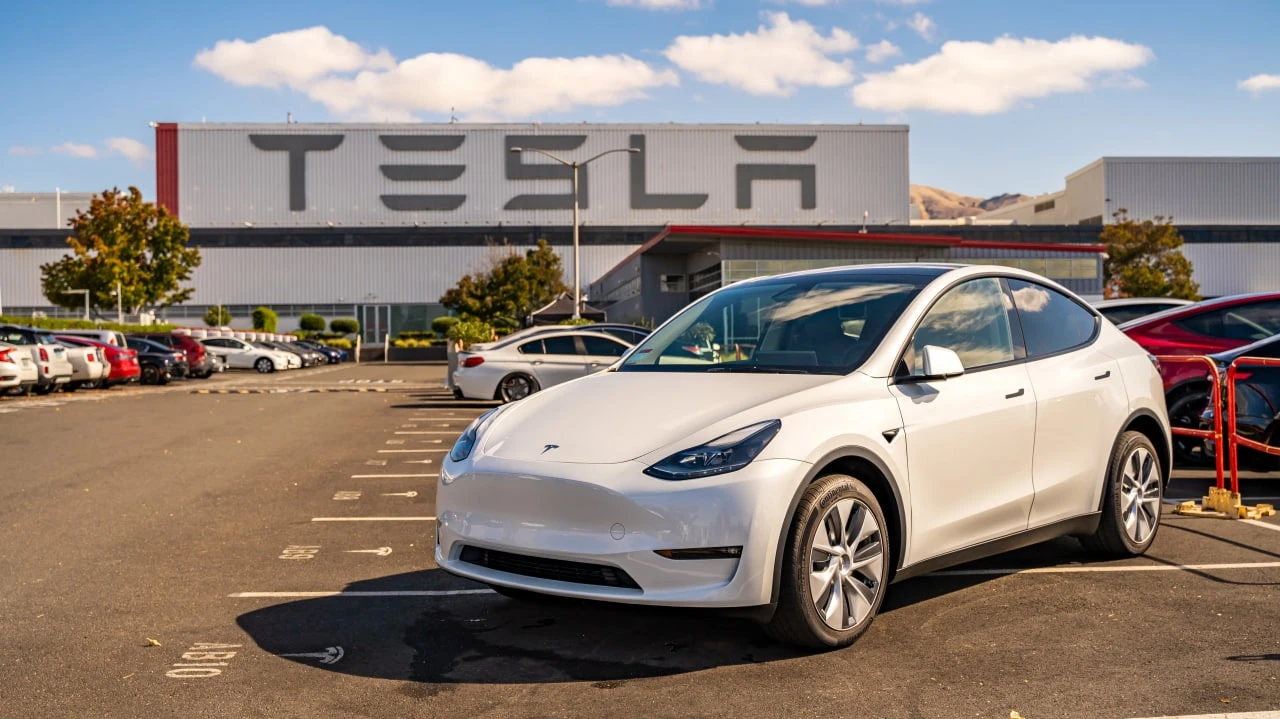
Sunday, June 22, could mark a turning point in the history of Tesla as the company prepares to put its first self-driving cars on public roads. However, the planned rollout looks more like a cautious pilot than a technological breakthrough, according to Jacob Falkencrone, global head of investment strategy at Saxo Bank. Investors should brace for heightened volatility: whether the launch proves transformative or becomes another of Elon Musk’s ambitious illusions remains an open question.
Details
Tesla is to launch a robotaxi pilot in Austin, Texas, on Sunday, using roughly a dozen autonomous Model Y vehicles equipped with the company’s Full Self-Driving (FSD) software. Though positioned as fully autonomous, the vehicles will operate only within tightly restricted geofenced areas and under remote human supervision. Falkencrone of Saxo Bank writes this approach reflects careful navigation of the regulatory landscape rather than a bold leap in technology.
“Tesla’s robotaxi debut looks less like a grand revolution and more like cautious experimentation—far from the sweeping spectacle Musk originally promised,” Falkencrone says.
Importance of robotaxis for Tesla
Tesla’s roughly $1 trillion market capitalization is driven largely by expectations of future innovation rather than by current vehicle sales alone, Falkencrone notes. The autonomous ride-hailing market represents not incremental growth but a fundamental shift in economic logic.
Falkencrone estimates that robotaxis could cut travel costs by as much as 70%, reshaping urban mobility and potentially turning Tesla from a car manufacturer into a global mobility platform. The scale of the opportunity is amplified by Tesla’s massive global fleet of vehicles, capable of turning into revenue-generating robotaxis through software updates.
“Robotaxis could redefine Tesla’s revenue model, potentially surpassing its car business. This isn’t just about innovation; it’s about transforming the economics of transport entirely,” Falkencrone argues.
Outlook for robotaxi launch
Despite the proximity of the Sunday launch, skepticism remains, Falkencrone cautions. On Thursday, June 19, Democratic lawmakers in Texas publicly urged Tesla to delay the rollout until autumn, when new autonomous-driving safety legislation is due to take effect. The lawmakers cited concerns over gaps in existing safety standards.
At the federal level, the National Highway Traffic Safety Administration is actively investigating Tesla’s autonomous driving systems following several incidents, including a fatal crash in Arizona in March 2018. Falkencrone flags Tesla’s continued reliance on camera-only systems, without radar or lidar – technologies used by competitors such as Waymo and Volkswagen – as a source of concern, particularly in conditions involving glare or poor visibility.
“Tesla’s regulatory roadblocks are significant. Investors must brace themselves: another delay or setback remains a very real possibility,” Falkencrone says.
Market reaction
Historically, Tesla shares have followed a familiar pattern around high-profile product launches: a rally driven by anticipation, followed by weakness once expectations confront reality. With the stock already trading at elevated valuations, Falkencrone warns that Tesla has little margin for error. Even minor issues, such as technical glitches or frequent human intervention, could trigger a sharp market reaction.
At the same time, a smooth demonstration of capabilities, even on a limited scale, could reinforce confidence in Tesla’s longer-term innovation pipeline: “investors face a crossroads: volatility around launch day is almost guaranteed. Whether robotaxis become Tesla’s triumph or tragedy depends entirely on execution,” Falkencrone writes.
Saxo's recommendations
Falkencrone advises short-term investors to prepare for elevated volatility around the launch. He notes that historical trends suggest profit-taking immediately after launch and advises investors consider clear risk management around critical launch milestones.
For long-term investors, Falkencrone recommends closely tracking safety incidents, regulatory feedback, and consumer adoption patterns. Initial evidence of reliable performance and regulatory acceptance could "signal a powerful, investable opportunity." At the same time, setbacks could create short-term buying opportunities amid volatility.
In particular, investors should track:
frequency and severity of remote interventions;
safety incident reports and regulatory reactions;
expansion rate beyond initial Austin geofence.
Context
Musk first promised operational robotaxis in 2019, predicting that one million autonomous vehicles would be on the road by 2020. That deadline passed without a single car entering service. In October 2024, Tesla unveiled a futuristic steering-wheel-free Cybercab, with mass production targeted for 2026. The upcoming Texas rollout, however, still relies on standard Model Y vehicles, underscoring the persistent gap between promise and delivery, Saxo Bank's Falkencrone notes.
“Investors have learned to be cautious of Musk’s timelines,” he adds. “The robotaxi saga has become a story of dazzling promises and delayed reality.”