Shares of Turkey's defense company are up 264% year-to-date. What attracted investors?
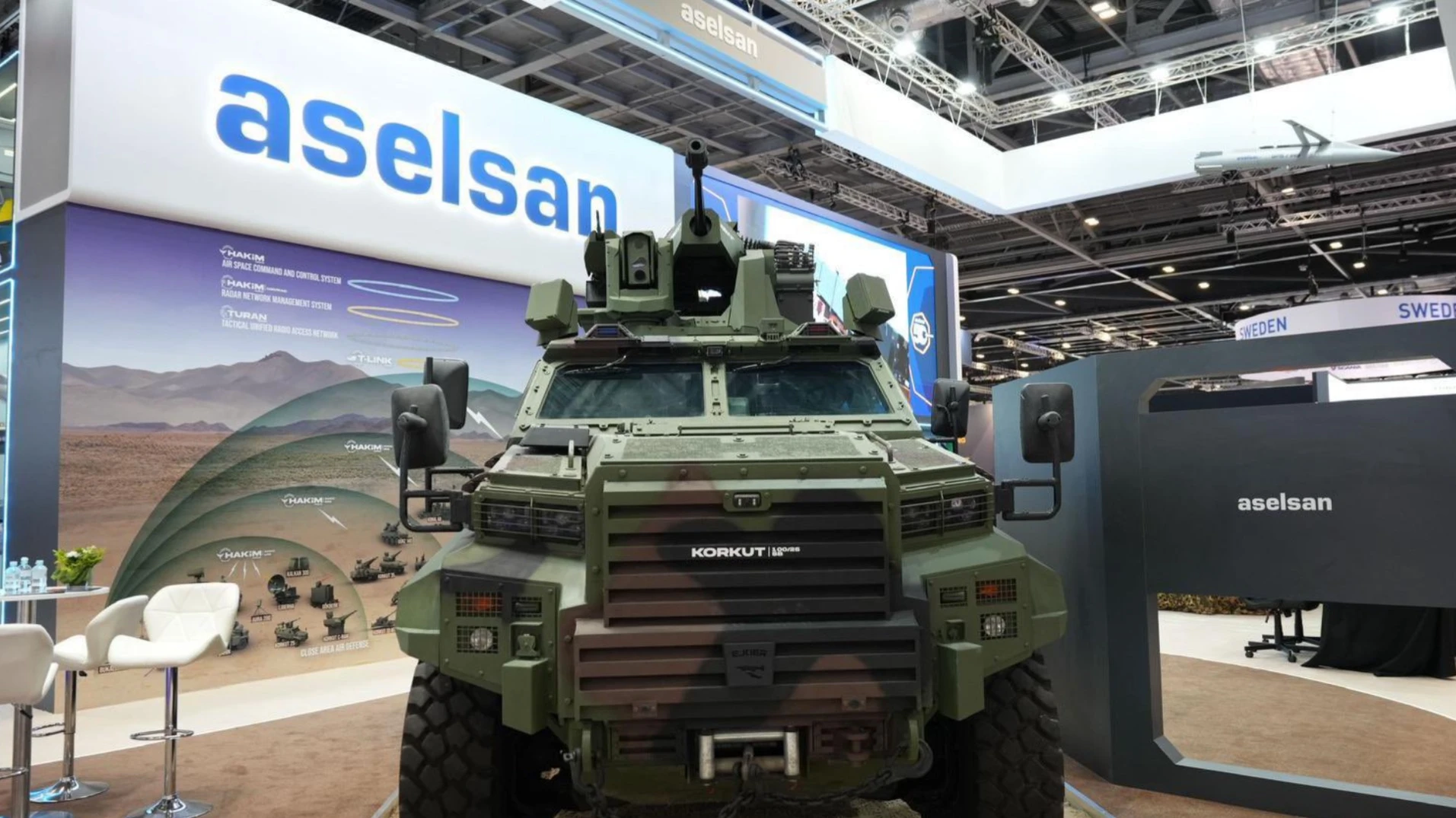
Aselsan is now moving from the expensive development stage to the mass production stage. Its shares have risen 264% in a year. Photo: Aselsan / X
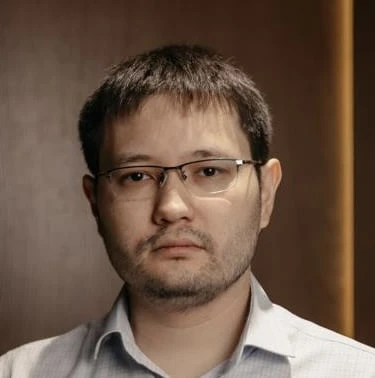
Turkey's defense and aviation industry exports, including products and services, exceeded $10 billion in 2025, a record. Over the year it grew by 48%. The Turkish defense industry is booming, Bloomberg writes. And Turkey's largest military electronics manufacturer, Aselsan Elektronik Sanayi, is competing for contracts in Europe and NATO countries. Its shares have risen 264% in value over the year, while the benchmark of the Turkish market - the BIST 100 index - is up about 45%. Askar Akhmedov, CFA, Chief Investment Officer at ATLAS Capital, wrote for Oninvest how the company secured such growth and how should investors view it?
Modular sovereignty and digital brains: what Aselsan offers to the marketplace
On October 2, 2025, Aselsan became the first Turkish company whose market capitalization surpassed the 1 trillion Turkish Lira (about $30 billion) mark. The company has evolved from an ordinary regional electronics supplier to a global Tier-1 defense technology systems integrator.
This means that it doesn't just make individual parts, but creates sophisticated turnkey systems that control the entire machinery. All of this happened as part of the aselsaneXt development program, which Aselsan launched in 2024.
To understand the magnitude of the change, imagine the difference between a factory that only makes buttons for the instrument panel and a company that creates the entire autopilot and control system for a modern airplane.
Aselsan is designing a complete "digital brain" for complex machinery. In aviation, it allows the airplane to respond more accurately to the pilot's commands. It's as if your computer never "slowed down" even when performing the most complex tasks. In the navy and ground forces, the company's systems allow different types of equipment to communicate instantly with each other and work as a single unit, increasing safety and reliability.
I believe it is no exaggeration to say that such a technological leap puts the company on a par with global giants such as Boeing or Lockheed Martin.
In addition, Aselsan is changing the global defense technology market. The global defense technology industry has long been ruled by Western giants such as Raytheon or Thales. However, now new players are entering the scene who no longer want to depend on other people's rules.
In the past, buying complex equipment was like buying a smartphone that you are not allowed to open: you use it, but you do not have access to the "brains" of the device and cannot repair it yourself. Aselsan has changed this approach. It offers "modular sovereignty" - meaning that the buyer gets access to the software code and can manufacture the parts himself in his country.
Thanks to this openness, Aselsan is squeezing European firms in markets in Asia and the Middle East. CEO Ahmet Akyol told Bloomberg in February that the company plans to expand its presence in at least five new countries this year. He said overseas sales last year rose 89% to $958 million and new export contracts more than doubled to $2.69 billion. The company will report for 2025 at the end of February.
The modern defense industry is not only about tanks and planes, it is first and foremost a battle of technology and artificial intelligence. Aselsan produces its own microchips based on gallium nitride (GaN). To understand their advantage, imagine the difference between an old incandescent light bulb and a modern LED bulb. GaN chips are 50-65% more energy efficient than older silicon technology. The result: radars with these chips "see" much farther and clearer.
The Steel Dome system manages all this. It is a kind of "smart manager" based on AI. If there is a threat, the system decides how to eliminate it, and does it in less than 1.5 seconds - faster than a human can blink.
New phase
Aselsan is now moving from the expensive development phase, where huge investments were made in research and prototyping, to mass and very profitable production. The main instrument of this change has been the new $1.5 billion Oğulbey production complex, which the company officially opened in August 2025.
This can be compared to if a large car factory spent many years spending money on designing a unique engine, and now it is ready to run the assembly line at full capacity. Whereas before the company only spent, now it will start selling what it has created. For those who have invested money in the company (shareholders), this is a great signal: the period of high spending is coming to an end, and the ten-year investment will start to pay off.
What do investors think about the company?
Now there is a situation on the market, when many investors have taken a wait-and-see attitude. This is due to the fact that the company's shares look very expensive: their price is now more than 70 times higher than the annual profit (according to the P/E ratio for the last 12 months).
While the stock price tag seems inflated right now, unofficial projections (so-called whisper numbers) hint that the market just doesn't realize how quickly accumulated orders will turn into real net profits. The company has large international contracts in Sovereign Tech, such as a $410 million deal with Poland, which it has in place for late 2025.
As a result, despite its seemingly high cost today, Aselsan has a huge backlog of paid work for years to come, making its position in the market much stronger than it appears at first glance. The company has already accumulated orders worth about $18 billion in the first nine months of last year.
Its main secret to success is simple: they offer state-of-the-art, fifth-generation technology. Aselsan manufactures and controls the entire process independently, from tiny semiconductor chips (the "brains" of the technology) to the most complex AI-based programs. This independence guarantees that production will not stop due to sanctions or supplier delays.
We expect that the stock could grow by more than 40% over the next two years. Although they are not cheap now, the company has strong "engines" for further growth. In mid-2026, Oğulbey will start dispensing products. The "peak delivery" of finished products is expected to be in 2027.
But there are a couple things an investor needs to keep in mind.
The first is complicated accounting. Due to high inflation in Turkey, financial statements can look confusing. To the average person, it may seem that things are not going well, although in fact there is more money "in the coffers" of the company.
Also, the company needs a lot of cash right now to keep production going. If the start-up of the new workshops in 2026 is delayed by even a couple of months, it could postpone expected profits.
There is also a political factor: Aselsan makes military equipment, so it depends on relations between countries. But the company has learned to make key parts itself, so it has become much less dependent on foreign suppliers.
Does not constitute an investment recommendation
This article was AI-translated and verified by a human editor