Shorts' share of Labooboo creator's stock is at a 2.5-year peak. They weren't convinced by the rally?
Following the company's buyback announcement this week, Pop Mart securities experienced their strongest gains in five months

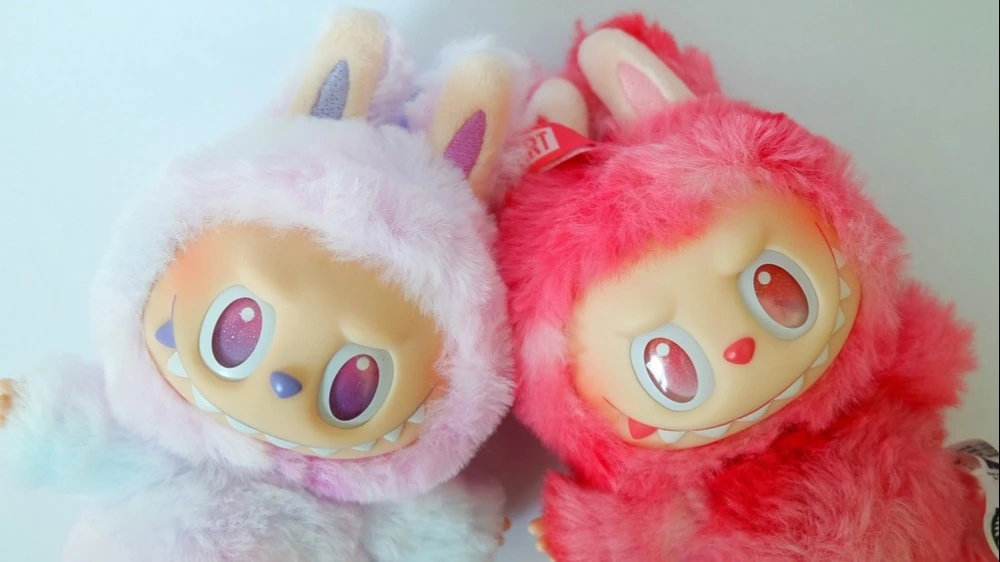
The volume of short positions on shares of Chinese toy maker Labubu rose to the maximum since July 2023 / Photo: aniejasin / Shutterstock
The volume of short positions on shares of Chinese toy maker Labooboo, Pop Mart, rose to the maximum since July 2023, despite the rally of securities after the company announced on January 20 about the buyback, Bloomberg writes with reference to data from S&P Global. The market remains divided on Pop Mart: some investors see the buyback as a signal of undervaluation, while others continue to doubt the sustainability of demand for the company's key products, including Labuba.
Details
The share of short positions (betting on the decline of shares) in the securities of Pop Mart International Group, a Chinese manufacturer of Labooboo dolls and other popular toys and accessories, rose to about 8% of the total volume of shares in free float against 6% a week earlier, Bloomberg reports citing data from S&P Global on Wednesday, January 21. This is the maximum since July 2023: a total of about 60 million shares were in short positions against 44 million a week earlier, the agency points out.
Pop Mart did not respond to Bloomberg's request for comment.
Context
Such statistics, notes Bloomberg, was fixed on the background of the strongest rally of Pop Mart securities for the last five months, which started on January 20. The jump was caused by the measures, which the agency calls "the most aggressive" among those, that Pop Mart management took to support the shares. Pop Mart's management announced its readiness to conduct its first buyback since February 2024 - the company said on January 19 it plans to buy back 1.4 million shares for HK$251.4 million ($32.2 million).
As a result, on January 20, after the announcement of the buyback, the quotes of Pop Mart jumped by 10% - for them it was the most significant growth since August 2025. During the week, the securities continued to grow, including on the background of the release of the company's new series of products with the character Twinkle Twinkle, Bloomberg points out. As a result, during the week, Pop Mart securities added 23%, and the market capitalization of the company increased by about $7 billion.
At the same time, until this week, the advantage on the securities of the creator of Labubu was clearly on the side of "bears", emphasizes Bloomberg. Since Pop Mart shares reached their peak on August 20 last year, they fell by almost 50% by the end of last week, Bloomberg writes. The agency explains such dynamics by investors' doubts in the company's ability to maintain growth rates. The main concerns related to weakening demand for the popular Labubu line.
In trading on Friday, January 23, the securities of Pop Mart in Hong Kong rose in price at the moment by almost 8%, noticeably outperforming the market: the Hang Seng index fell by 0.1%, notes MarketWatch. As a result, on January 23, shares of Pop Mart closed at 6.6%.
What the market is saying
The contradictory market dynamics points to the growing tension between Pop Mart's attempts to regain investor confidence and the continuing skepticism of some traders about the company's long-term prospects, Bloomberg notes. While "bulls" are betting on new product lines and attractive stock valuations, "bears" are increasingly pointing to signs of weakening demand in key overseas markets.
"There is still a significant amount of short positions built up in the U.S. as the slowdown in sales there continued in January," said Bernstein's Asian consumer sector analyst Melinda Hu. According to her, as the recent growth of quotations was not supported by fundamental factors, some investors could take advantage of the rally to build up short positions (shorts).
However, Morningstar analyst Jeff Zhang, on the other hand, believes that "the buyback [of the company's securities] reflects management's view that Pop Mart stock is undervalued." He said the buyback is also aimed at improving shareholder returns, as the company's dividend yield has long remained below 1%, MarketWatch writes.In the short term, Pop Mart may continue the buyback, but further price appreciation could reduce the company's willingness to take such action over a longer horizon, Zhang added.
Morgan Stanley analysts, in turn, indicated that Pop Mart likely has "significant financial resources to further return funds to shareholders," but the company has not yet outlined specific targets and timelines for new buyback programs, Bloomberg noted.
This article was AI-translated and verified by a human editor