Tesla chooses Intel to make AI chips: what does this mean for investors?
Participating in the release of chips for Tesla's existing lines of business would be a big win for Intel

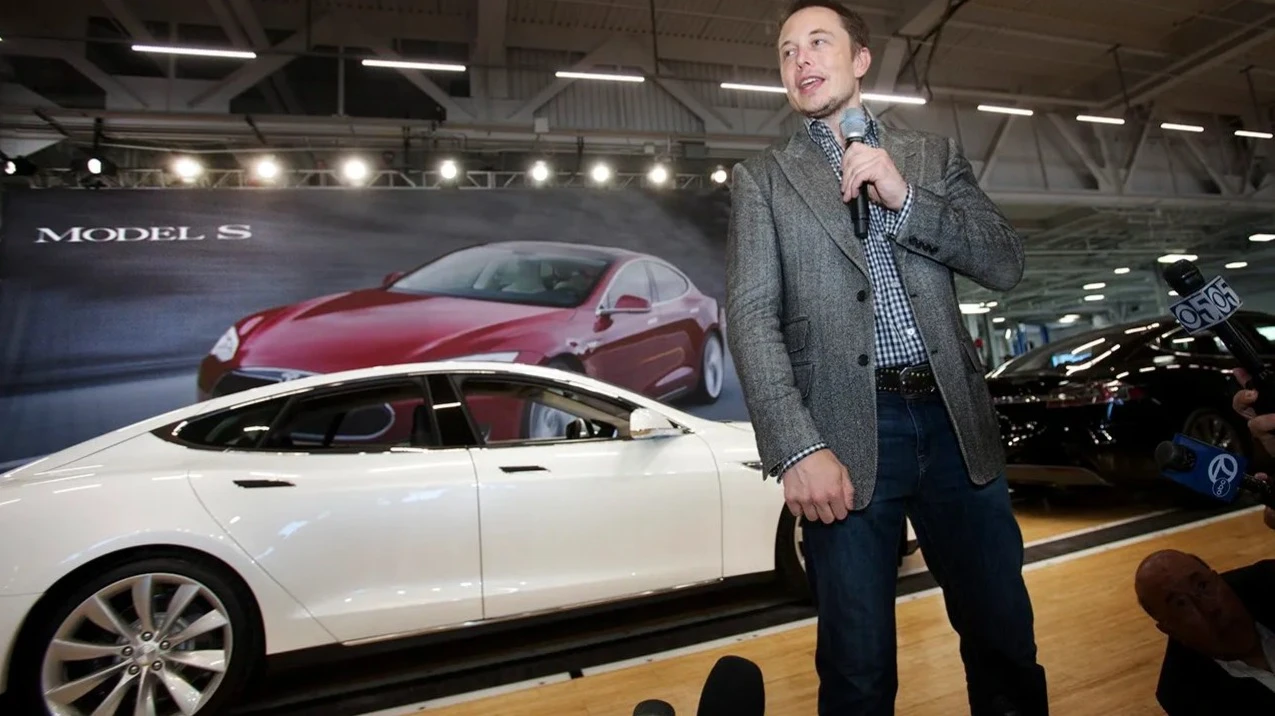
Tesla's current valuation has long gone beyond the value of its auto business / Photo: x.com/elonmusk
Elon Musk announced a partnership with Intel: Tesla will use its advanced process technology to produce chips for its robots and space data centers. This deal was a major victory for the semiconductor giant, which has long been trying to prove its worth to the market in the field of contract manufacturing.
Details
"We're planning to use Intel's 14A process, which is cutting-edge and, in fact, not yet fully mature," Tesla CEO Elon Musk said at the presentation of the company's quarterly earnings report. By the time the giant Terafab chip fab in Texas - Musk's own production facility - comes online, the technology will be "quite mature," he added, and praised the Intel team led by Lip-Bu Tan, the Financial Times reported.
Intel has scheduled mass adoption of 14A process technology for 2027, and the contract with Tesla will provide the company with its first major customer for the technology, Reuters points out. It's a breakthrough for Intel, which has long struggled to develop its contract manufacturing direction and has been increasingly losing ground to its main rival, TSMC. Lip-Bu Tan even warned that he would be forced to close chip plants if he did not find customers.
Shares of Intel on April 23 grow on the Nasdaq premarket by almost 2%. Quotes of Tesla, whose investors were concerned about the news of a sharp increase in capital expenditures, are down 3%.
What is Terafab?
Terafab is Musk's ambitious initiative to enter the advanced semiconductor manufacturing market, on which teams from Tesla, SpaceX and AI developer xAI are working together. Terafab aims to fully power Musk's business empire with chips. The venture will print processors for Optimus robots, Tesla's AI systems and SpaceX's orbital data centers. The billionaire believes that existing custom chip makers, such as TSMC and Samsung Electronics, will not be able to provide the necessary production volume.
Tesla is in charge of research, SpaceX is in charge of production
"Essentially, at this point, we've decided on the following: Tesla is doing the research factory, SpaceX is taking over the initial work on full-scale production of Terafab, and we'll deal with the rest later," Musk said during the Tesla report presentation.
In the near future, Tesla plans to create a semiconductor R&D center (research and development center) worth about $3 billion, Bloomberg reports. The site will be a compact pilot line designed to process a small number of silicon wafers.
The main task of the R&D center is to test new ideas and check their viability in conditions close to real production. Apparently, Intel's new technologies will have almost nothing to do with this experimental line, Tom's Hardware notes.
Whose stock is more interesting?
Wall Street analysts give cautious forecasts for both securities. The consensus rating for Intel shares is Hold, and the average target price of $56.9 per share reflects the risk of a decline of about 13% relative to the last closing price. Tesla shares also have a consensus rating of Hold. However, their price target of $413.9 per share on average indicates a modest upside of 6.8%, which makes the electric car brand's stock more attractive in the short term, TipRanks notes.
This article was AI-translated and verified by a human editor