'Tesla of the skies' Beta goes public on the Nasdaq
The eVTOL manufacturer raised more than $1 billion in its IPO

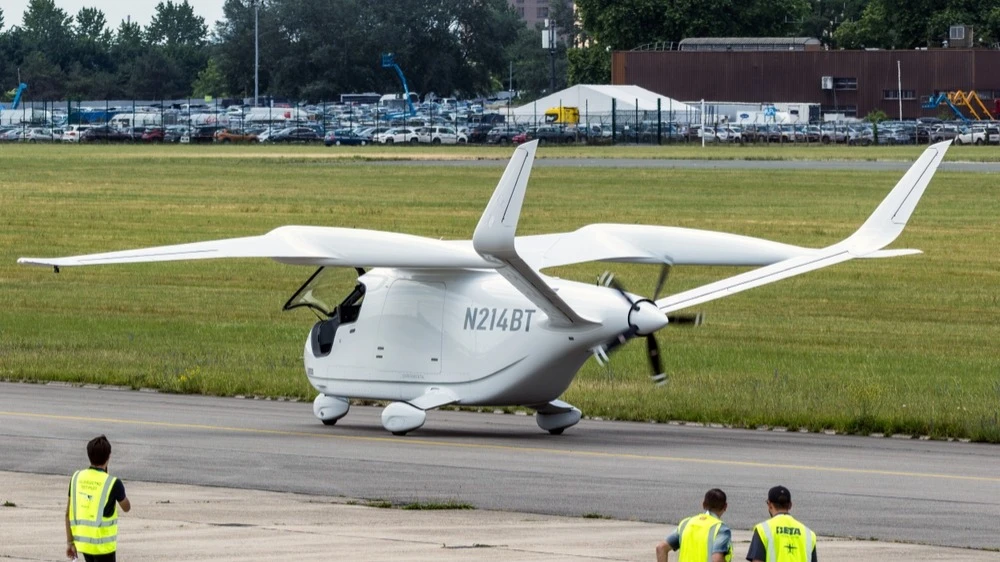
Early trading in shares of Beta Technologies, a developer of electric airplanes, propulsion systems, chargers, and components, has started on the Freedom trading system. The company joins a growing group of electric airplane manufacturers entering public markets as the technology evolves. As Seeking Alpha points out, Beta is seeking to do for aviation what Tesla did for the auto industry and is following a similar path in many ways. Later today, November 4, the stock will officially begin trading on the Nasdaq under the symbol BETA.
Details
Beta Technologies raised $1.01 billion in its IPO. The company offered 29.9 million shares at $34 per share, above the marketed range of $27-33 per share. The company is valued at about $7.44 billion, Reuters reports.
Beta was valued at $2.4 billion in 2022. In 2024, it raised $318 million in a new round led by the Qatar Investment Authority, though it did not disclose the updated valuation, saying only that it exceeded the prior figure, Bloomberg noted.
The IPO was arranged by Morgan Stanley, Goldman Sachs, BofA Securities, Jefferies, TPG Capital BD, LLC, Citigroup, Cantor, BTIG, and Needham & Company.
About the company
Beta Technologies designs, manufactures, and sells high-performance electric airplanes, advanced electric propulsion systems, charging stations, and components. Founded in 2017 by Kyle Clark, a former F-16 pilot and MIT graduate, Beta has a mission to create a sustainable and affordable air-transport system powered entirely by electric propulsion, Capital.com writes.
Beta is regarded as one of the leading developers of electric vertical takeoff and landing airplanes in the U.S. Its two flagship models, the ALIA-250 (cargo and passenger versions), are designed for regional air transportation, offering efficient and low-emission flights, Capital.com notes. Earlier in 2025, the ALIA-250 flew from the Hamptons to John F. Kennedy International Airport in New York and made its debut at the Paris Air Show. Beta airplanes have also been tested by the Federal Aviation Administration and the U.S. military, Bloomberg reports.
Proponents of eVTOL technology believe it can reduce pressure on transport infrastructure in large cities, but regulators have not yet granted official approval, CNBC reports.
Beta’s market strategy is reminiscent of Tesla’s early approach, Seeking Alpha writes. Instead of immediately targeting mass passenger air transportation, the company is beginning with niche and poorly served segments where the advantages of electric aircraft are clear, and regulatory barriers lower.
Beta is not yet profitable: for the first six months of 2025, its net loss totaled $183 million, while revenue more than doubled to $15.6 million, from $7.6 million in the same period a year earlier.
In September, Beta announced a strategic agreement with GE Aerospace to develop a hybrid-electric turbogenerator for next-generation airplanes. As part of the deal, GE Aerospace acquired a stake in the company and invested $300 million, as TechCrunch writes.
What the market says
Beta Technologies’ post-IPO share price will depend on how investors assess prospects for clean technology, aerospace innovation, and growth potential in emerging sectors, Capital.com writes. It will be influenced by macroeconomic and industry factors: interest rates and oil prices, which affect the company’s costs, as well as government support for zero-emission initiatives, which boosts sector valuations.
Certification will remain a key factor, the publication points out. Expected regulatory approval for ALIA aircraft in 2026 will determine when Beta will be able to generate large-scale commercial revenue, Capital.com explains. Any delays in certification or production could undermine investor confidence, while successfully reaching milestones and securing preorders would support the share price.
Competitive dynamics will also shape performance. Major players in the eVTOL sector – Joby Aviation, Archer Aviation, Lilium, and EHang – operate in the urban and regional segments. Beta’s advantage lies in its focus on regional logistics and infrastructure rather than crowded urban air-taxi markets, Capital.com argues. The company’s dual model of selling aircraft and operating charging networks differentiates it from competitors focused primarily on passenger transportation.
Freedom Finance analyst Alem Bektemirov estimates a target price of $42.30 per share for Beta, implying upside of about 24% relative to the IPO price. He believes the company demonstrates steady progress in a niche eVTOL segment, and the IPO reflects strong investor interest in innovative transportation solutions. Among the risks, Bektemirov highlighted possible delays in design, production, certification, and commercial launch, which could negatively affect the company’s financial results.
__________________
Freedom clients will be able to trade Beta Technologies shares before the start of the main U.S. session. Premarket trading will open 2-3 hours early, at 15:30-16:30 Astana time. Investors can participate by selecting the symbol BETA on the Freedom platform.
The AI translation of this story was reviewed by a human editor.