Tesla sales in the U.S. are near a four-year low. What about the budget models?
Demand for Tesla cars has slipped by nearly a quarter since the tax credit for electric car buyers in the US was removed, despite key models getting cheaper

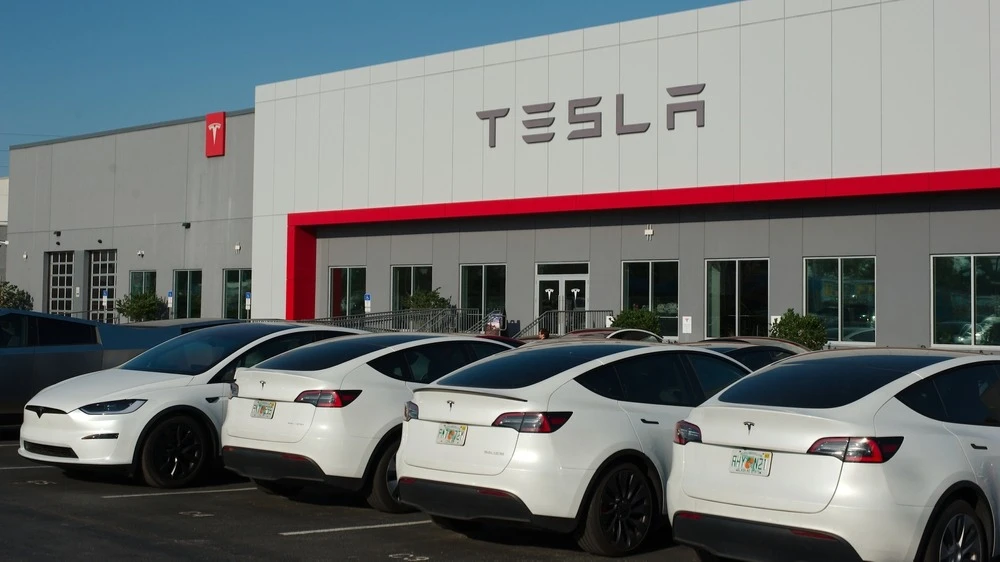
Tesla sales in the U.S. in November fell to an almost four-year low, since the beginning of 2022, writes Reuters, citing data from the conglomerate Cox Automotive. The decline occurred against the background of the abolition of federal tax incentives for buyers of electric cars in the U.S., due to which the purchase of such cars for consumers has become significantly more expensive. Tesla's production of budget modifications turned out to be insufficient to compensate for the drop in demand. Analysts note that the company needs a new model, otherwise the decline in sales may continue.
Details
Sales of Tesla electric cars in the United States in November fell to near their lowest since January 2022, despite the automaker launching more affordable, newer versions of its best-selling models - the Standard Model Y and Standard Model 3 - Reuters writes, citing data from conglomerate Cox Automotive.
According to information provided to Reuters by Cox Automotive, which among other things specializes in forecasts to gauge auto market conditions, demand for Tesla's standard models in the U.S. was expected to support the company's overall sales in November. But that figure ended up falling in the States by nearly 23%, to 39,800 vehicles, down from 51,513 a year earlier. For the company, that level of sales is the lowest since January 2022, analysts calculated.
Tesla shares were down 1% at the close of trading on Dec. 11, and were down about 0.2% at the premarket on Friday, Dec. 12.
Context
Demand for electric vehicles in general has weakened sharply in the US after the administration of US President Donald Trump canceled federal tax credits for the purchase of electric vehicles at the end of September. This program effectively allowed consumers in the U.S. to buy electric cars with a maximum rebate of $7500 (if all program conditions were met). The elimination of the rebate made purchasing electric cars significantly more expensive and cooled buyer interest.
To partially compensate for the decline in demand, Tesla launched cheaper versions of the Model Y for $39,990 and Model 3 for $36,990 in October - about $5,000 cheaper than the cars in the base versions. The updated electric cars were distinguished from them by a stripped-down feature set. "The decline in sales suggests that demand for standard versions of [the automaker's] models is clearly not enough to override the effect of the repeal of the tax credits," said Stephanie Valdes Streeti, Cox's director of industry analytics.
According to her, Tesla's new budget models have begun to pull some sales from the more expensive Premium models, primarily in the Model 3 lineup. At the same time, for Tesla, the success of cheaper modifications was of strategic importance, Reuters emphasizes: it is important for the company to maintain sales and revenue during the transition to new directions - robotaxis and humanoid robots.
At the same time, the abolition of incentives hit Tesla's competitors much harder, Reuters points out: total sales of electric cars in the U.S. in November collapsed by more than 41%, while Tesla's market share, on the contrary, rose to 56.7% from 43.1%.
Why it's important
After years of rapid growth, Tesla for the first time in a long time recorded a decline in deliveries as early as 2024 - amid high interest rates, deteriorating consumer sentiment and increasing competition, especially in Europe and China, where more affordable models of other manufacturers are actively appearing, recalls Reuters. Additional damage to the brand was caused by Elon Musk's political statements and his public support for Donald Trump, which caused protests from some customers. This year's deliveries are again expected to be below the 2024 level, according to Reuters.
Wall Street initially expected Tesla to release an all-new, budget model in 2025, which would expand Tesla's potential market, Barron's noted earlier. The company hasn't produced a new model since the Cybertruck debuted.
"Tesla faces a major challenge in 2025, with many automakers bringing cheaper and more advanced electric cars to market," Streeti emphasizes. - Companies need an entirely new model. It's critical."
Tesla began offering 0% APR loans on the Standard Model Y in the U.S. this week, which analysts are calling a signal of weak demand - especially considering that deliveries of the model to the U.S. market began just over a month ago, Reuters writes. On Tesla's website, both the Standard Model Y and Standard Model 3 are available out of stock and offered at a discounted price.
"If demand was really high, the company wouldn't be offering 0% financing," says Sean Campbell, a consultant at analyst firm Camelthorn Investments. - In the long term, the only way to solve the demand problem is to release new models," the analyst said.
This article was AI-translated and verified by a human editor