The Dow hit a record high on hopes of an end to the shutdown, but the Nasdaq fell. What's the matter?

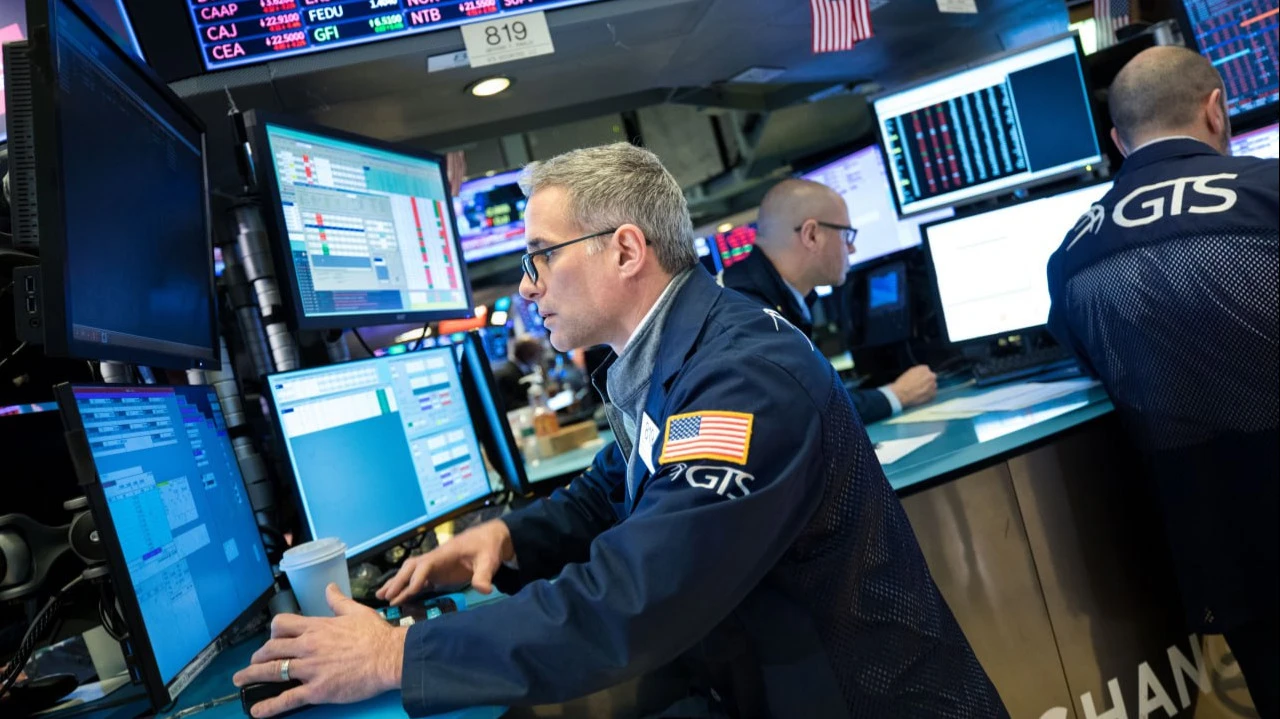
The Dow Jones blue chip index set a new record at the close of trading on Tuesday, November 11, while the Nasdaq Composite remained under pressure. Investors were shifting capital from the technology sector to cheaper segments of the market in hopes that the government pause would end soon, CNBC explained. Pressure on the Nasdaq also intensified after the publication of the ADP report, indicating further weakening of the labor market.
Details
- The Dow Jones Industrial Average rose by 1.18% or 559 points on November 11, closing at 47,927.96 points - a new record. The absolute maximum was reached on October 29 - 48,040.64 points. The index rose on Tuesday due to the fact that investors bought securities of various "blue chips", including securities of Merck, Amgen and Johnson & Johnson, noted CNBC.
- The S&P 500 broad market index added 0.21% to 6,846.61 points on Tuesday.
- The Nasdaq Composite index of technology stocks fell 0.25% amid investors' profit-taking on AI companies, CNBC reported.
- Shares of AI power provider CoreWeave plunged 16.3% after the release of its third-quarter report. Nvidia shares lost 3% after the news that Japanese conglomerate SoftBank sold all of its shares in the chipmaker for $5.8 billion. Shares of Micron (-4.8%), Oracle (-2%) and Palantir (-1.4%) also fell. Nasdaq was in the minus by 1% relative to the beginning of November - the worst dynamics among the indices, notes CNBC.
- At the same time, shares of delivery service FedEx, which Bloomberg called an indicator of the health of the U.S. economy, rose more than 5%. FedEx predicted that its profit will increase in the current quarter compared to the same period last year.
What drove the market
The stock recovery was helped by investors' hopes that the longest government shutdown in U.S. history will soon end, Bloomberg writes. Senators on the night of November 11 approved a compromise budget bill, now it will have to be voted on in the House of Representatives and get the signature of President Donald Trump.
Investors are hoping that after the government reopens, data on the state of the economy will be released to help anticipate the position of the Federal Reserve, which will have to make an interest rate decision in December, the agency said.
The negative sentiment reflected in the decline in the Nasdaq Composite was due to the ADP report showing a slowdown in job gains for the four weeks that ended Oct. 25, CNBC noted. The data presented points to some weakness in the labor market, the channel added.
What the analysts are saying
- "We are buyers on the downturn and maintain our tactical bullish outlook. The most important catalyst in the near term will be the government reopening, which will confirm GDP forecasts for the current quarter, but could also lead to an influx of liquidity into the market, which typically supports equities," JPMorgan Market Intelligence analysts led by Andrew Tyler wrote in a Bloomberg note.
- "Technology companies are cash flow machines. They're terrific, but the starting point matters, and given what they're valued at today, it doesn't take much - a little bit of bad news - for the mood to shift slightly and a situation that's more favorable for 'value stocks,'" said Logan Capital Management portfolio manager Bill Fitzpatrick, who was quoted by CNBC.
- "The overall trend remains positive. New records [indices] before the end of the year are definitely likely, especially if the Fed lowers [the rate] in December and takes a more dovish stance," said Navellier & Associates investment director Louis Navellier, as quoted by Bloomberg.
- "Policy easing by the Fed, strong corporate earnings and robust AI spending have acted as market movers and in our view they doddle to continue to support the equity rally," Ulrike Hoffman-Burchardy, investment director for UBS Global Wealth Management's U.S. markets, told Bloomberg.
This article was AI-translated and verified by a human editor