"The Fear Asset: why did Larry Fink dramatically change his mind about bitcoin?
The head of the world's largest investment firm used to call cryptocurrency a "money laundering index" but now sees it as a huge potential for application
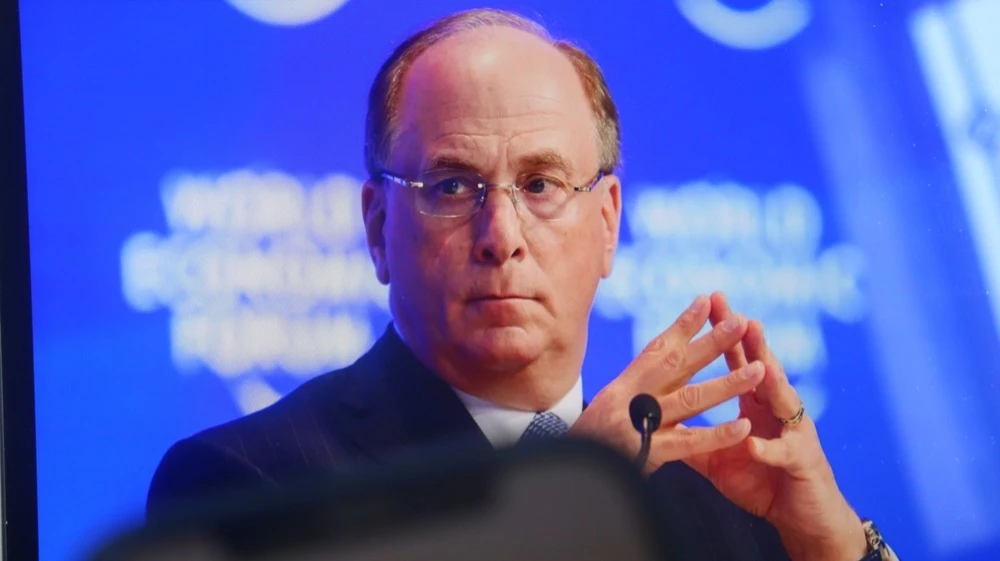
Larry Fink, CEO of BlackRock, the world's largest investment company, spoke at the DealBook Summit about how he sees the digital future of markets. Fink went from complete denial of cryptocurrency to the launch of the bitcoin-ETF and now speaks of asset tokenization as the inevitable future of the market. At the same time, he believes that the US is moving too slowly in this area and risks ceding technological leadership to emerging economies. Oninvest lists the key points of Fink's speech.
From laundering to ETFs
In 2017, I said that cryptocurrency is an index of money laundering. Laundering and stealing. Now BlackRock has a bitcoin-ETF (in January 2024 the company launched iShares Bitcoin Trust (IBIT) - Oninvest).
We need to evolve and change. During the pandemic, with more free time and no more traveling around the world, I decided to talk to advocates of this technology. I wanted to understand: What am I missing? Where did this belief in me come from, what was it based on? And by checking myself - as I do in many other matters - somewhere between 2021 and 2022, I started to revise my views. I now see bitcoin as having huge potential for application.
I meet with thousands of clients a year, I talk to leaders, we have discussions, and my thinking is constantly evolving. And this case is a very clear, public example of a fundamental change in my thinking.
About Buffett and bitcoin
Warren Buffett and Charlie Munger called bitcoin "rat poison" and said it would eventually drop to zero. But I think there's no chance of that happening. Right now, I don't believe it will happen.
There's pure psychology at work here: we're all getting older, we grew up in certain environments, and we're shaped by our experiences. And I think Charlie and Warren were shaped by the era of total American supremacy. The dollar was everything, and the very thought of questioning it was unacceptable. And now we live in a world where democracies are trying to figure out how to curb budget deficits. And bitcoin has become a kind of new digital gold. People are turning to it in times of uncertainty. So it's hard for that generation to accept the concept of a world that is becoming more decentralized and internet-based.
About fear
The $13.5 trillion that BlackRock manages on behalf of its clients is, in essence, hope management. Period. Why would anyone invest with a 30-year horizon if there is no hope that the compound interest effect will work in 30 years?
Bitcoin, on the other hand, is an asset of fear. And when the fear level goes down... for example, when there was a trade agreement with China, we saw a decline. Now there is talk of a possible settlement in Ukraine - bitcoin is down again.
You hold bitcoin because you fear for your physical safety. You hold it because you fear for your financial security. But the long-term, fundamental reason to own it is because of asset depreciation due to budget deficits. So even last week's movements - and we had a 20-25% drawdown, and this is the third one since IBIT was launched. You see these shifts, and in fact they hardly correlate with the rest of the market.
Bitcoin as insurance
Some may ask whether bitcoin can be considered insurance. If you bought the asset at $125 thousand, and now it costs $90 thousand and something... But here we are talking about a speculative transaction. This is an extremely volatile asset. To make money like this, you need to feel the market perfectly, which most people are not capable of. If you buy it as insurance, then it has a significant impact on your portfolio.
Another major problem with bitcoin is that it is still heavily influenced by leveraged players. We see where the capital flows are coming from. We are seeing more and more serious investors investing in it, playing only for the upside. There was an article recently about an endowment fund acquiring a large stake in IBIT. But I can tell you that there are a number of sovereign funds that are still waiting. They build up their positions gradually: they come in at 120 thousand, 100 thousand. I know that they bought at the level of 80 thousand, and this is normal. They form a long-term position. They own such an asset for years. It is not a quick deal, it is a holding with a certain purpose. However, the market is highly skewed because of the large amount of borrowed funds, and that is why volatility will be higher here.
On what will change finances forever
There is a lot of talk right now about artificial intelligence and how it will reshape the world. But not enough is being said about how technology will change the financial services industry and the need to democratize investing in America.
There is a darkness of intermediaries in the financial services industry. We have protracted settlement times, protracted processes. Imagine if we could digitize every asset? If we could digitize every stock and bond and make the transition from a digital wallet of cash or stablecoins to stocks or bonds virtually seamless? This would reduce "friction" costs, transaction costs, and allow for much freer movement of capital.
Right now, $4.1 trillion is sitting in digital wallets around the world, mostly in stablecoins. And today, if the owners of these funds want to invest in bonds, stocks or real estate, they have to withdraw money from the digital wallet into the traditional banking system, paying all these fees, charges and so on. The very idea of tokenizing all assets - including, eventually, real estate - is precisely to remove these huge friction costs and make investing easier.
But so far, we're late on this one. As a country, we're late. India and Brazil are ahead of us. And the foundation of U.S. success has largely been the role of capital markets. But now in Brazil and India, we're seeing a complete transformation of the digital economy - they've digitized their currencies. And my concern is that we're not moving fast enough. If we don't invest faster - in AI, in digitalization, in tokenization - other countries are going to get ahead of us.
About the AI bubble
I've talked to a lot of hyperscaler executives.... They are not sure whether they are now spending too much or not enough, but one thing is certain: most hyperscalers do not have enough computing power.
The demand is huge. Perhaps the payback period for deploying this infrastructure will lag behind their investment criteria, but they have no doubt that the demand will be there. We are in for some tremendous winners and some tremendous failures. And that leads us to the so-called "K-shaped" economy.
This article was AI-translated and verified by a human editor