The Russian Federation has been added to the EU blacklist on money laundering. This will affect not only Russians
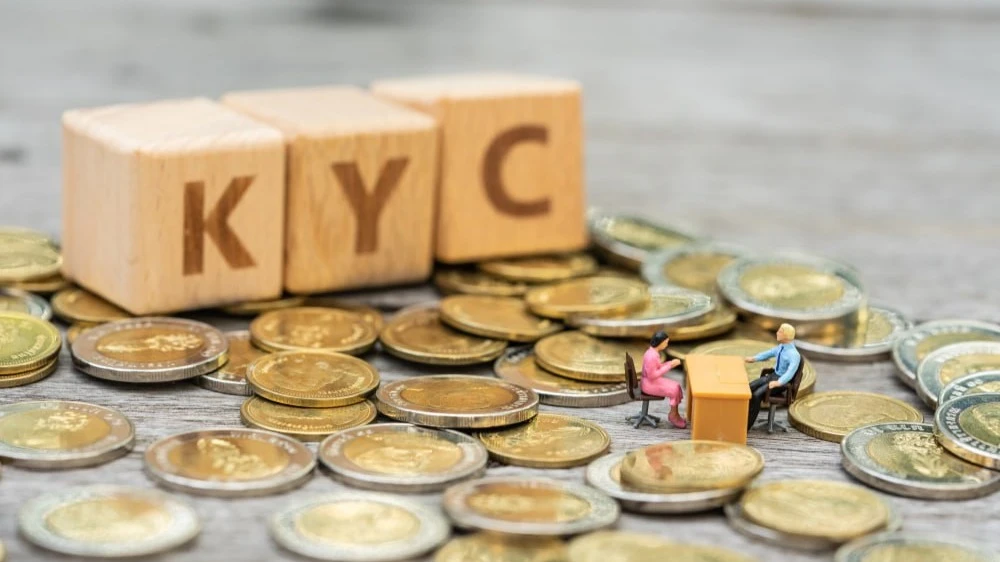
The European Commission has announced that it has included Russia in the list of high-risk countries in the field of anti-money laundering and countering the financing of terrorism. This is like a "black mark": European banks, brokers and other financial organizations will be obliged to intensify their scrutiny of any transactions involving this country. What will be the consequences of this decision?
What's wrong?
On December 3, the European Commission announced the inclusion of Russia in the list of high-risk countries with "strategic deficiencies in anti-money laundering and countering the financing of terrorism" (AML/CFT) systems. The decision will come into force in a month if there are no objections from the European Parliament and the European Council.
This event was expected: back in the summer, the European Commission pledged to complete an assessment of the AML/CFT systems of states whose membership in FATF (an intergovernmental group that develops standards for combating money laundering and terrorist financing) had been suspended by the end of 2025. And here is the outcome of this audit.
FATF suspended Russia's membership in February 2023 for "gross violations of its obligations of international cooperation and mutual respect," condemning Russia's military actions in Ukraine. FATF has its own list of high-risk countries. Its "black" list includes the DPRK, Myanmar, and Iran. The "gray" list includes 20 more countries. But Russia is not on any of them.
Interestingly, Europe has so far followed FATF's decisions in adding a country to and removing it from its high-risk list. For example, Panama dropped from the EU list only two years after being delisted by FATF, says Maria Cook, partner at FTL Advisers. And the UAE - a year later. In the case of Russia, this pattern was broken for the first time: the EU added it to its blacklist before the FATF did.
The European list of countries with high AML/CFT risks as of August 2025 (date of the last update) includes 29 countries. These include not only Afghanistan and the DPRK, for example, but also Monaco. The list is divided into three groups depending on the readiness of the governments of the countries to cooperate with FATF. Formally, all groups are subject to the same requirements, but in practice the level of caution in relation to different categories may differ.
Legalized overcompliance
The FATF and EU list of high-risk AML/CFT jurisdictions is used by banks and financial institutions, Main Partner Trust experts explain. If a country is included in such a list, the operations of its citizens are scrutinized particularly carefully, and the clients themselves are assigned a higher risk level.
"Whereas previously such checks could be qualified as 'overcompliance', this will now become a legitimate basic minimum. The European Commission's decision strengthens controls rather than introducing something fundamentally new. But it makes the system mandatory and more universal for all EU financial institutions," says Maria Cook.
Formally, banks and financial organizations of the 27 EU member states, as well as Iceland, Liechtenstein and Norway, will be obliged to conduct such checks on Russians. In reality, the "geography" may be wider: countries that apply or integrate EU directives, such as Switzerland, San Marino, Andorra, as well as companies with holding structures and headquarters in the EU or correspondent accounts in EU banks, Cook said.
"The EU blacklist may also be used by third-country banks that have correspondent accounts in euros, suggests Roman Kuzmin, counselor at the Pen&Paper Bar Association. They may impose increased checks on any transactions related to Russia.
That is, difficulties may arise for anyone who is somehow connected with Russia - doing business, receiving income, employing Russians or trying to sell property in Russia.
It's complicated
De facto, Russian citizens in Europe have long been categorized as high-risk: even with a passport or residence permit, it is extremely difficult to open an account in a European bank, and banks conduct enhanced checks on all clients with Russian connections or the source of origin of funds, Main Partner Trust experts say. This decision will rather confirm the already established practice of compliance checks of Russians in EU banks, they conclude.
The sanctions have already made it difficult for Russians to use financial services in the EU, and account closures and denials of service occurred even before Russia was blacklisted by the EU, agrees Gleb Boyko, a lawyer in NSP's sanctions practice.
But financial advisor Natalia Smirnova believes that it will now become more difficult for Russians even with a European residence permit or permanent residence permit to open personal and company accounts in European banks. Existing clients may face the need to explain the nature of their transactions more often and in more detail, including those outside the EU. They will be denied crediting funds from the Russian Federation more often.
According to her, the sale of an apartment or securities will no longer be considered sufficient justification for the origin of the funds; the bank or broker will dig deeper. For example, if you sold an apartment that you had previously bought "for a salary in Sberbank," Smirnova writes, this is a sub-sanctioned source, even if the transaction took place before the bank was hit by sanctions. Another example: withdrawal of funds from a brokerage account, if the source of replenishment of this account - income from individual entrepreneurship in the field of IT-consulting. In the EU, this is a sanctioned type of service for business in the Russian Federation.
"As recent measures to strengthen control over Russians' accounts by Revolut and Wise show, financial institutions are taking a cautious approach to transactions with Russians, so mass account closures by European banks and brokers cannot be ruled out," Roman Kuzmin suggests. Real estate transactions will also be complicated by increased scrutiny by notaries and banks, he adds.
Russians may face greater difficulties than they do now in transferring salaries to EU accounts and cards and sending money to relatives in Russia. In cross-border transfers, delays, document requests and refusals will become "the new normal," and correspondent banks will avoid participating in transactions where Russia is the end or starting point in order to reduce their own risk, Cook continues.
In her opinion, it will also become more difficult to conduct transactions on the cryptocurrency market: regulated exchanges will be more careful to ensure that cryptocurrency is not obtained from sanctioned sources, and may even refuse to serve Russians.
What's next?
Most likely, the European Commission's decision will come into force in a month: there is no need to expect objections from parliamentarians or the European Council, all lawyers interviewed by Oninvest are confident. The Commission took this decision after a long evaluation according to the established rules, and objections usually arise when a country wants to be removed from the list.
Finally, Russia has suspended the exchange of financial information with other countries, allowed legal entities to conceal information about their beneficiaries, and reduced international AML/CFT cooperation. This only complicates possible exclusion from the blacklist, Kuzmin adds.
The question remains whether FATF will include Russia in the "gray" or "black" list. This will be decided by all member countries of the group at a general meeting. FATF has states that previously opposed the inclusion of Russia in the "black" or "gray" lists: China, India, Saudi Arabia and South Africa, says Roman Kuzmin.
If FATF does make such a decision, it will have a greater effect: the compliance requirements for transactions with the "Russian element" will increase worldwide, Maria Cook believes.
Although FATF recommendations are not mandatory, their requirements are taken into account both by the group's member states and financial institutions around the world.
This article was AI-translated and verified by a human editor