The S&P 500 hit a record for the second day in a row. And for the first time since 2014 - on Christmas Eve


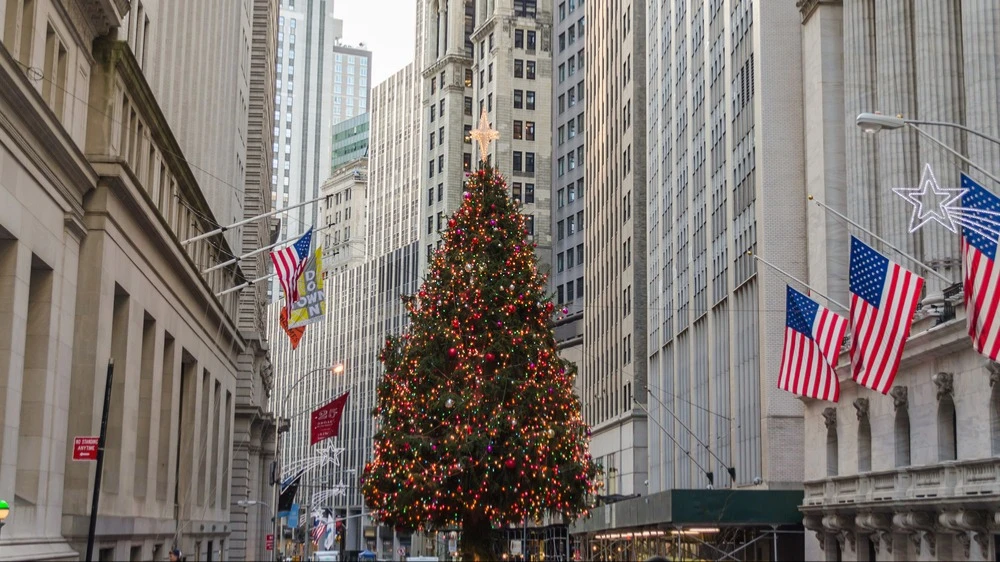
The S&P 500 index on December 24, during the shortened trading session, set a new record - both for all-time highs during trading and at the close. The historical maximum on that day was not updated for 11 years. Before the Christmas break, all four major U.S. indices rose, perhaps beginning a "Santa Claus rally." December 26 is also historically a good day for stocks.
Details
- The S&P 500 broad market index rose 0.32% to 6932.05 points. This was a new closing high, and during the day the index reached a new all-time record of 6937.32 points. The last time the S&P 500 set an intraday record on Christmas Eve in 2014, noted MarketWatch with reference to Dow Jones Market Data. The record at the close was the 39th for the index this year, the publication said.
- The Dow Jones Industrial Average blue-chip index added 0.6% to 48,731.16. That's also a record at the close - already the 19th for the index this year, MarketWatch says. The Dow Jones was boosted by Nike shares, which rose 4.6% after news that Apple CEO Tim Cook bought them for nearly $3 million.
- The Nasdaq Composite Technology Index jumped 0.22% to 23,613.3 points. The sector continues to recover after the recent correction.
- Platinum hit a record amid tight supply and historically high borrowing costs, Bloomberg writes.
What's driving the market
Investors are hoping for a "Santa Claus rally," which typically occurs during the last five trading sessions of the outgoing year and the first two in the new year, Bloomberg says. Historically, the day after Christmas - Dec. 26 - has been positive for stocks, MarketWatch wrote, citing analysis by Bespoke Investment Group. Since 1953, the market has been open 39 times on that day and has declined on only six occasions, never losing more than 0.5%, Bespoke found.
"We believe investors should be positioned for further equity market advancement. We maintain our attractive rating for U.S. securities. We see attractive opportunities in technology, healthcare, utilities, and financials, which should broaden the base for future growth," Ulrike Hoffmann-Burhardi, UBS Global Wealth Management's chief investment officer for the Americas, said in a Bloomberg statement.
Traders are hoping for two quarter percentage point interest rate cuts by the U.S. Federal Reserve in 2026, Bloomberg writes. "We now expect two rate cuts next year, probably in the first half. And, if unemployment doesn't soar, a steady economy, cooling inflation and looser [monetary] policy should support risk assets next year," Principal Asset Management market strategist Magdalena Ocampo believes (quoted by Bloomberg).
This article was AI-translated and verified by a human editor