The Vatican has launched Catholic indices for Europe and the US. Which stocks are included in them?
The move coincided with a period of significant outflows from ESG funds

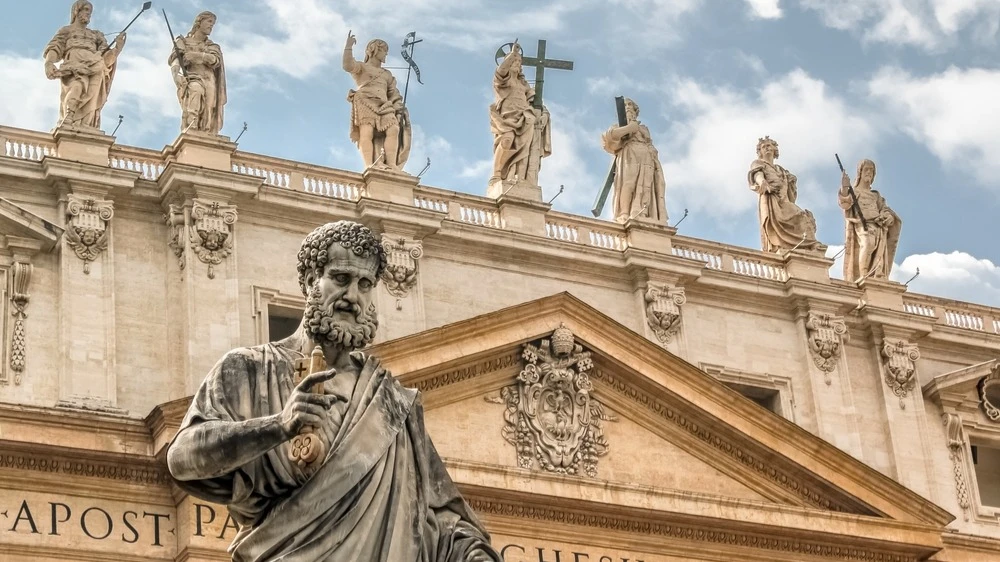
Vatican Bank launches two Catholic stock indexes / Photo: Shutterstock.com
The Vatican Bank has announced the launch of two stock indices formed according to Catholic values, in partnership with the Morningstar rating agency. They include 50 stocks each traded in the eurozone and the United States.
Details
The new indices are named Morningstar IOR US Catholic Principles and Morningstar IOR Eurozone Catholic Principles. Each of them includes shares of 50 companies of medium and large capitalization, whose activities are in line with Catholic teaching on ethics of life, social responsibility and environmental protection, Reuters writes with reference to the Vatican Bank (official name - Institute of Religious Affairs, IOR).
The largest positions in the European Catholic index were held by ASML (6.16% of the portfolio), Deutsche Telekom (5.07%), SAP (3.96%), Banco Santander (3.88%) and Hermes (3.82%). Technology giants Meta Platforms (5.31%), Amazon (5.22%), Nvidia (5.09%), Tesla (4.84%) and Apple (4.62%) rounded out the top five of the US benchmark.
Context
The project was a continuation of efforts to repair the Vatican Bank's reputation, which has suffered in past decades from allegations of corruption, embezzlement, money laundering and other crimes. Pope Francis, who died in 2025, instituted a series of reforms to address these problems, Reuters notes.
The launch comes at a time when the ESG investment market is experiencing a capital outflow crisis. The year 2025 marked the first time in history that net outflows from global sustainability funds have been recorded: according to Morningstar, investors withdrew about $84 billion from the sector. Europe, traditionally the engine of the ESG agenda, ended last year with an outflow of $61 billion.
Morningstar attributes the decline in interest in ESG funds in 2025 to heightened geopolitical tensions that have shifted the global focus to defense and economic competitiveness, as well as growing anti-ESG sentiment in the U.S.. Additional barriers were regulatory uncertainty in the EU and the unobvious profitability of ESG strategies.
This article was AI-translated and verified by a human editor