Three challenges for future Apple CEO John Ternus: what to look out for as an investor

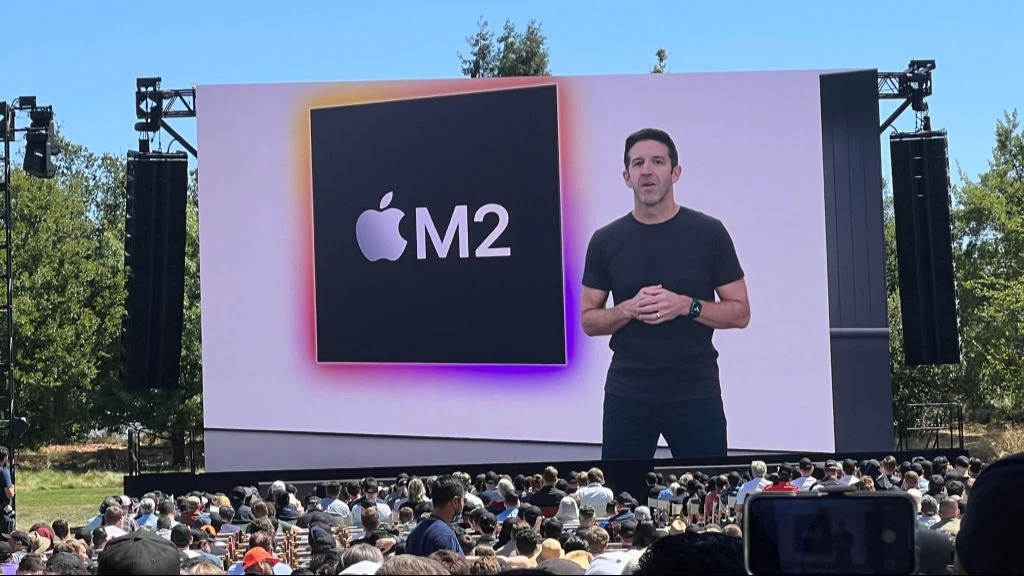
Tim Cook's departure was perceived in the market as a change in Apple's strategy / Photo: Christoph Dernbach/dpa/picture alliance via Getty Images
Apple's senior vice president of computer engineering, John Ternus, will transition to CEO in September. He will succeed the company's most successful CEO in history. What legacy will he inherit and what challenges will he face?
Catch up to AI competitors or drop out of the race
Apple is perceived by the market as a company that has failed to adapt to the AI era. While competitors invest colossal sums in the development of artificial intelligence and regularly announce new AI models, Macs and iPhones offer customers a very limited set of built-in AI functions. To expand them, users have to go to external suppliers: OpenAI, Anthropic, Google.
The problem isn't with the hardware for which Ternus was responsible: the processors he put into production are suitable for AI tasks, and production hasn' t even kept up with demand for the Mac Mini and Mac Studio computers popular for running large language models locally. The AI division's failures cost the post to senior vice president of machine learning John Giannandrea, who finally left the corporation last week.
This year, Apple's AI models will become based on Google's solutions and infrastructure. One of Ternus' challenges is likely to be to regain its technological autonomy in this area. This may require both capital investment (Apple spends many times less on AI than its competitors) and a restructuring of internal processes.
The real test is not a change in leadership, but whether Apple can turn the next wave of devices, software and services into a compelling AI-powered growth story
On the other hand, inertia in this market has not yet prevented Apple from selling its hardware: in January, Apple reported record quarterly sales. Total revenue growth was 16%, and iPhone sales jumped 23%. Buyers don't yet feel they need built-in AI functionality. The lack of major business lines that could be at risk from AI players helps the company be stable in a market feverish over the AI race. Can Ternus turn the abandonment of proprietary models from a failure into a conscious choice for the company?
Reduce iPhone addiction
Last fiscal year, iPhone sales accounted for 50.4% of Apple's revenue; in a traditionally strong first quarter for phone sales, that rose to 59.3%. The new phones are by a margin the corporation's largest source of revenue - and Ternus has successfully led the division that produced them. But some analysts see this dependence as a potential risk to the company's stock.
The second major source of revenue, services, depends heavily on user engagement with Apple's infrastructure. Needham & Company noted back in 2024 that this could make iPhones responsible for more than 90% of revenue.
We are concerned that [Apple - Oninvest note] is an electronics company in an era where the key breakthroughs are in software
The company has been unable to introduce a new product comparable in success to its phones for years. Apple has made no significant progress in virtual reality, automotive, or robotics.
Some insiders, MacRumors wrote, see Ternus as overly cautious and reluctant to commit funds to ambitious projects. This could slow innovation or even give Apple a conservative look against its competitors.
Become Tim Cook.
Cook was hardly known to the market at the time of his appointment as Steve Jobs' successor, but now his reputation among investors is impeccable.
He turned Apple into a structurally different business. Cook's legacy is less about new devices and more about building a services ecosystem around them that became the second largest revenue stream, launching new product categories, and building a supply chain management system around them
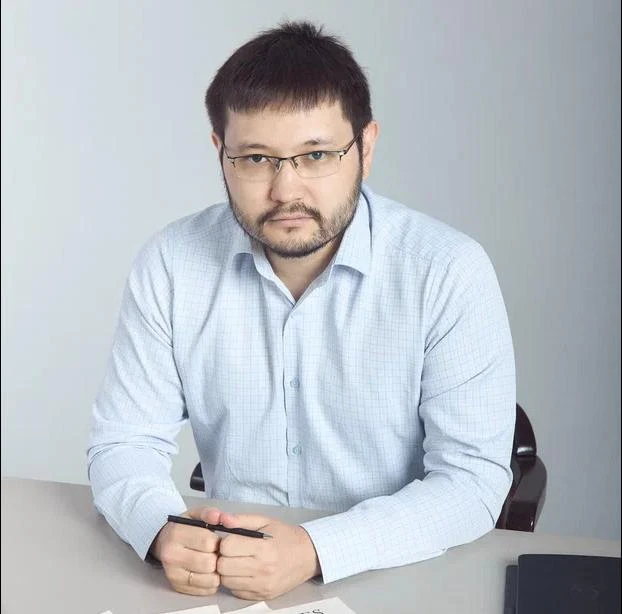
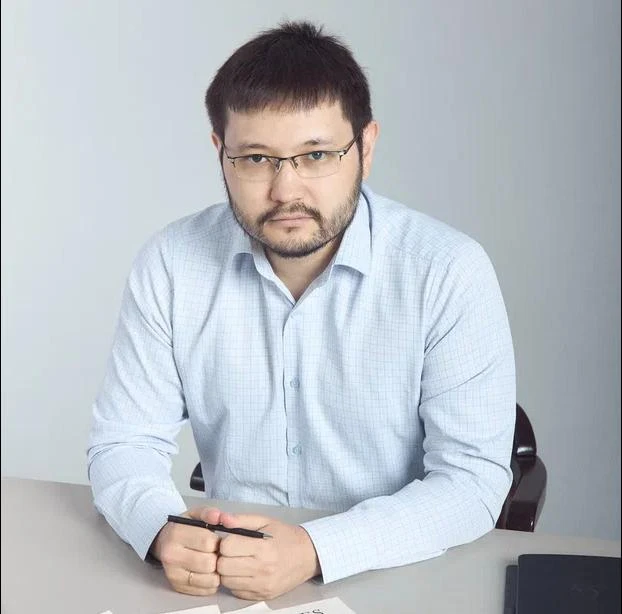
During Cook's tenure at the helm of Apple, the company's stock has returned almost 2000% to investors. The company's capitalization grew from $350 billion to $4 trillion, and revenue nearly quadrupled, including through new markets for apps and watches. Taking the place of such a visionary is an incredibly difficult task, notes Askar Akhmedov, Investment Director at Atlas Capital.
For John Ternus, Tim Cook has set the bar very high. During his leadership, he increased Apple's value many times over. Under his watch, investors valued Apple stock at a marked premium to the market. This was due to Wall Street's tremendous confidence in Cook's flawless execution. Mistakes can shatter that image of reliability.
Beyond market expectations, Ternus inherits unprecedented regulatory pressure. Apple is now at the center of a global lawsuit that could forever change the company's closed business model. In the U.S., the Justice Department is conducting a massive antitrust investigation, accusing the company of stifling competition. In Europe, the Digital Markets Act has already forced Apple to allow third-party app stores and alternative payment systems. The company's legal departments are now working just as hard as its engineering departments to protect the profit base - App Store fees and the integrity of the ecosystem.
Ternus was hired at Apple back in 2001 by Steve Jobs. And unlike Jobs and Cook, he is not yet known as a flamboyant charismatic. Colleagues at Apple unanimously characterize him as a very pleasant person to talk to, a great partner for teamwork and a balanced leader who does not make enemies in the company, describes WSJ. - In meetings, he prefers to speak directly to rank-and-file employees who know the product in detail, rather than to their managers. Will the nice guy charisma be enough to run a corporation of this size? In addition to negotiating with regulators, he will have to deal with foreign policy: Cook negotiated directly with China, smoothing over the tense relationship between Washington and Beijing. China remains Apple's largest production site and its second market - any problematic negotiations will bring serious losses to the company.
The transition is now structured to mitigate risk: Cook, as executive chairman, retains the diplomatic function - the relationship with Beijing and Washington that has been built over the years. For now, Ternus will focus on what he knows best - products and technology.
"It doesn't look like a dramatic change of course, but a disciplined succession," Paolo Pescatore says in a conversation with Oninvest. - Apple is managing one of the biggest leadership shifts in the global tech sector on its own terms."
But this cannot guarantee success either, Askar Akhmedov parries in absentia.
Even the most elaborate transition plans often fail. At Disney, the plan to succeed Bob Iger was prepared very carefully. However, the reign of his successor Bob Chapek failed, and Iger had to return. A similar story happened recently at Starbucks. Handing over management to Laxman Narasimhan - a manager with an impeccable resume from McKinsey - turned out to be a quick and high-profile failure. This proves that neither a perfect resume nor long preparation guarantees success as CEO
What about the stock
Shares were down more than 2.3% the day after news of the power shift at Apple. However, Wall Street is generally optimistic about the reshuffle.
As the market shrinks supplies amid component shortages and inflation, Apple will be able to occupy the vacated consumer electronics segments by attracting new users to its ecosystem
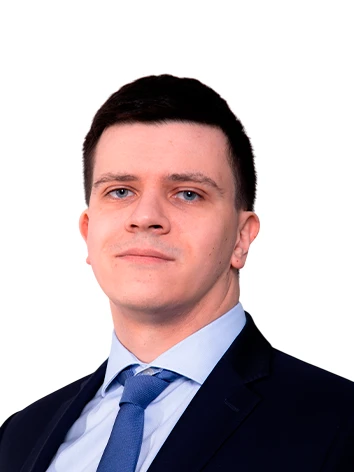
Freedom Broker maintains a Buy recommendation with a target price of $300, this implies an upside of 11%. Dan Ives from Wedbush noted that Turnus will need to move from defense to offense. He maintained an Outperform recommendation on the stock with a target price of $350. J.P. Morgan and Morgan Stanley also maintained an Overweight recommendation. The main challenge John Ternus faces is to get Apple out of the "Magnificent Seven" outsiders. Analysts surveyed by Investors Business Daily predicted Apple's EPS to increase by about 14% this year, while Nvidia's is about 75%.
This article was AI-translated and verified by a human editor