Trillion-dollar startup: fear is behind Anthropic's soaring valuation
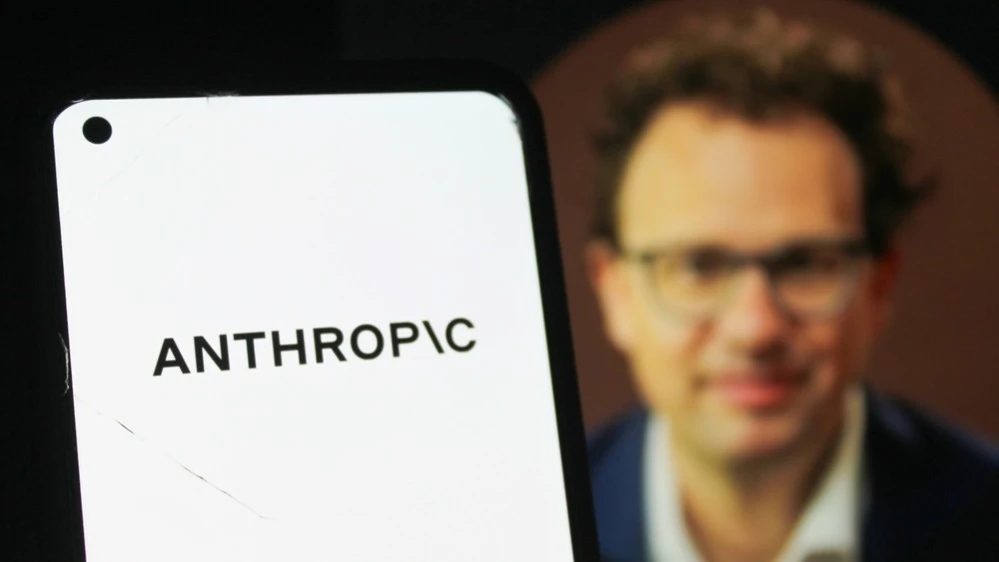
One of Anthropic's early shareholders was willing to sell his stake based on the company's $1.15 trillion valuation. photo: Shutterstock.com
On April 23, the value of Anthropic soared to $1 trillion in OTC trading on Forge Global, exceeding the valuation of its main competitor, OpenAI. In his column for Oninvest, Askar Akhmedov, Investment Director at Atlas Capital, writes how the release of the new Mythos model influenced this development
Race to IPO
The market is preparing for the largest IPOs of technology companies in history. The situation with AI leaders in the secondary market now looks interesting. OpenAI recently raised over $120 billion, and the company is now valued at over $850 billion. Anthropic raised $30 billion at a valuation of $380 billion.
At first glance, it seems that OpenAI is much larger and more successful. However, demand for OpenAI shares on the secondary market is much worse: prices are decreasing, there are simply no purchase orders. At the same time, the demand for Anthropic shares is so high that the company could choose from whom and how much money to borrow. On the secondary market, their shares have shot up rapidly and on platforms such as Forge Global, and the real value of the company is approaching $1 trillion. The conclusion is simple: despite OpenAI's early leadership and huge investments, these two AI giants are now worth about the same before their expected going public at the end of 2026.
Both firms, especially OpenAI, have raised such sums that questions about their survival in the face of huge cash burn are over for years to come. For both AI giants, going public is the inevitable next step. It's likely that even a modest offering would be several times larger than the largest IPOs in history, such as Saudi Aramco ($29.4 billion) and Alibaba ($25 billion). But the timing of the IPO is not predetermined.
What could go wrong
The main risk is the expected IPO of SpaceX, which will be the first to go through. It's possible that demand for SpaceX shares will be low and the deal will fall through, which could spook investors. If market conditions turn bad - due to SpaceX's failure or a general downturn in the stock market - both companies have a backup plan. That's the Gulf Coast sovereign wealth funds, the GCC. I should note that neither OpenAI nor Anthropic took money from these Middle Eastern funds during their most recent fundraisers. This means that if necessary, they can turn to them and postpone going public.
The myth that changed the grade
Some call the main "lure" for investors the companies' latest technologies: Anthropic's closed Mythos model and the OpenAI project codenamed Spud. The Mythos model itself and the way Anthropic announced it hints at a business audience first. First, the enormous cost of training such systems makes it prohibitively expensive for open source (free) model builders to enter the market. Second, by keeping their models closed, both companies close the possibility of distillation, i.e. it is no longer possible to copy their technologies. Instead, they have made the Mythos available only to a "closed club" of large companies. And given the model's cybersecurity capabilities, these companies simply cannot ignore it.
At the same time, some skeptics continue to doubt, saying that Mythos' capabilities are greatly exaggerated. In their opinion, it is just a clever marketing to create hype before the IPO. For example, one user gave the same buggy programs to regular public AI models and asked them to find vulnerabilities, and they were also successful.
But to really appreciate these huge numbers, we need to look at the proven capabilities of Mythos in real-world conditions. The benchmarks are clear: Mythos is head and shoulders above other models. The user test, where public models found bugs in the code, was done unfairly: it directly indicated where to look for vulnerabilities, turning the task into a simple code check. Mythos, on the other hand, worked completely independently. It was launched into huge arrays of code without any hints about whether there were vulnerabilities there at all.
The results startled Anthropic for a reason. Mythos found critical bugs in legacy systems that had been considered reliable for decades. Security experts had overlooked these bugs all along. More importantly, Mythos was able to find and tie together several small, seemingly innocuous weaknesses to create a complex, multi-layered attack.
They are forced to start a race against time to "hack themselves" and fix these hidden vulnerabilities before public models reach the same level. This guarantees Anthropic a huge and constant demand for their computing power. Moreover, this is not a one-off solution. As the next models will find even more complex vulnerabilities, this cycle of constant testing and patching will become a mandatory subscription for any large business.
This technological leap creates a frightening but very lucrative situation for Anthropic. Organizations such as banks, hospitals, and infrastructure companies have been backed into a corner: they will simply have no choice but to buy access to the closed version of Mythos in a hurry - when the company decides to allow a wider selection of people to access it.
Perhaps the strongest evidence that Mythos' capabilities are more than just an advertisement is Anthropic's own response. The company has intentionally degraded the cyber capabilities of its latest public model, Claude 4.7. It began to handle security tasks worse than the previous version, Claude 4.6. By deliberately weakening its public models, Anthropic has made it clear that we may never see such high abilities in public models again.
This article was AI-translated and verified by a human editor