Trump announced Operation Project Liberty in the Strait of Hormuz
US will dispatch merchant ships blocked in Persian Gulf, Trump says. The escort of tankers by US Navy ships is not envisaged, the WSJ found out

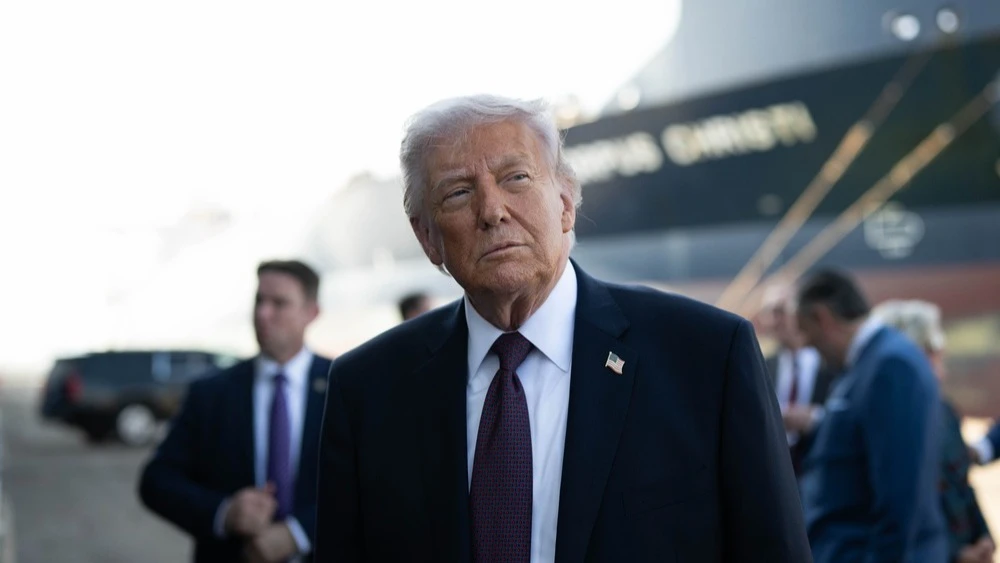
Photo: Rawpixel.com / Shutterstock.com
The U.S. will send neutral merchant ships blocked in the Persian Gulf through the Strait of Hormuz starting Ma. 4, President Donald Trump said on Truth Social.
According to Trump, the operation will be called Project Freedom. He called it a response to requests from countries not involved in the Middle East conflict to help ensure their ships leave through the Strait of Hormuz. Trump said the operation will be humanitarian in nature and is designed to "free people, companies and countries that have done absolutely nothing wrong."
"If in any way this humanitarian process is impeded, unfortunately this interference will have to be dealt with by force," Trump wrote.
The US president also said Washington was engaged in "very positive talks" with Tehran that could lead to "very positive outcomes for everyone", but did not provide details.
At the moment, the initiative does not envision commercial ships being escorted by U.S. Navy ships, a senior source explained to The Wall Street Journal. "Project Liberty" involves the creation of a mechanism for countries, insurance companies and shipping organizations to coordinate the movement of ships through the strait, he said.
How the market reacted
Oil prices reacted to Trump's statement with a decline. In early trading after the weekend, Brent futures for July delivery were down 1.9% to $106.16, while the cost of June WTI crude contracts fell below $100.
U.S. stock index futures for the S&P 500, Nasdaq 100 and Dow Jones Industrial Average added 0.1-0.2 percent.
Context
The Strait of Hormuz, through which about 20% of the world's oil and liquefied natural gas exports passed before the war in the Middle East, was effectively blocked by Iran in response to attacks from the US and Israel. This led to hundreds of tankers, bulk carriers and cargo ships being blocked in the area, Bloomberg writes. For its part, the US imposed a naval blockade on Iranian ports in an effort to limit Iranian oil exports and put pressure on the country's economy.
The blockade of the Strait of Hormuz has caused a sharp rise in global energy prices, with Middle Eastern countries forced to cut oil production due to a lack of storage capacity. The situation is causing serious concern in the White House that Republicans risk defeat in the midterm congressional elections in November due to high gasoline prices, Bloomberg notes.
This article was AI-translated and verified by a human editor