Uber has agreed with Nvidia to create a fleet of 100,000 robotaxis. What about the stock?
Nvidia will also work with electric car brand Lucid on a platform for self-driving cars

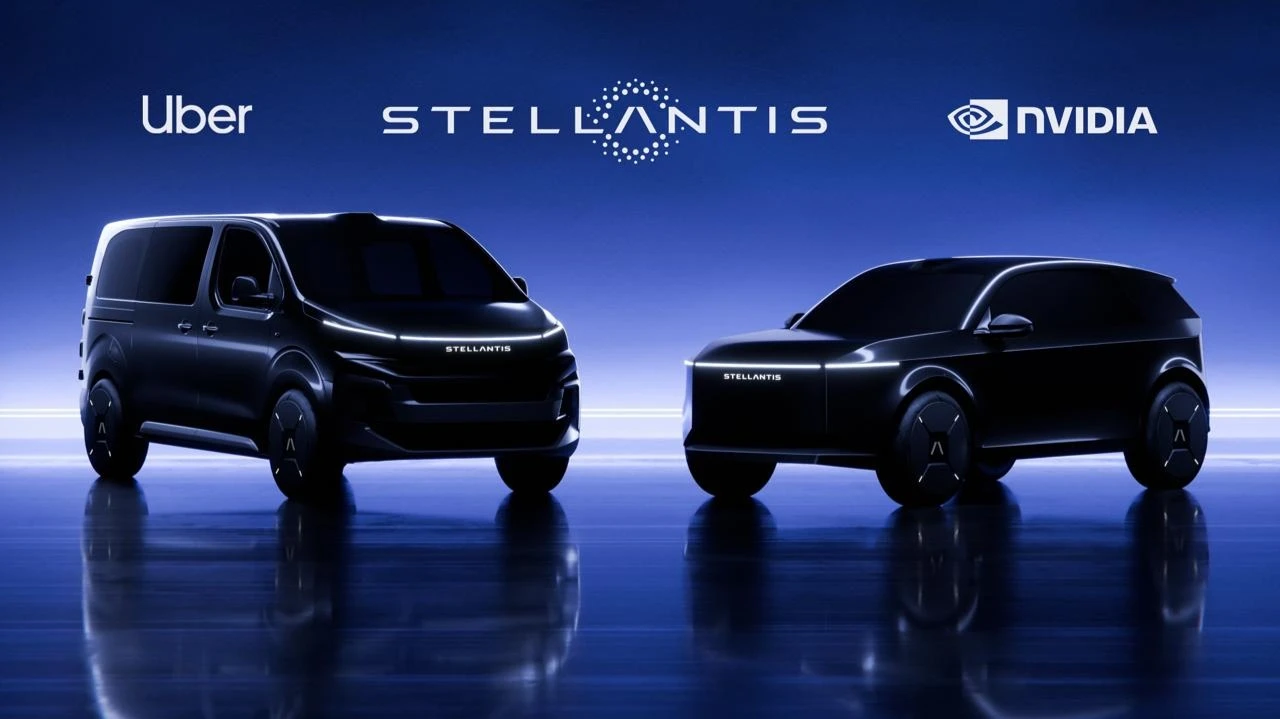
Cab service Uber has agreed a partnership with Nvidia to create a fleet of 100,000 self-driving cars starting in 2027. It's an "ambitious plan" that could lower the cost of robot cab rides in the future, according to Bloomberg. Uber's shares rallied nearly 1.5% in trading on Oct. 28 but then lost ground, while Nvidia's stock soared nearly 6% on the day of its AI conference and set a new record.
Details
Uber is working with Nvidia to "accelerate the development of a new generation of robotaxis and self-driving delivery vehicles" based on the chip maker's AI infrastructure, the cab service said. It plans to greatly expand its fleet of unmanned vehicles as part of the partnership. Nvidia said it will support Uber in expanding its global autonomous fleet to 100,000 vehicles starting in 2027.
European car company Stellantis (Peugeot, Opel and Fiat brands) will be among the manufacturers that will be among the first to supply Uber with at least 5,000 vehicles with Nvidia technology to operate as robot cabs in the United States and abroad. Uber will handle their organization, including remote support, charging, cleaning, maintenance and customer interaction. Stellantis will work with Foxconn on the hardware and systems integration technology for these robotaxis, the auto giant said.
Nvidia said it is partnering with Uber to "scale the largest Level 4 transportation network": this involves a high level of automation without human involvement (only Level 5 is higher, where a self-driving car can drive anywhere under any conditions). "Uber and Nvidia are working together to support the global Level 4 ecosystem - which includes [drone car developers] Aurora, Avride, May Mobility, Momenta, Motional, Nuro, Pony.ai, Waabi, Wayve, and WeRide - to develop autonomous technologies for passenger transportation, freight, and delivery," Uber noted.
Uber and Nvidia will also work together to create a "robotaxi data factory" for the development of autonomous driving technologies.
What does that mean
Uber and Nvidia's stated goals are an "ambitious move" that could help lower the cost of passenger transportation by self-driving cabs, according to Bloomberg. Uber will be able to make more robotaxis available on its platform, which will help cut costs and start making money from this rather expensive technology, the agency noted.
Uber and Nvidia are expanding a partnership that began in January when Uber agreed to share data to improve Nvidia's artificial intelligence models, Bloomberg added. Uber doesn't develop robotaxis on its own: it partners with a dozen other companies operating in that market. For example, it offers rides in self-driving cars in Austin (Texas) and Atlanta (Georgia) with Waymo (a Google subsidiary) and in Abu Dhabi and Saudi Arabia with China's WeRide. However, so far the fleet of self-driving cabs is quite small compared to the millions of cars with drivers in the Uber network, Bloomberg writes.
In September, Uber announced plans to launch its robot cabs in Europe: in 2026, they will take to the roads of Germany, with Munich being the first city. In this market, Uber will use technology from Chinese developer Momenta.
What about the stock
Shares of Uber at the trading on October 28 at the moment rose by 1.4%, but then lost the gained and began to fall in price by about 0.3%. Shares of Nvidia, which runs the GTC AI conference in Washington, D.C., were up nearly 6% at one point to a record $202.72. Nvidia's capitalization has surpassed $4.9 trillion.
Nvidia will also partner with electric car maker Lucid, the latter said Tuesday. The companies will work together to develop the world's first personal car with Level 4 self-driving, Lucid said. Its shares jumped as much as 7.6 percent at one point during trading on Oct. 28, but then also lost all the momentum and went down 0.3 percent.
Uber stock is up 60% since the start of 2025. They have 61 ratings from analysts, with most advising them to buy: 43 Buy ratings and six Overweight ("above market"), MarketWatch shows. The remaining 12 analysts recommend holding the securities (Hold). The average target price of $109.88 implies a 14% increase in quotes compared to the closing level on October 27.
Nvidia's stock has added 51% in value in 2025. They have 66 ratings, of which five are Hold and one is Sell, while the rest are Buy recommendations. The average target price is $223.52, up 17% from the last closing price.
This article was AI-translated and verified by a human editor