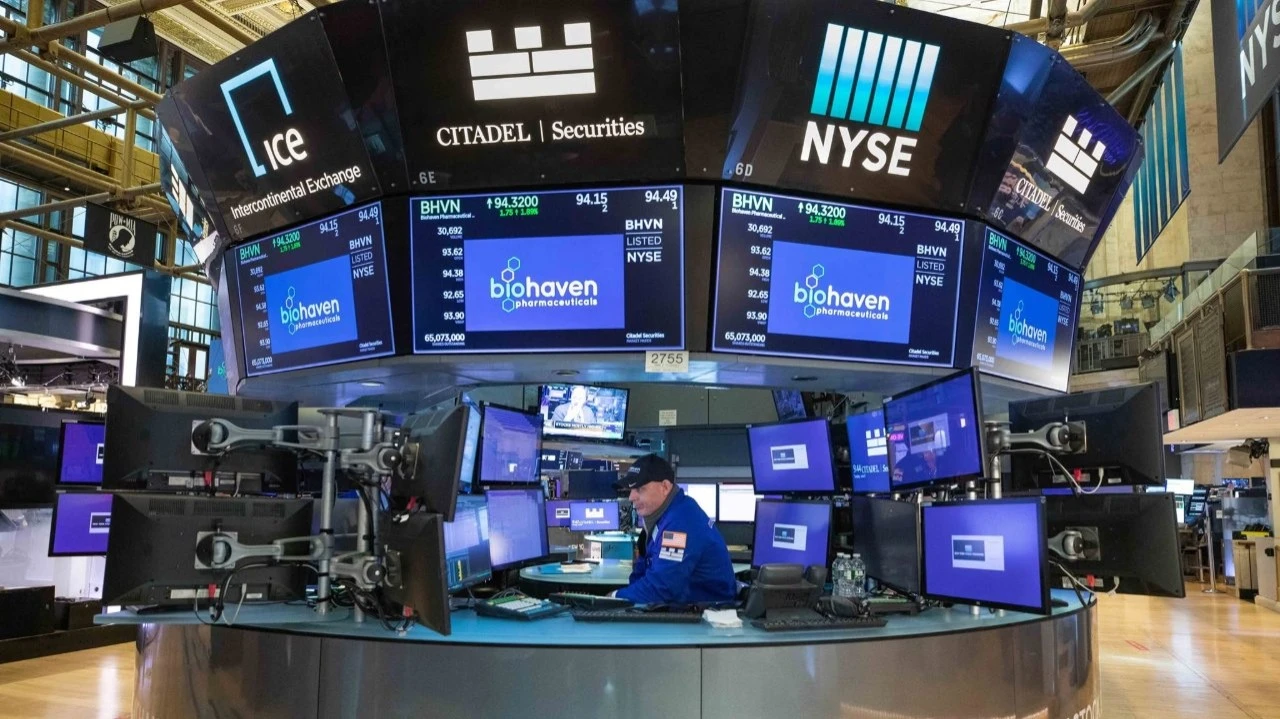
Video game developers have outperformed the S&P 500 index this year. Will the rally continue?

Shares of video game developers have more than doubled this year, outperforming the S&P 500. However, the future of the market will depend on how the industry survives the privatization of one of the largest and most important players in the industry, Electronic Arts.
Details
The Roundhill Video Games ETF outperformed the S&P 500 more than twice as much from the beginning of the year through mid-November, Bloomberg reports. In addition, its performance was better than the total return of the "Magnificent Seven" players, despite the excitement around their projects in the field of artificial intelligence.
The impetus for the rally that remained was given by the pandemic and the lockdowns that followed, as well as the hype around next-gen consoles and the anticipation of the release of the iconic GTA VI in November 2026.
What's next
Further growth of shares of video game developers will depend on how events will develop after the purchase of one of the largest and most important companies in the industry - Electronic Arts, emphasizes Bloomberg. In September it was announced that the company is being bought for $55 billion by some of the world's richest and most famous investors, including the sovereign wealth fund of Saudi Arabia, after which it will become private and its securities will no longer be traded on the stock exchange.
The privatization of Electronic Arts will be a turning point for the entire gaming industry: according to Bloomberg's assessment, it will either prolong the game developer's stock rally or show that their growth is nearing its limit.
What the analysts are saying
"If a major publisher goes private, it signals that strategic and financial buyers see potential that the public market is underestimating," Dave Mazza, CEO of video game fund manager Roundhill Financial, said in a Bloomberg statement. Buying EA, he said, is "a bullish signal overall because it shows how valuable these franchises have become."
However, some analysts fear the gaming stock's rise may be coming to an end. EA's huge valuation masks its real difficulties - staff cuts, weak sales and uncertainty around Donald Trump's duties. An additional risk is the loss of transparency to the market. According to TD Cowen analyst Douglas Kreutz, Wall Street is losing one of the clearest sources of information about the $400 billion video game industry. In a worst-case scenario, he warns, investors might decide, "It's probably better to look at industries where there are more large public companies left."
In addition, when EA will leave the stock exchange, small studios will become more difficult to attract the attention of investors amid rising development costs and the insatiable demand of players, writes Bloomberg, citing the head of the British research firm Pelham Smithers. According to him, the deal will lead to polarization: it will become clear who can withstand the race of budgets, and who is not. Smithers believes EA's record valuation means even more expensive projects ahead, raising the bar for the entire industry. Smaller studios, he predicts, risk losing ground quickly.
Whose stocks to watch out for
Only those studios with either enough money to compete with privatized EA or strong enough creative teams to keep players interested will survive, Bloomberg stresses. According to eToro analyst Lale Akoner, companies with diverse revenue sources are the most resilient - they can more easily survive console generation changes, pauses between releases and changes in player behavior. Their key strategy is to turn popular franchises into "recurring revenue streams" that continue to make money even after players have completed their playthrough. Aconer named Japanese studios Capcom, creator of Monster Hunter: World, and Konami, known for Silent Hill, among her favorites.
Bloomberg also singles out Nintendo, which many cite as a model for its ability to constantly reinvent its franchises. Its bet on expanding its own intellectual property helped the company break records even before the Switch 2 was officially announced - and its stock has since hit all-time highs several times.
This article was AI-translated and verified by a human editor