Volozh's Nebius will buy AI agent search firm Tavily
Nebius will report 4Q and 2026 results on Thursday

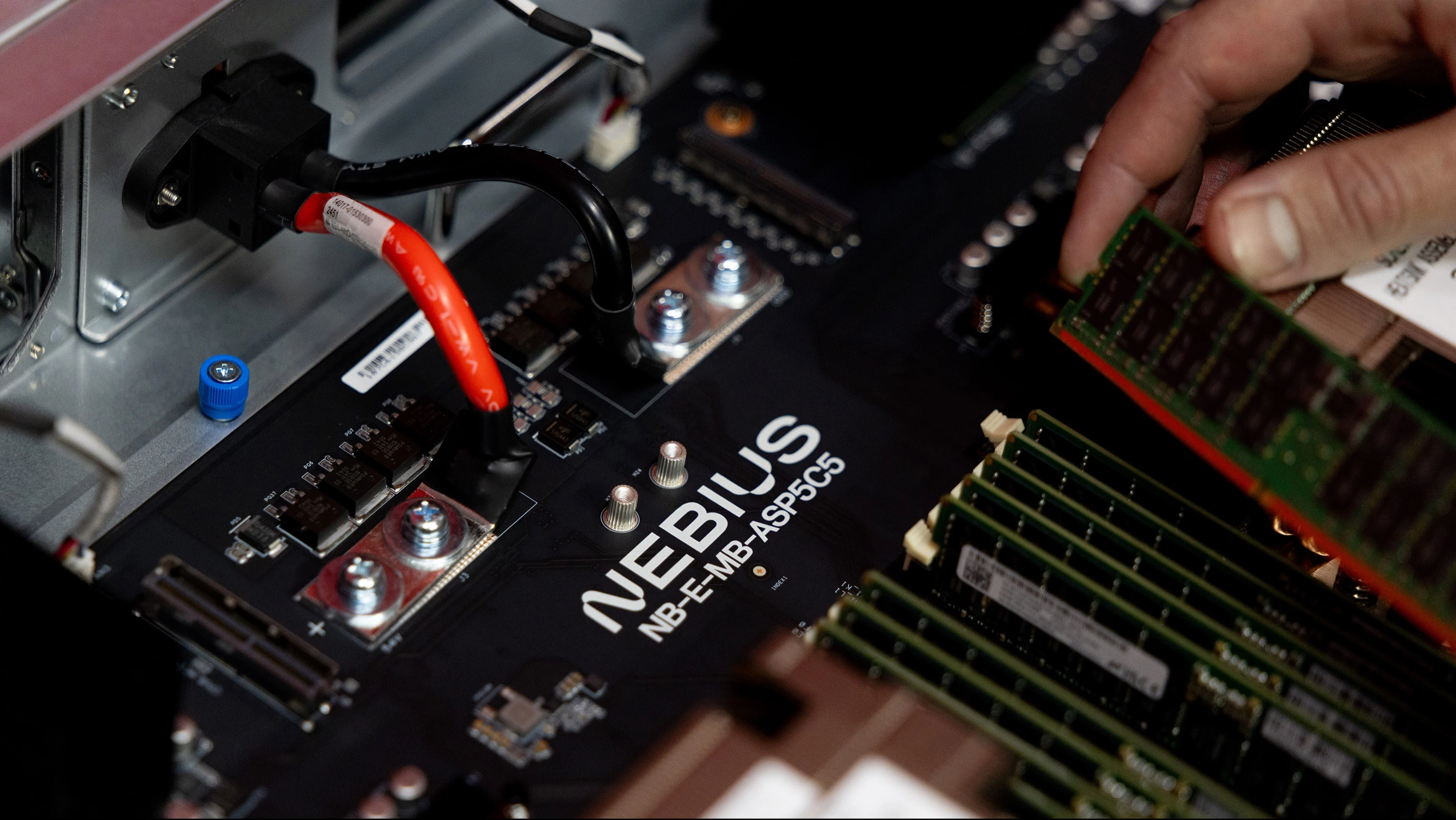
Tavily makes software that helps artificial intelligence agents search for up-to-date information / Photo: Nebius
Cloud provider Nebius Group, founded by Kazakhstan-born entrepreneur and Yandex cofounder Arkady Volozh, has agreed to acquire software developer Tavily, which builds tools that help AI agents find up-to-date information needed to perform tasks such as coding and financial trading. The deal is meant to help Nebius to generate more revenue from customers.
Details
The acquisition of Tavily is part of Nebius’s strategy to build a unified platform on which companies specializing in specific AI applications can develop, tune, and deploy AI agents, Nebius said in a press release. By acquiring Tavily, Nebius is expanding the toolkit it offers to developers building AI agents, the company added. In November, Nebius launched Token Factory, a product that provides access to open-source models and the computing power required to run them: Tavily will complement that product, the statement said.
The companies have not officially disclosed the value or terms of the deal. A Nebius spokesperson declined to comment to Bloomberg on the matter. However, according to a person familiar with the transaction cited by Bloomberg, Nebius will acquire Tavily for $275 million. Tavily founder and CEO Rotem Weiss will join Nebius along with his team. The transaction is expected to close within the next few weeks.
The cloud provider announced the deal two days before publishing its fourth-quarter and full-year results. Nebius shares rose almost 3% during trading on Tuesday, February 10, although the stock was volatile, swinging between gains and losses during the session.
About Tavily
Nebius describes Tavily as a search service for AI agents. Autonomous agents used in areas such as trading, coding, customer service, travel, and other sectors require a new type of software for retrieving information, Nebius cofounder and Chief Business Officer Roman Chernin told Bloomberg. “They behave differently than humans using the web,” Chernin said. “Agents do not want a list of links, and they will likely ask for information many times as they refine prompts. People, in contrast, often give up if they do not get the kind of answer they had hoped for.”
Another challenge is that the large language models (LLMs) underlying AI services often do not contain up-to-date information or access to company-specific data. “LLMs are quite powerful to talk to about different stuff, but then you need to also understand what’s going on in real time,” he said. Tavily develops software designed to provide AI models with niche, specialized, and up-to-date information.
According to Bloomberg, the acquisition also fits Nebius’s goal of expanding the range of services it offers in order to generate more revenue from customers. It is important for Nebius to build a “comprehensive offering,” Chernin said. In many cases, clients can create prototypes of agents and other AI products using LLMs, but additional software tools are required to scale those solutions, he added.
“Tavily is on a mission to onboard the next billion AI agents to the web. Agentic search is a multi-billion-dollar opportunity, and we believe the market is poised to grow exponentially as enterprises deploy autonomous AI systems,” said Weiss.
Last year Tavily raised $25 million in funding from Insight Partners and other investors. Its customers include IBM and Cohere. The company competes with Exa Labs, which is backed by Nvidia, and has offices in New York and Tel Aviv.
Netherlands-based Nebius is among the so-called neocloud providers that specialize in selling computing capacity to customers developing AI products. The company operates data centers in the U.S., Europe, and Israel. Its customers include Microsoft.
What analysts say
Nebius shares are currently trading about 40% below their October 2025 peak. Investor concerns about a potential bubble in the AI market are weighing on the stock, according to Seeking Alpha.
However, most analysts covering Nebius recommend the shares as a "buy," according to MarketWatch data. The stock has eight “buy” ratings and two “overweight” ratings, versus two “hold” ratings and one “underweight” rating. Wall Street’s consensus target price is $152.90 per share, which is 64% above the closing price on Monday, February 9.
