Wendy's stock is down 50% in LTM. Can Nelson Peltz right the ship?

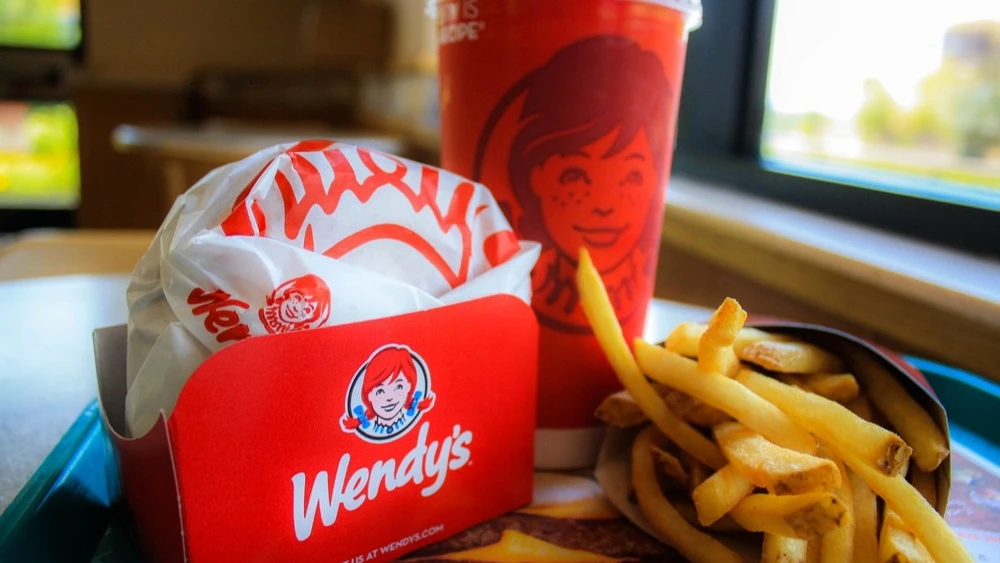
Wendy's stock is down 12% since the start of 2026 and 50% over the last 12 months / Photo: Peach13615 / Shutterstock.com
Wendy’s is the second-largest burger chain in the U.S. by sales, trailing only McDonald's. Yet the company, which has been in business for more than five decades, is going through a rough patch. Over the last year, its shares have roughly halved in value, sales and profits have declined, and pressure from shareholders is mounting – including from activist Nelson Peltz, the former chair of Wendy’s board.
Last week, Peltz’s fund, Trian Fund Management – which owns roughly 16% of Wendy’s – launched a strategic review of its investment and outlined potential steps to unlock additional shareholder value.
Below we look at what led Wendy’s to its current troubles, how the company plans to address them, and what Wall Street analysts say about the prospects for a turnaround.
Company beginnings
Wendy’s now operates more than 7,000 restaurants worldwide, while its market capitalization has fallen to less than $1.5 billion. The company’s history began with a single restaurant in Columbus, Ohio, opened in 1969 by entrepreneur Dave Thomas. Thomas, who grew up in foster care, began working in the restaurant industry at an early age and later helped develop the Kentucky Fried Chicken franchise in Columbus. The logo of the new chain was modeled after his daughter – a smiling red-haired girl whose nickname, Wendy, ultimately became the company’s name.
The restaurant attracted customers with its square hamburger patties and the slogan “Wendy's doesn't cut corners.” The business expanded rapidly. By 1972, the company had begun franchising, and in 1976 it went public on the Nasdaq, selling a million shares at $28 apiece. Within less than a decade, the chain had surpassed 1,000 restaurants, and Thomas eventually stepped back from day-to-day management.
'Where's the beef?'
Part of Wendy’s growth was driven by memorable advertising campaigns. One of them featured an elderly woman peering into a big hamburger with a tiny patty and asking the question that became a cultural catchphrase: "where's the beef?" The campaign became a nationwide sensation in the mid-1980s. According to Forbes, Wendy’s global revenue rose 31% in 1985 to $945 million. But such success could not be sustained.
“By the late 1980s, Wendy's, a victim of its own rapid expansion, a saturated fast-food market, and intense competition, was slumping badly,” wrote United Press International. In 1989, the company launched a new campaign featuring its founder. Thomas became the friendly face of the brand, building trust with consumers, and ultimately appeared in more than 800 commercials before his death in 2002.
Expansion
In the early 1990s, Wendy’s was expanding rapidly. In 1993, profit reached $78 million – the fourth consecutive year of earnings growth above 20%. Seeking fur expansion, the company acquired Canadian coffee-and-doughnut chain Tim Hortons in 1995 in a deal valued at about $400 million. “The move was seen by many as the most successful acquisition in restaurant industry history,” wrote Nation's Restaurant News.
By the late 1990s, however, Wendy’s market position began to deteriorate. In 1998, the company reported $73 million in restructuring losses after closing underperforming operations, including salad bars that had once been a hallmark of the chain. Several factors converged: the absence of key executives, tensions within the management team, intensifying competition from McDonald's, and pressure from activist investors. One of those investors was Nelson Peltz. His firm, Trian Fund Management, first bought Wendy’s shares in 2005. Peltz pushed for several strategic changes, including the 2006 spin-off of Tim Hortons.
Wendy's and Peltz
In 2008, Triarc Companies, which owned Arby's, another fast-food chain, known for its roast-beef sandwiches, merged with Wendy’s in an all-stock transaction that created Wendy’s/Arby’s Group. The deal was valued at about $2.5 billion and was intended to strengthen the company’s market position and deliver cost savings through synergies. The alliance ultimately failed, however. In 2011, Wendy’s/Arby’s Group sold most of Arby’s to Roark Capital Group in a deal valued at roughly $430 million. After the sale, the company returned to its current name, Wendy’s.
Peltz stepped down as chair of the board in September 2024 after 17 years in the role. In February this year, it emerged that he was considering a full buyout of the company, arguing that Wendy’s shares are undervalued. The Wendy’s board has stated it is prepared to evaluate a proposal. Peltz now holds a 16.24% stake in the company, while Trian Fund Management owns 7.85%.
Wendy's stock as an investment
Wendy’s is currently facing tough challenges. Global chain-wide sales fell 3.5% in 2025, while adjusted earnings declined 12%. The company plans to close 5-6% of its roughly 6,000 U.S. restaurants to improve performance, writes the Wall Street Journal. Another element of the turnaround plan is cutting back breakfast service at locations where it is not profitable. The management is also trying to win back customers. In the fourth quarter, the company conducted research to better understand how they perceive the brand and what motivates them to visit its restaurants. The findings suggest Wendy’s needs to emphasize consistently affordable prices rather than rely on limited-time promotions. CEO Ken Cook said "we swung the pendulum too far toward limited-time price promotions instead of everyday value."
What analysts say
Wendy’s quarterly and annual results, released in February, did little to reassure markets. Wendy’s reported weak fourth-quarter results in absolute terms, although EBITDA and EPS were closer to the upper end of guidance. The EBITDA guidance for 2026 – down 8-12% – was worse than expected, as Deutsche Bank noted in a February report seen by Oninvest. Deutsche Bank lowered its target price from $10 per share to $8 per share and maintained a “hold” rating.
Evercore ISI highlighted a realistic growth plan developed with Greg Creed, the former head of Yum! Brands and Taco Bell. It expects same-store sales momentum and cash flow to turn positive in the second half of the year. Evercore ISI lowered its target price from $9 per share to $8 per share and maintained a neutral rating. Morgan Stanley maintained its “underweight” rating and reduced its target price from $8 per share to $7 per share.
BMO Capital Markets wrote that the company plans to introduce new menu items and shift away from aggressive promotional discounts toward permanent low-price offerings. BMO lowered its target price from $11 per share to $9 per share and maintained a “market perform” rating.
UBS says Wendy’s shares appear cheap relative to the cash flow the company generates, and that rising sales and restaurant expansion could increase the company’s valuation. UBS also cut its target price from $8.50 per share to $7.50 per share while maintaining a “hold” rating.
Wendy’s shares are down 12% year to date and about 50% over the last 12 months. According to MarketWatch data, 20 Wall Street analysts rate the stock “hold,” while five recommend “buy” or "overweight" and five “sell” or "underweight." The average target price is $8.07 per share, implying about 7.6% upside.