Will Britain's new defense strategy bring a victory for its economy

The UK in early June announced the strongest increase in military spending since the end of the Cold War. This was in response to regular and persistent U.S. calls for Europe to take more responsibility for its security. But money fetishism in defense matters can serve a bad service: it is important not just to spend money, but to build a combat-ready army;
What the UK's new military strategy entails
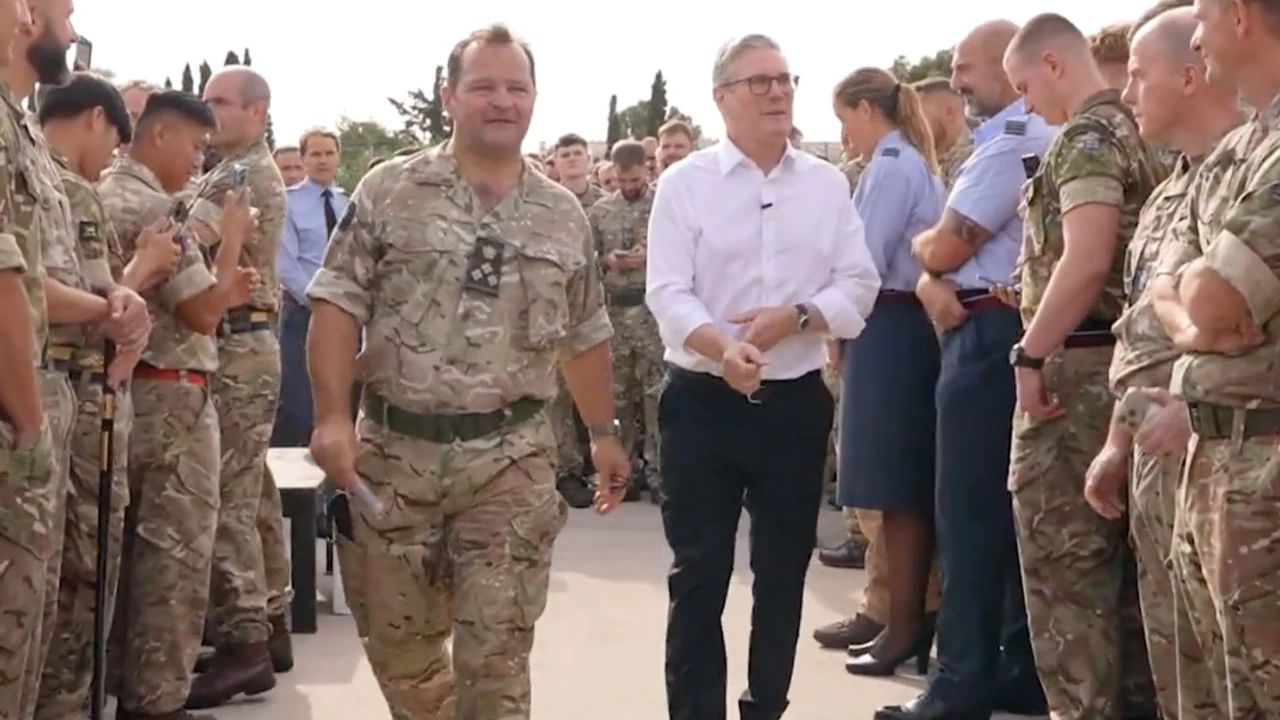
Britain's new military spending is oriented toward changes in military technology, especially in drones and data sharing. This will be investment in communications and digital networks to enable decision-making in war, rather than trying to re-recruit a large army equipped with tanks and guns. The decision to "end the devastation of our armed forces" was made by Prime Minister Keir Starmer following the publication of a Strategic Defense Review created on his behalf.
The review sends a clear signal that military procurement will grow and defense companies can invest in new capabilities and technology development, pleased BAE Systems, Britain's largest defense company with 107,400 employees. Its stock price has risen more than tripled (shares Babcock and Rolls Royce are also rising on news of increased defense spending).
Over the next four years, the state will spend $20 billion to replace warheads in the nuclear fleet (which is Britain's only way to deliver nuclear weapons) and build 12 attack submarines. The nuclear force gets 20% of military spending. More than $8 billion will be spent on building six munitions factories and buying 7,000 British-made long-range weapons. New communications systems are planned to be put into production, and $2.7 billion will be invested in drone production.
The plan calls for investment in space research and technology: about 20 percent of British GDP now depends on satellite-related services, including financial transactions, navigation and emergency services. However, the current budget underfunds some personnel costs, noted Malcolm Chalmers of The Royal United Services Institute. Because of this, spending increases may go toward "plugging holes" rather than achieving new goals. The military spending budget includes, for example, about $2 billion to provide military housing.
NATO's demands are growing
In the 1960s, during the Cold War, the United Kingdom spent 6-7% of GDP on defense. Now its military spending is low even by European standards: 2.3% of GDP. In 2027, they should reach 2.5% of GDP (an increase of $6.6 billion). The UK will finance this increase by reducing aid to poor countries.
NATO is now discussing the need to spend 3% of GDP on defense, and U.S. President Donald Trump is demanding an increase to 5% of GDP. As NATO Secretary General Mark Rutte explained, NATO should spend 3.5 percent of GDP on defense and an additional 1.5 percent on related purposes, including cybersecurity, railways, ports and other infrastructure;
If NATO countries don't increase military spending, the United States, threatened by Trump, may leave the organization to avoid maintaining it at its own expense. Some countries manipulate military statistics by achieving military targets through related spending. Others (Poland, Germany, France) substantially increase military spending. NATO set its previous military spending target of 2 percent of GDP in 2014, but so far not all members of the military alliance have reached it.
Contrary to persistent questions, Starmer did not clearly state when Britain's military spending would reach 3% of GDP, but said it would happen under the next parliament, between 2029 and 2034. Britain may have to raise military spending to 3.5 percent of GDP by 2035, $41 billion a year above the current plan.
A plan with no guarantees
Britain's military budget has been shrinking in previous years. Its army, the seventh largest in NATO, now has only 137,000 soldiers (in 2010 it had 192,000). This is fewer than at any time since the Napoleonic Wars (in 1952, the British army reached 871,700). Together with service personnel, the total number of navy, air and ground forces decreased from 221,000 to 182,000 since 2012, and Starmer's plan does not envision a strong increase in personnel in the coming years.
It's not just soldiers who are in short supply. The British army has extremely low ammunition reserves: in the event of a high-intensity conflict, they would be exhausted in countless weeks. The number of Royal Air Force aircraft has decreased by 22% to 564 since 2016. And both aircraft carriers have serious technical problems, lacking sailors for crew and aircraft.
The main problem with Starmer's plan: it's unclear how it will be funded. Especially in a situation of very sluggish economic growth (and stagnation in steel, chemicals, automobiles), increasing budget deficits, increasing national debt, and poor demographics. Increasing defense spending can be done by raising taxes or cutting other budget spending, notes Paul Johnson, director of the Institute for Fiscal Studies.
The government's promise to bring military spending to 3% of GDP is not backed by financial guarantees. If total budget expenditures grow by 1.2% per year and health and social spending grows by an average of 3.4% per year, to bring military spending to 3% of GDP in 2029-2030, all other expenditures would have to be reduced by 1.8% per year. This can only be avoided by slowing the rate of growth in social and medical spending.
Starmer wants to portray the increases in military spending as a plan that creates wealth and jobs. But don't expect them to raise budget revenues enough to fund all of the increase in defense spending. Military spending may contribute to economic growth, but civilian spending is more effective at creating productive and sustainable jobs.
There are many opponents of increased military spending in Britain. Military spending is characterized by inefficiency and corruption, and the cost of military projects multiplies during their implementation, writes Karen Bell, a professor at the University of Glasgow who focuses on social and environmental justice. The government risks repeating past mistakes by embarking on large-scale, expensive projects that waste resources and fail to meet objectives, Bell says;
Indeed, the much-delayed construction of new Astute-class nuclear-powered submarines has increased in cost by a factor of 2.8, from £4.3 billion ($5.8 billion) to £12.2 billion ($16.5 billion). Aircraft carriers are overly expensive to produce and operate, and are designed to be deployed in the Pacific and Indian Oceans. But Britain is no longer the "ruler of the seas" but a medium-sized country in Europe, and the primary task now is to ensure the defense of Europe.
Instead of the military, Prof. Bell suggests increasing spending on education, health care, and fighting warming, since Britain does not face military threats now. The authors of an alternative review of military spending add to this list spending on aid to poor countries.
As is often the case with European officials, their words are more formidable than their deeds. New submarines will be built no sooner than in 10 years. How long new weapons factories will be built is unknown. Under Starmer, military spending will not reach 3% of GDP. Meanwhile, the capabilities of the British war machine may be needed sooner.
The number of threats is growing, there is no answer
Money is not the only problem with the British defense plan. Modern military threats are often complex, involving cybersecurity, media, Internet infrastructure, energy, etc. The British military recognizes these threats and paints a picture of a total war that could involve the country. The British military is aware of these threats and paints a picture of an all-out war in which the country could be drawn. But so far they have no plan on how to counter possible threats on all fronts;
Britain's Strategic Defense Review is largely motivated by growing American isolationism, but Trump's name is not mentioned in it. If the new US foreign policy is for the long haul, Europe can rely less and less on the American military umbrella. This is a challenge the UK has not yet thought through;
In the coming years, European NATO countries will have to shoulder an increasing burden to ensure their security. There will be a price to pay for a more self-reliant and combat-ready Europe. But money alone is not enough - complex political decisions and long-term industrial commitments are also needed;
Complexity instead of simple solutions
Digital fetishism doesn't win wars. The desire to measure military spending as a percentage of GDP is a longstanding spectator sport in NATO, ironically Matthew Saville, an analyst at The Royal United Services Institute for Defense and Security Studies.
But spending any amount of money does not guarantee success. "The current focus on spending percentages as a measure of political virility risks obscuring the fact that NATO and Europe need a robust military capable of fighting, winning and deterring adversaries from wanting to use force," Saville writes. - Achieving 2.5 percent, 3 percent, or any other suspiciously round figure taken from the ceiling should not be an end in itself."
Spending half as much on defense as a percentage of GDP as it did in the 1980s, Britain nevertheless spends as much in real terms (adjusted for inflation) as it did 40 years ago, Savile calculated.
Recalculation of expenditures as a percentage of GDP makes it possible to "weigh" government priorities and different types of expenditures in terms of their importance for the state. For example, to compare the weight of defense and infrastructure spending. But such math will not help calculate how much should be spent on military expenditures and what goals should be achieved. These are questions that Britain's military strategy does not answer.
Military procurement in Britain is low-competitive, with a narrow range of large suppliers, and takes too long. About 37% of army procurement comes from 10 suppliers, and 40% of contracts are non-competitive. About 15% of contracts ($6.2 billion over 2022-2023) are awarded to BAE Systems, of which 86% are non-competitive.
Since the end of the Cold War, the military industries of Britain and other NATO countries have increasingly favored technical excellence, losing out on scale and cheapness. But modern wars are won by scale: you need more soldiers, shells, drones, etc. to win. If you have the best tanks, but 10 times fewer than your opponent, you lose. Especially if you produce tanks of 7-8 different models.
The Western defense industry clearly prefers technological complexity to scalability. As a result, for example, the U.S. stockpile of anti-ship missiles in the event of a conflict with China in the Pacific would be used up in a week, and it would take years to replenish them. The Pentagon's high demands on drones have almost doubled their cost. The high cost reduces the number of weapons that industry can produce and the Army can procure. Suppliers, who are guaranteed a fixed profit, do not try to reduce costs.
Poor scalability of solutions is a big problem for the British military industry as well, which can make weapons well but not in sufficient quantities. No country, including Britain, can buy expensive military equipment in large quantities without incurring bankruptcy. Preparing for wars therefore requires not only innovation, but simple scalable solutions. For this, the market of all NATO countries must become complementary and competitive.