X-Energy IPO: shares of the energy company with Amazon investment started trading
Nuclear energy company raises more than $1 billion in initial public offering

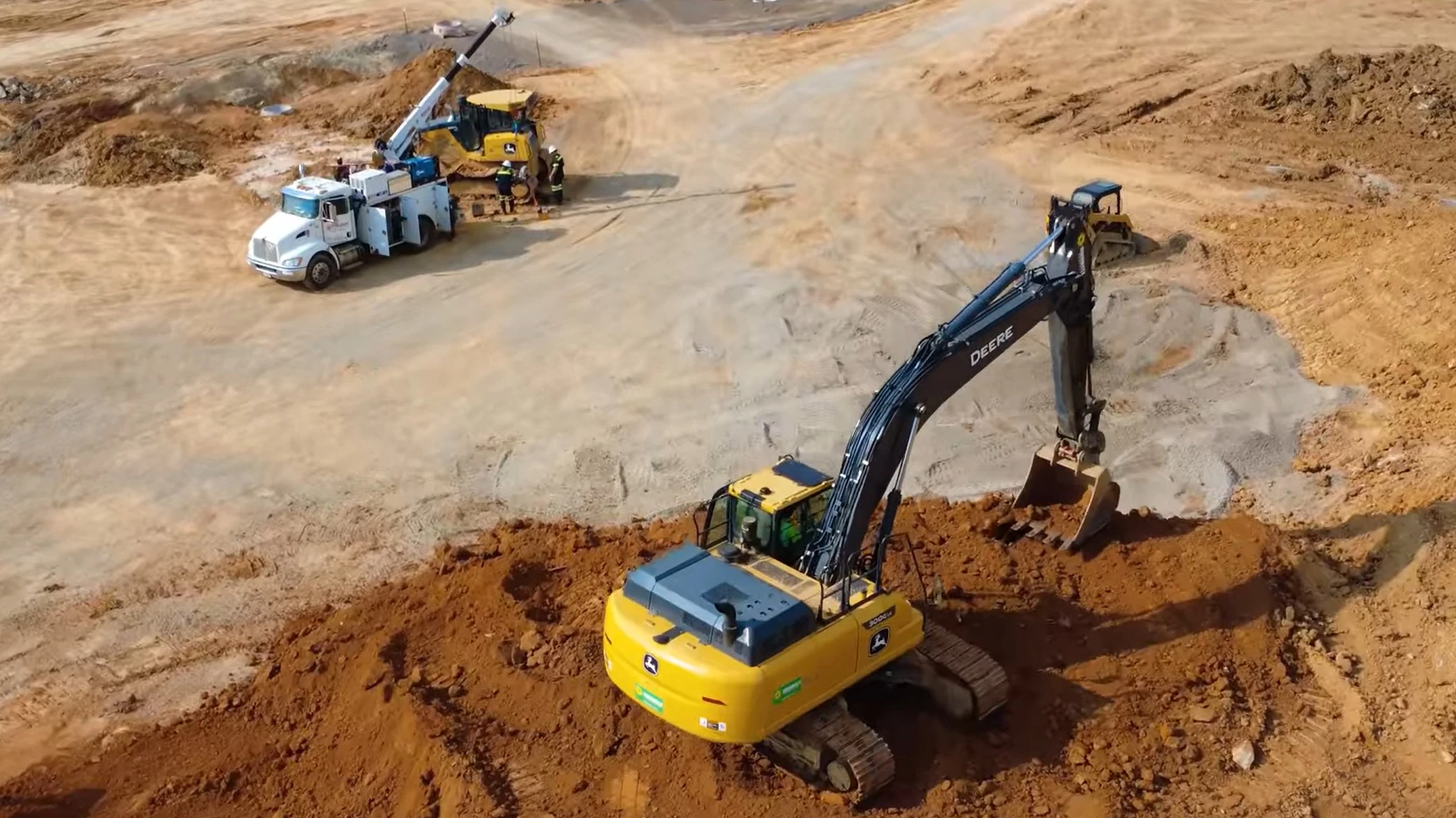
Shares of X-Energy, which is building a small modular reactor, began trading / Photo: YouTube screenshot / X-Energy
Preliminary trading in shares of small nuclear reactor developer X-Energy, whose investors include tech giant Amazon, has begun on the Freedom client trading system. The company's securities will appear on the Nasdaq exchange under the ticker XE later on April 24. To participate, click on the ticker XE.
Details
X-Energy, a developer of small nuclear reactors, raised $1.02 billion in an IPO on the Nasdaq exchange. It placed 44.3 million shares at $23 per paper, well above the previously announced range ($16-19). Based on the listing parameters, the value of the entire company can be estimated at $9.1 billion, Bloomberg calculated.
The underwriters of the X-Energy IPO were J.P. Morgan, Morgan Stanley, Jefferies, Moelis & Co., Cantor, UBS Investment Bank, TD Cowen Securities, Guggenheim Securities, Wolfe, and Nomura Alliance. The underwriters were granted a 30-day option to purchase up to 6.6 million additional shares at the initial public offering price.
ARK Investment Management's Cathie Wood and affiliates have expressed interest in acquiring up to $105 million worth of X-Energy shares in the offering, Reuters wrote.
The small reactor developer plans to use the proceeds from the deal for working capital and other corporate purposes, such as research and development, according to the company's IPO prospectus, which it filed with the U.S. Securities and Exchange Commission (SEC).
What investors need to know about the company
X-Energy was founded in 2009 by Iranian-born American businessman Kamal (Kam) Ghaffarian to bring clean, safe, reliable and affordable technologies to the market, the company wrote in a prospectus.
The list of companies founded by Ghaffarian looks like something out of the pages of a science fiction novel, Forbes said. Axiom Space is building the world's first commercial space station in partnership with NASA and developing spacesuits for the next generation of astronauts. Intuitive Machines is developing lunar rovers and providing other companies with space services such as navigation. Quantum Space is building a space "superhighway" so that spacecraft can refuel and travel between Earth and the Moon.
All of these companies have a common goal, the entrepreneur told Forbes, "We need to become a multi-planetary species and be able to go to other stars. But until then, we only have one home, right? - he said and added with a laugh, "In short, [we need to] take care of our existing home and find a new one.
X-Energy is building a small modular reactor. Nuclear power is experiencing a renaissance driven by a surge in electricity demand due to the growing needs of AI applications, Reuters writes. The agency cites a Morgan Stanley forecast that global electricity demand will grow by more than 1 trillion kWh per year through 2030, with data centers accounting for nearly 20% of that growth.
Unlike full-scale reactors, which often take decades to build, small modular reactors are more compact and cost-effective, Reuters notes. The company already has publicly traded competitors in this area, including Nano Nuclear, NuScale Energy and Oklo. The latter's investors include OpenAI founder Sam Altman.
For 2025, X-Energy reported a 9 percent drop in revenue and grant income, to $109 million, and a net loss of $389.8 million, compared to nearly $126 million a year earlier.
X-Energy has not yet received approval from the Nuclear Regulatory Commission to build its reactor, but in February 2026 the regulator granted the company a license to produce nuclear fuel for advanced reactors at a facility in Tennessee, writes the Financial Times (FT).
X-Energy had already planned to go public in 2023 through a reverse merger with a SPAC company, but then backed out, citing difficult market conditions, Reuters notes.
However, this did not diminish investor interest. In October 2024, the company held a $500 million funding round led by Amazon, TechCrunch writes. The tech giant also pledged to purchase up to 5 gigawatts of nuclear power from the company by 2039. The new round, last November, included Cathie Wood's ARK Invest, Jane Street and XTX Ventures, among others, the FT adds.
What the analysts are saying
X-Energy's IPO comes as Wall Street prepares for a series of potentially large equity offerings, including Elon Musk's SpaceX, writes the FT.
"We've seen the IPO window close before, so when companies see an opportunity [to go public], they take it," Renaissance Capital senior strategist Ma Kennedy told Reuters.
Freedom Finance analyst Alem Bektemirov names the Xe-100 small modular high-temperature gas-cooled modular reactor (the company has been working on its development for almost a decade, the expert points out) as one of X-Energy's main products. The Xe-100 is designed to generate 80 MW of electricity or 200 MW of thermal power, and the company has three customers - Dow, Amazon and Centrica - that X-Energy expects to deploy the first batches of Xe-100. The project is now in what's known as the preliminary design phase - the second of three typical engineering design phases, Bektemirov says. If the timeline for construction and commercial launches of the reactors slows down, it will have a negative impact on the company's revenue, he notes. Freedom Finance analysts' target price for X-Energy's securities - $24.5 apiece - implies they are up 6% relative to their offering price.
X-Energy itself cites the need for capital to further develop the reactor, which may require new issues of securities, as one of the main risks to its business. The company also depends on the cost of raw materials. For example, its reactor uses helium instead of water as a coolant, which is the industry standard, the Financial Times reports. However, the closure of the Strait of Hormuz due to escalating conflict in the Middle East has seriously disrupted helium supplies, leading to higher commercial prices, the publication notes. It cites a forecast by Fitch analysts, according to which spot helium prices could rise by 50-200% in the face of a serious shortage.
TechCrunch in turn points out that the road to new power plants becoming profitable could be a long one, as it usually takes about a decade to get mass production up and running.
_______________________________
Freedom clients will be able to get access to X-Energy shares before the opening of the main exchange session. Trading will begin in the early pre-market format 2-3 hours before the U.S. exchanges open (from 15:30-16:30 Astana time). To participate, click on ticker XE.
