$1 trillion loss in a day on fear: How market discipline saves money


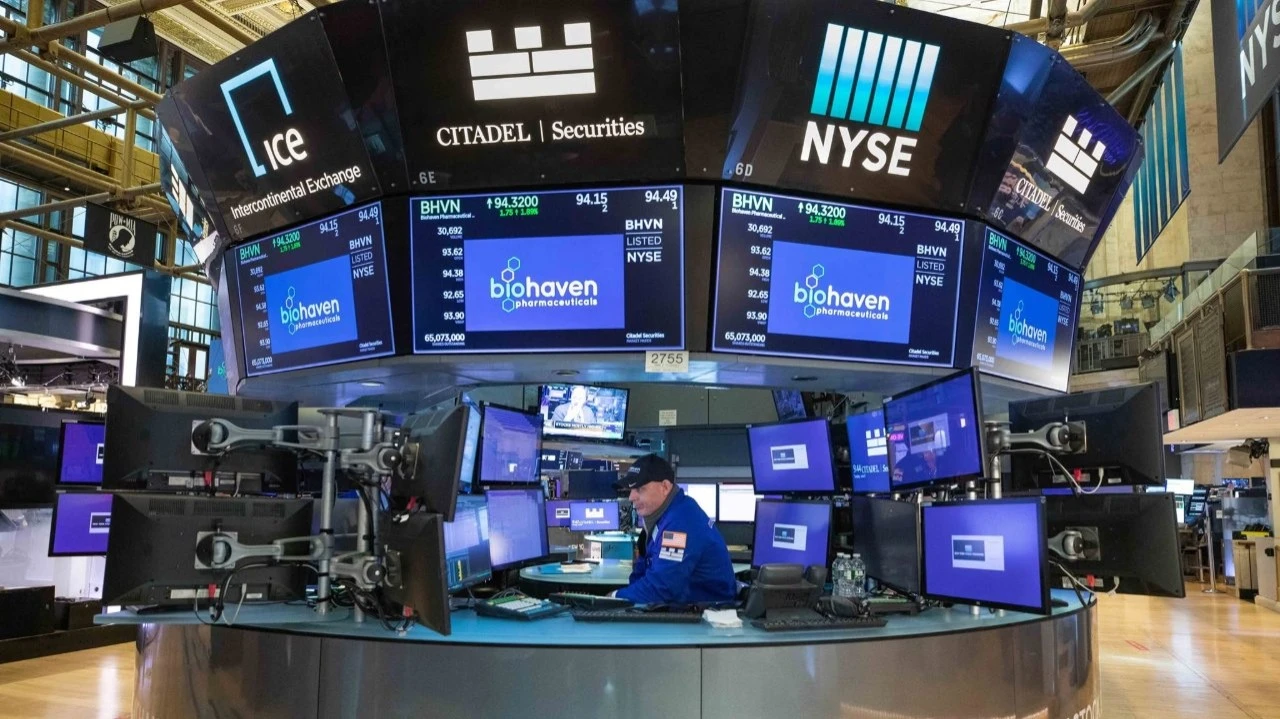
The VIX fear index fluctuated in a 19% range this week, first rising to 20.1 points as it approached the edge of the stress zone, and then falling about 16%. Investors were reacting not to objective macroeconomic data but to Donald Trump's plans for Greenland - as a result, U.S. stocks lost more than $1 trillion on Tuesday. In such an environment, reactive decisions can lead to financial losses. Why discipline and system help an investor to act more effectively than intuition and quick analytics - explains psychologist Mikhail Tegin.
The architecture of tranquility
What is a strategy really? It's not just a set of "buy here for N, sell there for N+1" conditions. From a psychological perspective, a strategy is an external skeleton or cognitive crutch for the will that keeps you from collapsing when emotions kick in.
Think back to the movie "The Downgrade." Michael Burry didn't just "guess" the mortgage market crash. He had a rigid mathematical model and strategy from which he never wavered, even when investors threatened to sue him and the market went against him for months. His strategy was his refuge from the collective insanity.
Having a system radically changes the consciousness and therefore the decision-making process. When you have a clear algorithm, you shift the responsibility from the "present self", impulsive and frightened, to the "past self", calm and analytical, who wrote the algorithm. This reduces the level of cognitive load. According to research on cognitive behavioral therapy (CBT), having a clear plan of action in situations of uncertainty reduces levels of the stress hormone cortisol and prevents decision-making paralysis.
Paradox of Choice or Decision Paralysis - a condition where an overabundance of options or overanalyzing a situation puts a person in a stupor and they end up choosing nothing or making a deliberately bad decision.
In practice, this condition manifests itself in the fact that you spend hours choosing between two virtually identical assets, wasting time and energy, which are more expensive than the difference in, for example, withdrawal fees from trading platforms. More often paralysis is prone to "maximizers" - people who strive to make only the ideal, the most correct, the best decision.
What works more effectively over the long haul
Intuition is fine, it's an experience that is recorded in the subcortex. But the market is filled with uncertainty and therefore too volatile for pure intuition. The problem is also that our gut feeling is often a common cognitive distortion (we've written about some of these here and here). We are prone to confirmation bias - we pick and choose facts that fit well with our existing opinion and justify our desire to buy "this good stock". In doing so, we ignore everything that other facts say.
Discipline is the ability to do what you need to do when you don't really want to. From the point of view of psychoanalysis, discipline is the transition from the "pleasure principle" - I want to earn right here and now - to the "reality principle": I will earn in time, and it is unlikely to be billions. This is, in essence, the maturation of the investor.
Mental accounting
People without rigid money management rules tend to make irrational mistakes simply because of the way they subjectively categorize their funds by type. The concept of mental accounting - mental bookkeeping - was formulated by Nobel laureate Richard Thaler. Its essence is that our brain refuses to recognize all money as the same. From a mathematical point of view, $1000 earned by hard work and $1000 received as a dividend or "gift" are absolutely identical. But psychologically, we put them in different "wallets." According to Thaler, if you make a quick profit on a trade, you tend to risk that money much more boldly than you do your fixed capital, you treat it like a casino win. This is called the House Money Effect - investors don't treat it as a personal asset and often end up "over-sitting" on risky assets, losing not only profits but also the body of the deposit,
On the other hand, a person ignores the fungibility of his money (Fungibility). He can keep $100,000 in a savings account at 10%, afraid to touch it, for example, saving it for a rainy day, and still have credit card debt for the same amount at 30%. In his mind, these are different accounts, although rationally they are a net loss.
Finally: the third effect is cognitive blinders. We evaluate each trade in a separate cognitive "file". For example, an investor may be upset about losing $500 on one stock and close it in a panic, not noticing that his total portfolio grew by $50,000 that day.
Thaler concluded that when there is no system, algorithm or strategy, the brain manages money based on the way it is received rather than logic.
The art of waiting
Investing is all about watching what happens and how it happens, which is why the "slowest" investors often end up the richest. Because they have the patience to let the mathematical expectation work out.
Patience is not just a tempered expectation or the ability to bear uncertainty or pain. It's also a skill, and it can be practiced. In a world of instant notifications and trading apps, this is increasingly difficult to do. Planning acts as insurance here. If you prescribe in advance what to do when an asset drops 10%, 20% or 50%, you take the element of surprise out of the equation. It is as if you have already "lived" the scenario in your head at the time of planning.
In CPT, this technique is called exposure therapy: you confront your fear - the loss - beforehand, in a safe environment. You write down a rescue plan, and when the event happens in reality, it no longer causes that paralyzing horror. It is very important to note that it is the fear or your anxiety that you are facing, not the actual event or situation: it is not the fear or anxiety itself that causes the unpleasant feelings.
The highest form of discipline
Working according to an algorithm and strategy is not necessarily about robots, bots or complex program code. You can be a "human algorithm" yourself. Algorithmizing a process is about eliminating the "human factor" where it may not produce an efficient or useful outcome. In addition, an algorithm is a set of principles of action, general rules, not a list of actions themselves. It can even be a simple checklist:
✔ Does the asset meet my long-term financial goal?
✔ Do I understand why I am buying it?
✔ Where is my stop loss and take profit?
✔ Am I risking the amount I am willing to lose?
Then you can establish for yourself that if the answer to at least one question is "no" or "I don't know", you should think about it or not make the deal at all. This is the systematic approach. In many ways it makes you more effective than the majority, because the majority in the market often acts chaotically. Discipline allows you not to "deceive" yourself by painting rosy prospects where the numbers show danger.
Investments are not a sprint, but a marathon, where the winner is the one who keeps the pace and stays on track. Discipline is especially important here because it frees you from the tyranny of your own emotions. When you make decisions based on a system, you are no longer a slave to the stress hormones adrenaline and cortisol. Therefore, your strategy is not a restriction, but a type of hedging.
This article was AI-translated and verified by a human editor