1000% growth: rare earth metals are the new oil

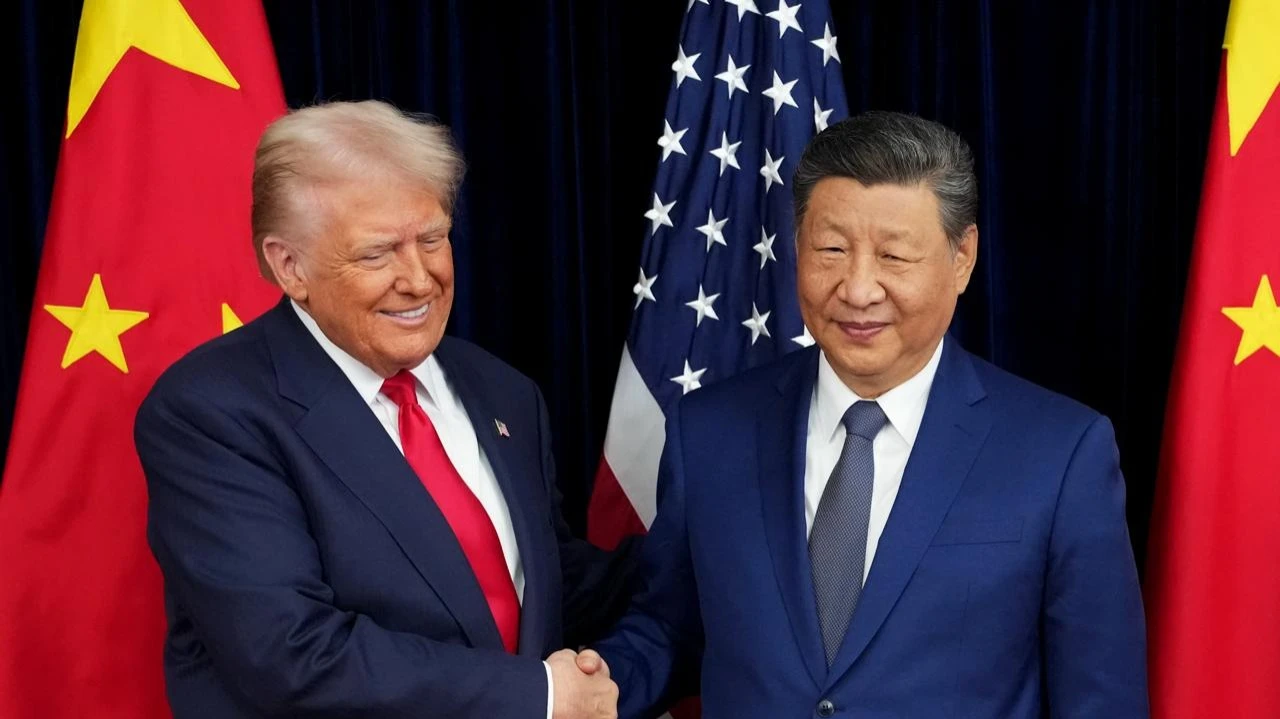
U.S. President Donald Trump said on October 30 that China agreed to lift restrictions on rare earth metals exports for a year. Because of Washington's trade war with Beijing, shares of some companies mining and producing rare earth metals have risen 300-800% since the beginning of the year. The escalation has made the industry a strategic priority for the U.S., and new projects are receiving political and financial support. How to capitalize on this?
China's bazooka for Trump
Since the inauguration of Donald Trump, the topic of mining and processing rare earth metals has become a strategic issue for the United States. In May 2025, Trump signed an agreement with Ukraine to jointly develop rare earth deposits, while negotiating with Russia to end the war.
On October 20, the U.S. signed an $8.5 billion rare earth metals mining, processing and supply agreement with Australia.
In about a year, we'll have so many critical minerals and rare earth elements that we won't know what to do with them
Three days earlier, China's Ministry of Commerce issued a decree that would further complicate the export of rare earth metals, in particular by requiring foreign companies to obtain permission from the Chinese government to export products containing even small amounts of rare earth elements. In addition, companies must declare the intended use of these minerals.
In response, Trump threatened to impose additional 100 percent duties on Chinese goods and impose export controls on software.
They [China - Oninvest note] have aimed a bazooka at the supply chains and industrial base of the entire free world, and we will not tolerate that
How China became a monopoly
Rare earth elements are a group of 17 chemical elements, including 15 lanthanides, as well as scandium and yttrium. They are used to change the properties of materials or to catalyze various processes.
Rare earth elements are therefore used in a wide variety of applications: in magnetoelectric motors and control systems for electric vehicles and in military technology and weapons systems.
The extraction of these elements is complex: the ore is crushed and subjected to flotation or chemical leaching, followed by separation and purification processes. Production is often associated with serious environmental damage: mining and processing generate large amounts of toxic waste, release radioactive dust and pollute water bodies.
China has been active in rare earth development since the late 1970s and early 1980s, when geologists in the Inner Mongolia region discovered large deposits of light rare earths. China set up research centers and gave companies tax breaks. And cheap labor and weak environmental regulations compared to Western countries allowed for rapid expansion. As a result, cheap Chinese rare earth metals have taken almost the entire market.
China now controls 90% of the refining and about 70% of the mining of all rare earth metals in the world.
What the trade war has led to
The escalation of the trade war between the United States and China has become a reason for the growth of stock prices of companies that mine and produce rare-earth metals. This refers primarily to shares of American, Canadian and Australian producers. Shares of mainland Chinese companies are not available to ordinary investors.
For example, securities of MP Materials, one of the largest producers of rare earth metals in North America, have grown by 312% since the beginning of the year. Shares of a small Canadian company Ucore Rare Metals - by more than 1000%. Shares of Australian companies are not lagging behind - small Arafura Rare Earths, developing the Nolans deposit in the north of the country grew by 133% since the beginning of the year. And securities of Australia's largest companies Lynas Rare Earths and Iluka Resources - by 130% and 31.68%.
Three stocks to watch out for
- MP Materials is the largest producer of rare earth materials in the U.S. with a capitalization of $11.4 billion. The company operates the famous Mountain Pass mine in California and is building its own full-cycle chain - from ore to products. In fact, it is the centerpiece of the American strategy to get rid of dependence on China. In 2025, MP Materials received a major public-private contract and investment that provides funding for magnet plants and gives the company a key Pentagon partner. Out of 12 analysts, 8 advise buying its stock and 4 advise holding. The consensus target price is $80.7 per share, which implies a 25% upside.
- Lynas Rare Earths is the world's largest producer of rare earths outside of China with a listing on the Australian Stock Exchange. Capitalization - $14.89 billion. In recent years, the company has been actively increasing capacity for the production of neodymium and praseodymium, which are used to create powerful magnets, which are used in electric drives, wind power, and military equipment. And it has also been putting the production and supply chains of these elements in order. Lynas depends on magnet price fluctuations, but the company's scale and "out of China" position give it a competitive advantage. According to MarketWatch, out of 16 estimates, eight analysts recommend holding the stock and four recommend buying. The average target price of $15.1 with a current $10.3 implies upside of 50%.
- Iluka Resources is another large Australian mining company, traditionally known as a producer of metals (gold/titanium dioxide/zircon), which in recent years has been purposefully reorienting part of its business to rare earths and plans to build processing plants in Australia. Capitalization - $2.86 billion. For an investor Iluka is interesting as a diversified conglomerate with a plan to develop rare-earth metals. The company enjoys government support, which reduces risks in the transition to more profitable rare earths. Out of 11 analysts on MarketWatch, 6 advise hold, 4 advise buy. At the current price of $4.4, the average target is $7.2. The upside potential is 64%.
Three funds for the cautious
Another way to bet on the growth of stocks of companies that mine and produce rare earth metals is through ETFs.
- VanEck Rare Earth and Strategic Metals ETF - A fund with total net assets of $1.3 billion follows the MVIS Global Rare Earth/Strategic Metals Index. It includes the three companies mentioned as well as other stocks - including Chinese stocks traded on the Shanghai Exchange. The key is that more than 50% of revenue must come from mining or processing rare earths. Since the beginning of the year, the index is up 67%. The management fee is 0.59% of the asset value.
- Sprott Critical Materials ETF. This fund, with $160 million in assets under management, gives exposure to mining companies that produce various materials needed to create new technologies. It too replicates an index, but a different one - the Nasdaq Sprott Critical Materials. It includes rare earth metals - most of the companies mentioned in this text are present among the 86 issuers in the index's calculation base. The management fee is 0.65% of asset value. There are also premiums and discounts for buying and selling - 1.41% of the share price. Since the beginning of the year, the fund's shares have grown by 66%.
- Global X Disruptive Materials ETF. A small fund with $10 million in assets under management from U.S.-based Global X ETFs. Like the other two, it focuses on the Solactive Disruptive Materials index. It holds companies involved in the exploration, mining, production or enhancement of rare earth metals, zinc, palladium and platinum, nickel, manganese, lithium, graphene and graphite, copper, cobalt and carbon fiber. Lots of Chinese companies, accounting for 33% of the index's weight. One position - including China Northern Rare Earth High-Tech Company. The fund's management fee is 0.59%. YTD return is 72.9%.
This article was AI-translated and verified by a human editor