A morning in New York: waiting for the moment of truth

Daily review and forecast of events on the U.S. stock market from Mikhail Denislamov, Deputy Director of Freedom Capital Markets Research.
We expect
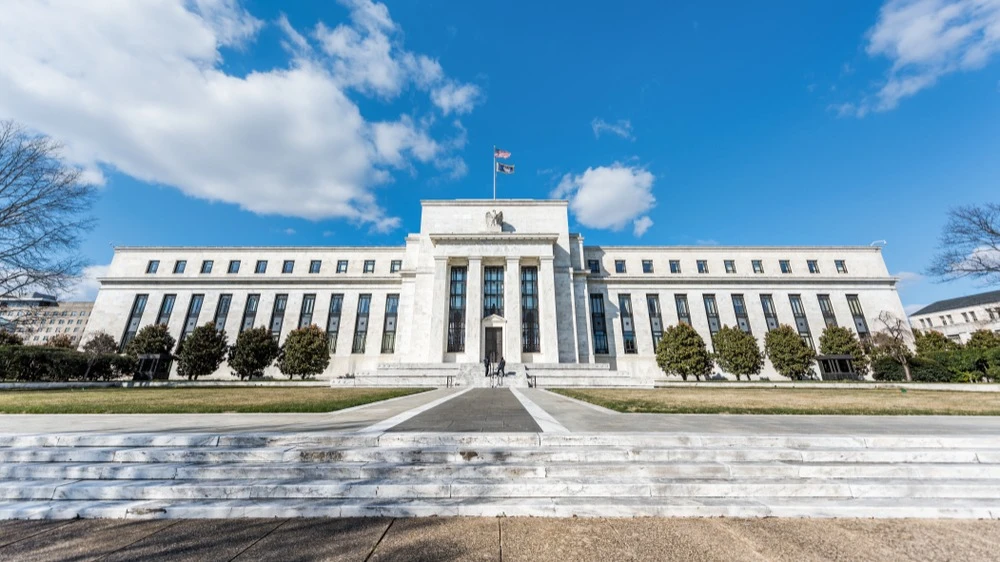
Today investors' attention will be focused on the risks to financial stability and the prospects for further adjustment of interest rates following the Fed meeting, which will be held on December 9-10. On the eve, a number of representatives of the regulator's management, in particular Lisa Cook and Beth Hammack, emphasized that the growing private (non-bank) lending sector and high activity of hedge funds in the market of trejeris may create threats to the financial system. At the same time, Ms. Cook explicitly said that the likelihood of a sharp decline in overvalued assets had increased markedly, although a price correction alone would not be a systemic threat. For her part, Ms. Hammack added that high inflation and still loose financial conditions made further rate cuts insufficiently justified in the near term, even as the labor market cooled.
Today, Fed Deputy Chairman Philip Jefferson speaks at the FRB Cleveland Financial Stability Conference. Also comments on the situation will be given by the first deputy head of the regulator Michael Barr. Investors will be primarily interested in the position of the speakers regarding further changes in monetary policy.
One of the highlights of a busy macro calendar will be the release of the preliminary business activity indices (PMI) from S&P Global for November. The consensus for the manufacturing index is for a decline from October's 52.5 points to 52, while the service index is expected to rise from 54.8 to 55 points. The final consumer sentiment index from the University of Michigan (consensus: 51 points, preliminary estimate: 50.3 points) will also be released. FRB Kansas will present the regional statistics of business activity in the services sector for November (October: -5 points). The final values of the indicators may increase intraday volatility and adjust expectations on the timing of the Fed's monetary policy easing.
Futures on US indices demonstrate about zero dynamics. We assess the balance of risks for the upcoming trades as neutral with increased volatility. We focus on S&P 500 fluctuations in the range of 6440-6600 points (from -1.5% to +1% of the previous session's closing level).
In sight
- Veeva Systems (VEEV) reported better than expected revenue and operating profit. This was supported by strong demand for Veeva's innovative product line of AI, Vault CRM and Crossix. However, a number of concerns related to the migration of some of its large customers to alternative platforms and the slowdown in growth of its CRM business. As a result, VEEV shares are down 6% on the premarket.
- Elastic (ESTC) exceeded revenue and subscription revenue expectations thanks to strong sales of AI solutions and large corporate contracts. Despite this, the company is under pressure from increased competition, as well as delays in concluding new contracts due to the shutdown. Against this background, ESTC quotes lose about 10% before the start of the main trades.
The market on the eve of
Trading on November 20 on American stock exchanges ended with a pronounced decline. S&P 500 fell by 1.56%, Nasdaq 100 fell by 2.38%, Dow Jones fell by 0.84%, and Russell 2000 corrected by 1.82%.
The technology sector (XLK: -3.14%) showed the biggest decline. This was due to profit taking in shares of the Magnificent Seven, all issuers of which, led by Nvidia (NVDA: -3.15%) closed in the minus. Active outflow of funds was observed from securities of bigtech as a whole.
The non-cyclical consumer staples sector (XLP: +0.72%) looked better than the market amid the release of strong quarterly results from Walmart (WMT: +6.46%) and stronger demand for protective assets.
During the day, sentiment shifted sharply towards risk-off, accompanied by the aforementioned withdrawal of funds from bigtech, semiconductor and AI-oriented companies and purchases of defensive instruments. Pressure on Nvidia (NVDA) resumed, even despite the initial positive reaction to its robust report in which the company recorded revenue above consensus. The reasons for the decline were generally due to technical correction, overvaluation of individual stocks, momentum exhaustion and capital rotation. All this took place against the background of persisting fundamental concerns about overheating in the AI sector. Quotes were negatively affected by labor market data and expectations of cooling consumer activity, despite strong results of Walmart (WMT).
The main event of the macrostatistics calendar yesterday was the data on the number of new jobs outside of agriculture for September, which amounted to 119 thousand, which was better than the consensus forecast. Similar figures for July and August were revised downward by 33k. As a result, for the last summer month non-farm payrolls declined by 4k. Unemployment in September rose by 0.1%, to the highest since October 2021 4.4%. The number of initial claims for unemployment benefits in the week to November 15 amounted to 220 thousand, the number of reapplications returned to the peak in four years, reaching 1.974 million.
Company News
- Walmart 's (WMT: +6.5%) sales and earnings per share beat average market expectations. The corporation's management raised its full-year forecast, noting market share expansion in all revenue segments. The retailer's management also pointed to stable consumer demand and growth in the e-commerce segment.
- Ford Motor (F: -3.8%) shares reacted negatively to a report of a new fire at the Novelis plant in New York, adding to concerns about supply chain stability.
- PACS Group (PACS: +55.3%) shares soared as the company reported earnings above expectations, improved its guidance for the year and announced the completion of an internal audit that eliminated key regulatory risks.
This article was AI-translated and verified by a human editor