Alphabet, Goldman Sachs and Brazil: how billionaire Druckenmiller's portfolio has changed
The billionaire has overhauled his strategy in BigTech, increasing his investments in Alphabet and Amazon and getting rid of Meta altogether
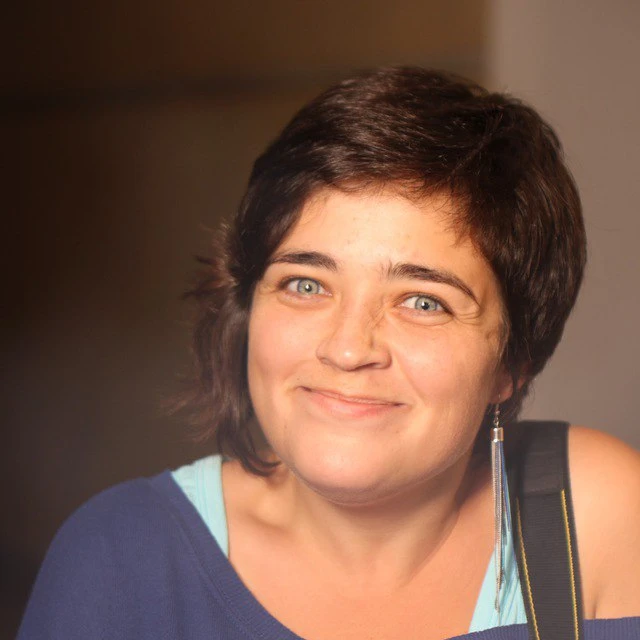
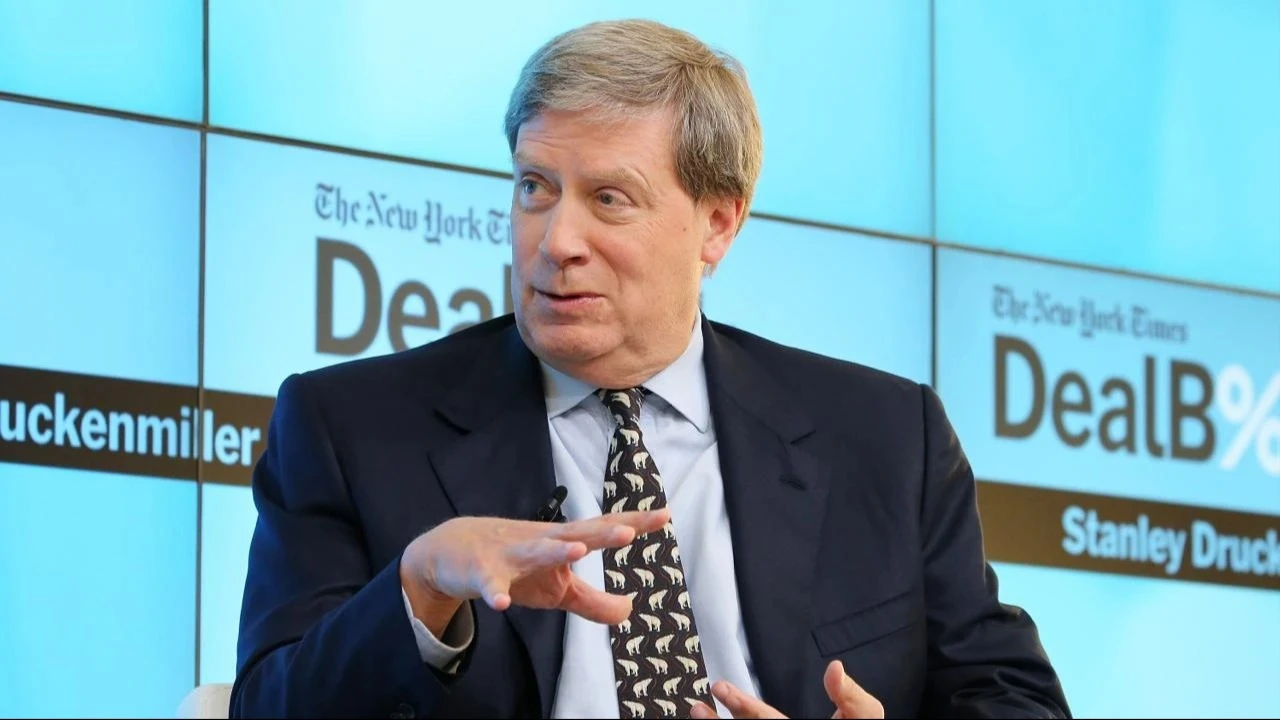
A prominent investor reviewed his investment in the Magnificent Seven at the end of the year / Photo by Neilson Barnard/Getty Images for The New York Times
Billionaire Stanley Druckenmiller, who heads Duquesne Family Office, undertook a major portfolio realignment last quarter, with a shift in focus to technology sector leaders and the financial industry, according to his report on Form 13F. The investor focused on Alphabet, Amazon and Goldman Sachs. In addition, Druckenmiller bet on companies in cyclical sectors: industrials, airlines, and aluminum production.
Rotation in BigTech: bet on Alphabet and exit from Meta
Druckenmiller revisited its investment in Magnificent Seven during the fourth quarter. Duquesne Family Office increased its investment in Alphabet by 277% - one of the largest acquisitions of the quarter. Now the fund owns 385 thousand shares of Alphabet with a total value of $120.5 million. The investor increased his stake in Amazon by 69%, bringing the package to 738 thousand securities worth $170.3 million. Both companies are in the top 10 of the billionaire's portfolio.
Besides, Druckenmiller opened new positions in semiconductor sector - bought shares of Lattice Semiconductor (926 th.), Entegris Inc (844 th.) and STMicroelectronics (774 th.). These companies now account for 0.5% to 1.7% of the investor's portfolio, while the share of Taiwan Sem iconductor, the favorite of the past years in the semiconductor sector, decreased by almost a third, and now the chipmaker's share in the fund's portfolio is less than 4%.
The investor completely liquidated its position in Meta Platforms, selling all 76,000 shares it bought in the third quarter of 2025. The investor closed positions in cloud service Twilio, semiconductor and software developer Arm Holdings and data storage companies Sandisk and Seagate Technology.
Financial sector: from retail to investment banking
In the fourth quarter, the investor opened a new position in Goldman Sachs, purchasing 27, 500 shares for $24.2 million. However, the most significant additions to the portfolio were exchange-traded funds: Duquesne initiated the purchase of Select Sector SPDR Financial Sector ETFs for $301 million and Invesco S&P 500 Equal Weight for $224.8 million. These purchases changed the structure of the portfolio, with XLF and RSP becoming Duquesne's top five holdings, taking 7.1% and 5.3%, respectively.
At the same time, Druckenmiller fully sold shares of Bank of America, Citigroup, Synchrony Financial and Capital One Financial.
Betting on Brazil
The billionaire cut his investment in the broad iShares MSCI Emerging Markets iShares MSCI Emerging Markets Index by 52.5%, leaving 902,000 shares and concentrated capital on specific Brazilian assets.
Druckenmiller formed a large position in Brazilian assets, buying about 3.6 million shares of iShares MSCI Brazil exchange-traded fund for $112.8 million. This instrument unites the largest companies of the country, including mining Vale and oil and gas Petrobras. Additionally, Duquesne Family Office opened positions in call options on the same fund, betting on the growth of quotations.
In doing so, Druckenmiller completely liquidated its position in Brazilian neobank Nu Holdings, selling all 1.45 million shares.
Betting on the "cycle" and energy for AI
At the end of 2025, Duquesne Family Office was actively building positions in the industrial sector and transportation infrastructure. A large position was opened in aluminum producer Alcoa (1.4 million shares for $73.1 million). Three names were added to the airline sector at once: the fund acquired 651,000 shares of Delta Air Lines, 348,000 shares of United Airlines and 640,000 shares of American Airlines.
Druckenmiller also invested $64.3 million in Bloom Energy, which develops highly efficient electricity generation systems. This bet is directly related to artificial intelligence infrastructure: the company's technology allows it to provide data centers with low-emission energy, which is becoming a critical factor for the growth of hyperscalers.
At the same time, the billionaire completely got rid of assets that used to form the basis of the energy block: positions in gas producer EQT, utility corporation PG&E, electricity retailer Vistra and energy company GE Vernova disappeared from the portfolio. Druckenmiller also cut its investment in steelmaker Cleveland-Cliffs by 35.7%, reducing the stake to 1.75 million shares.
Healthcare: profit taking with Natera leading the way
In the fourth quarter, the fund strengthened the biotechnology block of the portfolio with new names and active acquisitions. Druckenmiller opened positions in ADMA Biologics and Cidara Therapeutics, and more than doubled its stake in Cogent Biosciences. Option Care Health, where the position grew by 78.5%, and Newamsterdam Pharma (+59.6%) received significant capital inflows.
At the same time, the investor conducted profit-taking in medical assets, generating more than $660 million from deals in this sector. Duquesne cut its stake in Israeli generics maker Teva Pharmaceutical by 64.6%. The fund sold 10.7 million shares for about $334.8 million. Druckenmiller also trimmed its stake in Insmed, which focuses on rare and serious diseases, by nearly 39%, bringing the fund $164.1 million.
The fund reduced its position in Natera by 21.8%, selling about 703,000 securities and receiving $161.2 million for them. Despite the partial sale, the diagnostic company, which specializes in non-invasive testing, remains the leader in Druckenmiller's portfolio, holding 13.63% ($575.3 million).
Duquesne Family Office briefcase
According to the 13F report, the value of assets under management for the fund rose 10.6% to $4.49 billion during the quarter. At the end of 2025, Duquesne Family Office's portfolio structure has become more diversified, although the concentration on the top ten assets is still high at about 52.3%.
The unquestionable leader Natera with a 13.63% share is followed by a new strategic asset - financial sector fund Select Sector SPDR Trust, which now accounts for 7.13% of the portfolio ($300.9 million). Following closely behind are Insmed, a healthcare company with a 6.11% stake ($257.8 million), and Invesco's S&P 500 Equal Weight exchange-traded fund, which holds 5.33% of total assets ($224.8 million).
Rounding out the fund's list of key positions are generics maker Teva Pharmaceutical (4.34%), industrial group Woodward (4.23%), retailer Amazon (4.04%) and chip maker TSMC (3.91%).
This article was AI-translated and verified by a human editor