"It's only 1996 on the market now": how does Cathie Wood invest in the "software apocalypse"?

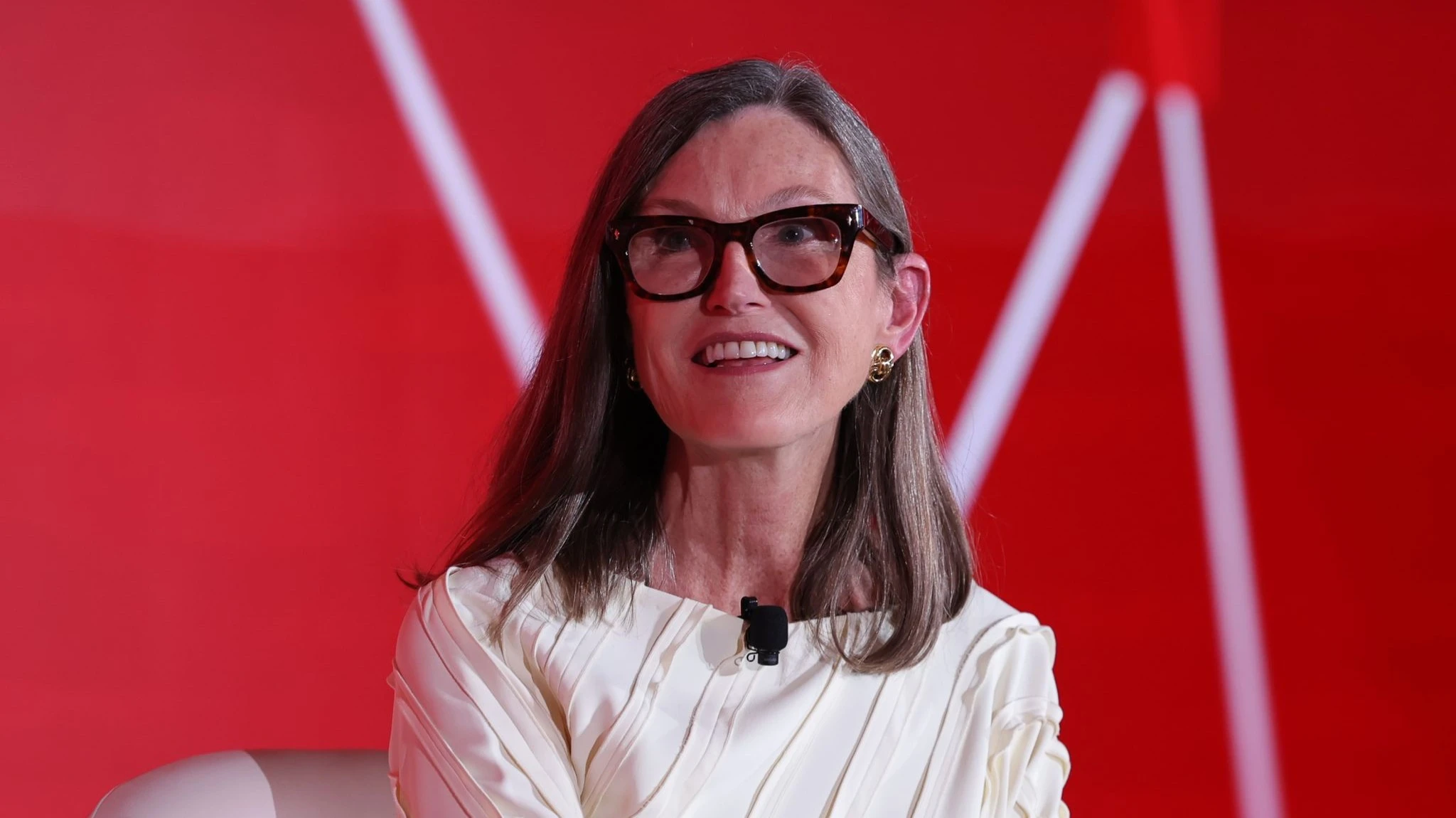
Cathie Wood believes the AI market has not yet peaked / Photo: Linkedin / Catherinedwood
Cathie Wood's flagship fund is experiencing the longest decline in its history, having lost more than 50% over the past five years. But Wood, famed for her optimistic vision of disruptive innovation, isn't giving up. In a new video podcast, she revealed that she doesn't share the market's fears about the AI sector. And while more conservative investors are reducing their positions in tech companies, the head of ARK Invest is using volatility to center her portfolio around the most promising assets.
How ARK is redeeming fear
Wood believes that the market often "spits the baby out with the water", creating price anomalies that have nothing to do with the real state of the business. She attributes the sharp movements of quotes in the AI sector to the dominance of algorithmic trading, whose systems do not take into account the qualitative difference between companies.
"Algorithms don't do the kind of research that we do. That's why we focus on our positions with the highest degree of conviction. The market itself gives us that opportunity."

During downturns, ARK Invest shifts capital from a broad list of securities to a narrow group, though Wood does not name specific companies. At the same time, she insists that selling during drawdowns is a mistake:
"Do you remember last April? Remember, there was a sharp downturn then, and many people were very scared. Even those investors who usually remain calm and are used to volatility were shaken last year. Anyone who sold assets in that dramatic moment regretted it for the rest of the year"

Another reason for portfolio concentration, Wood says, is the expected market shift from traditional software-as-a-service (SaaS) to agent-based AI platforms (PaaS). In her opinion, instead of one-size-fits-all solutions, companies are increasingly choosing platforms customized for their individual tasks.
The price of fighting for leadership in AI
Wood takes a counter-cyclical stance on bloated bigtech budgets. While the market is penalizing Google, Meta, Microsoft and Amazon for falling free cash flow, the ARK head argues that they have an obligation to spend even more aggressively. From her perspective, in the race for "agency AI," saving money now will lead to strategic defeat. For Wood, the issue isn't the current quarter's margins, but the ability of these corporations to take their place in the new technology hierarchy.
As an argument for her strategy, Wood cites Palantir's results. She uses the company's metrics to demonstrate how artificial intelligence is changing the economics of business in practice. In particular, she points out that the company's commercial segment in the U.S. grew 142%, and this abnormal jump occurred while the sales force was downsized.
For Wood, this is an example of the mindset that modern businesses need to develop. In her opinion, companies that do not adapt to such changes will inevitably lose out to competitors.
"It's a kind of 'muscle' we need to exercise in reasoning about how the world works now and how companies work. Elon Musk claims some crazy numbers in his predictions, but I think it's the right approach. Companies that don't have that vision will lose opportunities to more agile competitors"

The 1996 effect: market vs. euphoria?
Contrary to fears over the AI hype, Cathie Wood categorically rejects the comparison of the current situation with the bubble of 2000. According to her version, the market is now at the stage of 1996, when the Internet revolution was just beginning. Wood sees the main difference between the current situation and the late 90s in the mood: if then the market bought any stock on news of investment in the Internet, now it is full of skepticism.
"The market is climbing the 'wall of worry' and such periods usually mark the most powerful bullish trends. Volatility scares people, but frankly, the current situation is much healthier than what we saw during the tech and telecom bubble"

According to Wood, the lack of euphoria creates entry points for those willing to ignore short-term drawdowns. She backs up this logic with an example from the crypto sector, where high volatility has already caused short-term players to "shake out". According to Wood, when "weak holders" panic and sell assets at the first sign of risk, the market is cleared of speculative ballast.
"We're taking advantage of moments like this - building positions in the cryptosphere as part of our strategies"

Cathie Wood's macro bet.
ARK's bet on market growth relies on macroeconomic analysis, the results of which diverge from official data. Wood says government inflation indices are overstated because of methodologies that do not take into account the specifics of the digital economy. "The Truflation indicator [Trueflation is a financial service that uses blockchain technology to provide real-time data on inflation and other economic indicators. - Oninvest] shows that after several years of struggling in the 2-3% range, inflation is on the decline. According to this data, it is now around 0.7% year-on-year," Wood says. According to official data, U.S. inflation fell to 2.4% in January on an annualized basis from 2.7% in December 2025.
Cathie Wood is convinced that the technology boom is not accelerating inflation, but suppressing it through a surge in productivity. In her view, this makes the Fed's tight monetary policy redundant as the regulator fights inflation, which technology is already negating. The belief that AI's deflationary pressures will eventually force rates down allows Wood to maintain the fund's position and ignore the current pressure from the regulator.
This article was AI-translated and verified by a human editor