"Already a verb but not yet a bank": can Revolut become a full-fledged lender before IPO?
Despite receiving its long-awaited banking license in the UK, Revolut has yet to become a bank in the traditional sense: it does almost no lending and earns mainly on commissions, the FT writes

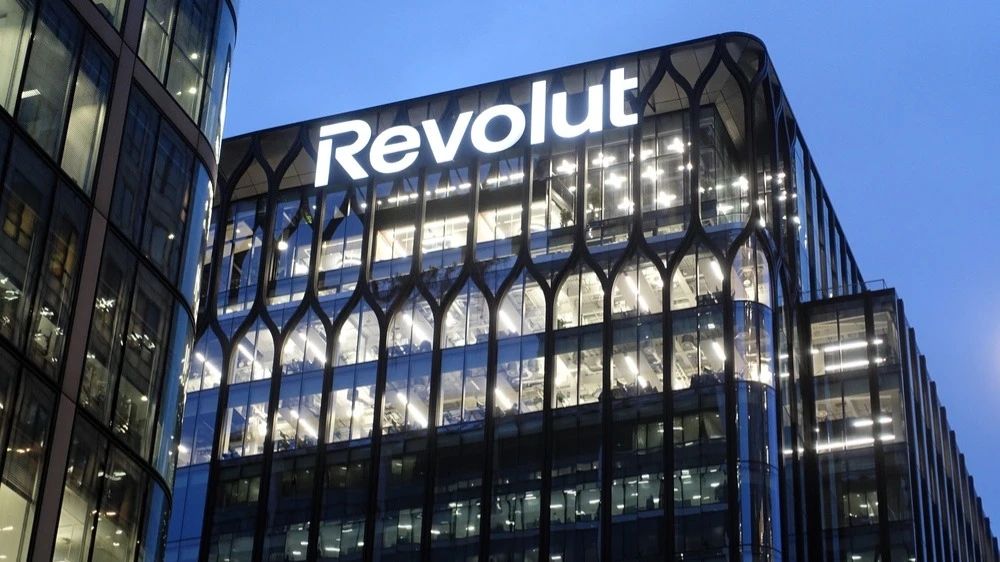
Revolut expects it will take four months, not a year, to get a license in the U.S. / Photo: Peter_Fleming / Shutterstock.com
On the evening of April 30, Revolut employees in London will don tuxedos and gather at the historic Mansion House to celebrate receiving a full banking license in the U.K. after a four-year wait, the Financial Times reports.
Revolut CEO Nikolay Storonsky expects that obtaining a similar license in the United States will take four months, not years, the article said. The application for the license was submitted in March, and in April Storonsky went to Washington for networking and meetings with politicians and regulators, the publication's sources said.
During the trip, Storonsky confirmed that Revolut will float shares on the stock exchange, but not until two years from now. "We are a bank, and trust is extremely important for a bank. Public companies are trusted more than private ones," he explained.
The stakes are high: according to FT sources, Revolut is looking to increase its valuation from the current $75 billion to $200 billion in the two years before going public.
Revolut's valuation is now 13 times its revenue, while other fintech companies are valued at around four times revenue, the publication notes. The ambitious valuation is based on the company's impressive growth. Last year, the startup's pre-tax profit grew 57% and revenue 46%. Revolut has more than 70 million customers in 40 countries, which "exceeds the combined scale of Monzo, Starling, N26, Bunq and Wise and approaches the scale of JPMorgan Chase," JPMorgan Chase analysts wrote in a note to clients last week.
But what's critical to sustaining Revolut's growth is its ability to evolve into a full-fledged bank capable of growing customer deposits and channeling them into loans, according to banking analyst John Cronin.
"They are good at solving many problems, but banking is not one of them," he said. - In terms of banking, they haven't advanced yet."
Large British banks generate most of their revenue from deposits and lending. Revolut's 76% of revenue last year came from commissions on currency trading, cryptocurrencies, premium subscriptions and other services. Interest income from deposits accounted for just 21.6% of revenue, compared to about 70% for rival neobank Monzo. JPMorgan estimates Revolut earns about 66 pounds a year per consumer, compared with Monzo's 101 pounds and traditional U.K. retail banks' 300-400 pounds.
Revolut insiders are irritated at comparisons between the company, which is not licensed to lend in many markets, and institutions with a century-long history, the FT writes. But Revolut has failed to establish a foothold in lucrative lending markets even in markets where it does have the necessary licenses, the publication notes. For example, in Ireland, where three-quarters of adults have accounts with Revolut, the introduction of mortgage lending has been delayed.
"They've had tremendous success in attracting customers - Revolut has become a verb here," said Denis McGoldrick, head of financial research at brokerage Goodbody (referring, presumably, to Google. - Oninvest). - But lending is a different story.
Revolut had a loan book of £2.2 billion last year. By comparison, smaller specialist lender OneSavings Bank had net loans of about £25.9 billion last year. Against Revolut's overall balance sheet, the loan book looks "very modest", UBS analysts wrote.
JPMorgan estimates that without a takeover by some lender, building the necessary expertise and infrastructure could take several years. This is partly due to the fact that customers do not use Revolut as their primary account to receive their paychecks, making it more difficult to attract deposits.
Investors, however, are optimistic. "This company has a chance to be the European equivalent of Amazon in terms of scalability," one of Revolut's big early investors told the FT. - They will do to lending what they did to payments."
Revolut's lending strategy is at an early stage of development and less mature than traditional banks, a source close to the company admitted. According to him, the goal is to first build a large customer base and a profitable commission-based business model, and only then move to sustainable loan growth.
There are doubts about whether Revolut even wants to become a major lender, the article says. In its application for a U.S. license, the startup made it clear that, at least initially, it plans to focus not on lending but on the same services that brought it success in the U.K.: payments, transfers and transactions in digital assets, including stablecoins. "They're not trying to become a traditional bank," Matthew Bizantz, a regulatory partner at U.S. law firm Mayer Brown, told the publication.
According to one investor, Revolut is pursuing licenses for lending opportunities, but this is not at all key to future growth. The main benefit of a UK license is more of a reputation, another insider agrees.
"It's about trust," he said, echoing Storonsky's words. - The license gives users more confidence to place their money with us - and that's also the point of the listing."
This article was AI-translated and verified by a human editor