Arm enters the proprietary chip market and challenges Intel and AMD
This is a radical reversal of Arm's business model, which has been called the "Switzerland" of the semiconductor industry

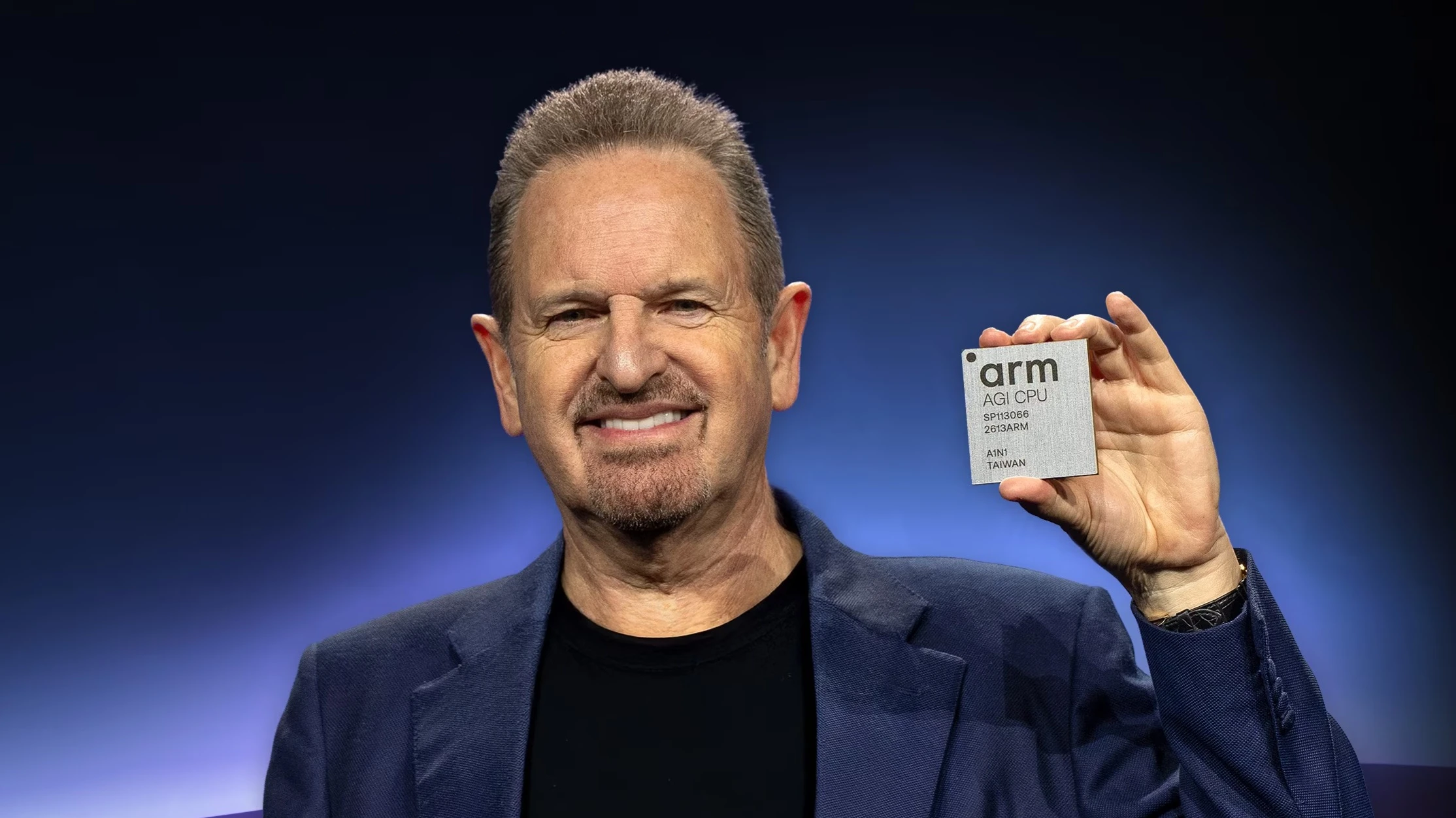
Arm enters the proprietary chip market and challenges Intel and AMD / Photo: Arm
Arm Holdings, which has made a name for itself by licensing technology to semiconductor manufacturers, will start selling its own processors for the first time, intensifying competition with Intel and AMD in the AI infrastructure market, Bloomberg writes. This area, as the company expects, will bring it about $15 billion a year for five years. The first major client of Arm will be Meta, which is actively increasing investments in data centers.
Details
Arm Holdings unveiled its first-ever proprietary AGI CPU data center chip at an event in San Francisco. It will have up to 136 cores, consume about 300 watts of power and provide greater efficiency than x86-based solutions from Intel and AMD, allowing data centers to get more computing power with the same energy and space constraints, the company assures.
The new product is designed to work alongside GPU processors, such as those from Nvidia: it coordinates computation, prepares data and performs tasks related to query processing in AI systems, Bloomberg notes. Taiwan Semiconductor Manufacturing Co. will handle production, and Meta will be the first customer, Arm announced.
"The product we're creating doesn't just look attractive - we already have customers ready to buy it," Arm CEO Rene Haas told the agency.
The new business, the company estimates, will bring it about $15 billion a year for five years, surpassing revenue from its current operations and bringing the total to $25 billion - five times what it is now, Bloomberg points out.
What this means for the market
The launch of its own chip means a radical reversal of Arm's business model. CNBC calls the company the "Switzerland" of the semiconductor industry because it has traditionally supplied technology to all market players without competing directly with them. For decades, Arm has licensed its processor architecture to major chip makers and earned royalties, Bloomberg recalls, with virtually all smartphones, tablets and even Mac computers running on the architecture.
The changes should help the company earn more through larger "checks." Even the most expensive chips for smartphones cost only tens of dollars, the agency notes. And the price of the highest-performing semiconductors for data centers can run into the tens of thousands of dollars.
Now Arm is actually entering the battle for market share with its own customers, many of whom are developing server processors based on its architecture, Bloomberg notes. Its competitors are primarily Intel and AMD, which Haas explicitly mentioned. But also major cloud companies such as Amazon Web Services, Microsoft and Google Cloud. Nvidia's Grace and Vera processors are also built on Arm.
Entering the off-the-shelf chip market could complicate manufacturer-customer relations, Bloomberg said. But "the market is big enough for several players," Haas believes.
First customer
Meta has become the first and key customer for the new processor. The company is building multigigawatt data centers and plans to spend up to $135 billion on capital expenditures this year, CNBC reported.
Meta already buys chips from Nvidia and AMD and is simultaneously developing its own solutions, now adding CPUs from Arm. Moor Insights analyst Patrick Moorhead estimates that even Arm's small share of Meta's spending could have a significant impact on the vendor's financials. "It would dramatically change Arm's revenue," CNBC quoted the analyst as saying.
A shift in the AI market
The launch comes amid changing demand patterns in AI infrastructure, where the role of CPUs is growing: Nvidia believes CPUs are becoming a bottleneck as new types of AI systems evolve, CNBC writes.
We are talking about so-called agent-based systems that require significant universal computing, process coordination and data processing between different components. Unlike GPUs, which are optimal for parallel computing, CPUs perform sequential tasks and ensure the overall operation of the AI, the TV channel explains.
Analysts at Futurum Group report a "quiet supply crisis" for CPUs and expect the segment's growth could overtake the GPU market by 2028, CNBC writes.
What about the stock
Following the results of trades on March 24 Arm shares fell in price by 1.4%. At the same time since the beginning of the year the company's capitalization increased by 21%.
The average target price of the producer's securities is $152.2, implying a potential upside of 12% relative to the last close. 27 of 52 analysts surveyed by Marketwatch recommend buying Arm shares, 13 take a neutral stance, and two advise selling.
This article was AI-translated and verified by a human editor