'Intel killer': analyst calls Nvidia and Meta deal a threat to oldest chipmaker
Nvidia's move to Arm architecture CPUs and the related deal with Meta could bring Intel serious problems, an analyst said

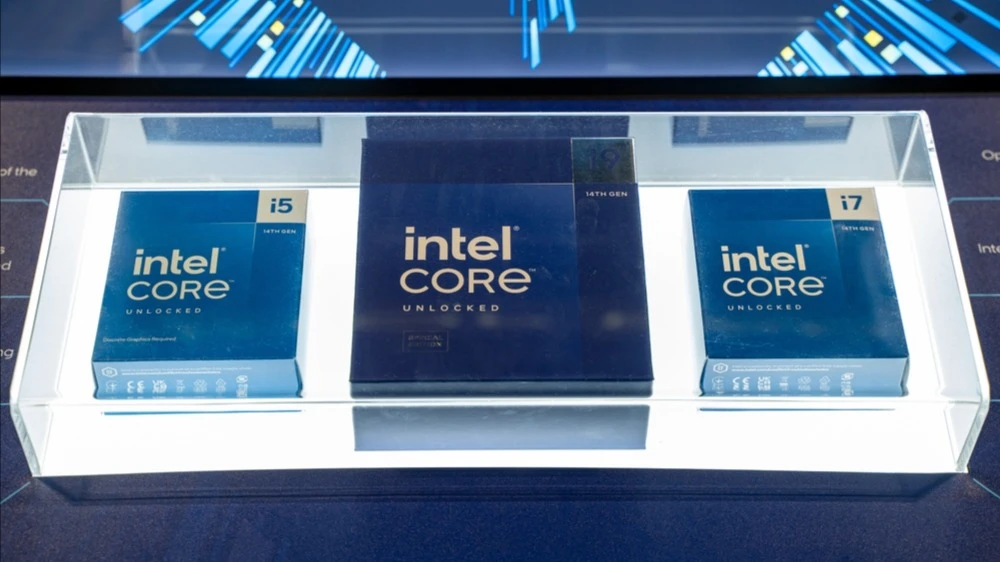
Intel shares are declining, losing 1.6% of their value in trading on February 19 / Photo: Erman Gunes / Shutterstock.com
The deal to bring Nvidia processors into Meta data centers will be "Intel's killer," according to Richard Windsor, an independent analyst and founder of the Radio Free Mobile analytics platform, MarketWatch writes. This agreement, he believes, will lead to the sunset in the market era of x86 processors from Intel.
He said the large-scale rollout of CPU Grace processors based on the architecture of UK-based Arm Holdings is "devastating news" for Intel, which has held a monopoly on the market for decades.
Details
So the analyst reacted to the announced by Nvidia on February 17, the first large-scale deployment in data centers Meta systems based exclusively on processors (CPUs) from Nvidia Grace based on the company's architecture Arm. That architecture is what Intel's x86 processor architecture competes with, MarketWatch notes. Under the Meta and Nvidia deal, Arm-based processors will be responsible for running Meta's applications and AI agents.
What's more, Windsor believes more deals are expected in the coming months with manufacturers of Arm-based processors for data centers, as well as companies that design chips for inferencing (the process of AI models processing queries and issuing responses to users).
All of this, the analyst believes, is "devastating news" for Intel, which Windsor estimates has long dominated the server chip market while Arm-based chips have "often failed." The fact is, the analyst explains, that Arm-based processors, unlike x86, were often incompatible with legacy software systems in data centers (and Intel, founded in 1968, is the oldest commercial microprocessor developer on the market). Now, however, judging by the Nvidia and Meta deal, that trend is probably a thing of the past, the analyst says.
Why it's important
The server chip market is now experiencing a new upswing, MarketWatch writes: amid the AI boom, CPU processors are essential to running data centers. And while Meta and other hyperscalers are looking for solutions to power shortages, market players are focusing on chip optimization. In this regard, Arm architecture-based processors have an advantage over Intel's x86 processors, Windsor points out, noting that the main criterion for choosing a CPU becomes the performance of computational operations per watt.
For Intel, which is already struggling to meet AI demand and is having to shift production capacity from the consumer (PC) segment to the server segment, the news is increasingly worrying. "The real loser here is Intel, as it is now open hunting season on all of its major product lines," Windsor emphasizes.
Nvidia's move to Arm architecture-based processors also opens up opportunities for other server chip makers to participate in Meta's plans to spend up to $135 billion on AI this year, the analyst said, emphasizing that Meta, in his opinion, will use both its own designs and Nvidia's off-the-shelf systems for its solutions.
Another competitor for Intel
Windsor believes that the "final nail in the coffin" of Intel could be its main competitor AMD if it releases its own Arm-based processor for both PCs and servers. In January 2026, Mizuho analyst Jordan Klein noted that AMD is in a better position to meet demand for server chips thanks to its strong partnership with Taiwan Semiconductor Manufacturing Company (TSMC). Hyperscalers are now favoring AMD server processors over Intel solutions, he said.
What about the stock
At the trades on February 19, Intel shares are down 1.6%. Wall Street's interest in the company is low: only nine analysts advise to buy the securities, 35 - to hold and three - to sell.
At the end of January, the company presented a weak forecast for the current quarter, admitting that it was not in time to take advantage of demand for new processors due to shortages of its own products and high scrap rates in the new production process. According to Bloomberg, this was a major disappointment for the market, which was expecting a more robust start from the new chip lines.
Nevertheless, amid these difficulties, some analysts remained optimistic about Intel's future. A couple of days before the company published its quarterly report in January, analysts from HSBC and Seaport upgraded Intel's stock ratings (from "sell" to "neutral" and from "neutral" to "buy," respectively). In addition to Nvidia, analysts also named Apple among Intel's potential customers.
This article was AI-translated and verified by a human editor