Arm's AI chip demand data overshadowed quarterly report
Arm has kept its AI chip revenue forecast for the year at $1 billion: whether the company will be able to meet all the demand remains questionable

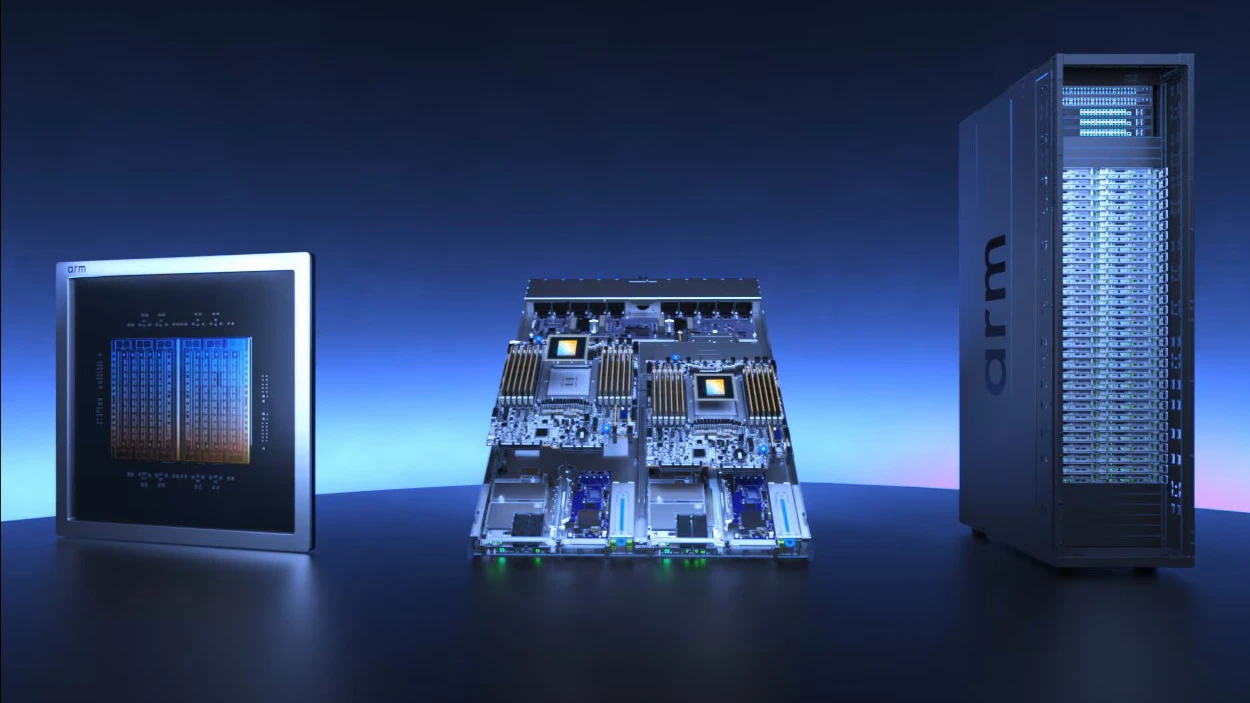
Arm expects sales of its new AI chips to be around $1 billion in fiscal 2027 / Photo: Arm
Processor architecture developer Arm ended fiscal year 2026 with record revenue of $4.92 billion, up 23% year-over-year. Now it consists mainly of royalties and license fees. Whereas investors are far more interested in a new source of revenue - the company's first AI chip. It claims the processor will bring in about $2 billion - but only between 2027 and 2028. ARM shares fluctuated sharply in extended trading after the report was published, ranging from a 6 percent rise to a more than 9 percent drop.
Details
Entering the central processing unit (CPU) market will allow Arm, which previously only developed architectural solutions for other chipmakers, to directly earn money from expanding data center infrastructure for artificial intelligence, Bloomberg writes. The British company said Wednesday that its new product, the AGI CPU, will bring it more than $2 billion in revenue in 2027 and 2028. Back in March, Arm said it had received orders for $1 billion. At the time, the company expected $2 billion in CPU sales by 2029 and up to $15 billion by 2031.
"We see Arm's transformation into a significant player in the data center market accelerating," Bloomberg quoted Arm CEO Rene Haas as saying.
Arm has kept its AI chip revenue forecast for the current year at $1 billion, as uncertainty remains as to whether the supply chain will be able to meet all of this demand, Barron's emphasizes.
Revenue in FY 2026 grew 23% year-over-year to a record $4.92 billion, but so far, Arm's entry into the AI chip market has led to higher operating expenses, and profitability has started to decline, Barron's notes. Adjusted operating margin in fiscal 2026 has shrunk to 49%. In 2025, it was 53%.
Investors were not impressed by the financial results. In the post-market after the publication of the reports, Arm securities traded in the U.S., first rose by 6%, and then fell in the moment by more than 9%. The main trades on Wednesday, May 6, ended with an increase of 13.6%.
How the company reported
Arm's revenue rose 20% year-over-year to $1.49 billion in the fourth quarter of fiscal 2026. Earnings for the quarter ended March 31 were $0.6 per share, up 9% year-over-year. Both figures exceeded analysts' expectations, Bloomberg notes.
For the current, first-quarter fiscal 2027 quarter, Arm expects revenue of about $1.26 billion. Analysts on average had predicted $1.25 billion, according to data compiled by Bloomberg. Earnings excluding discrete items will be $0.4 per share, versus a forecast of $0.36.
The company earns money in two ways: on licenses that allow customers to use its designs and standards, and on royalties that are paid per unit on shipments of finished chips, Bloomberg recalls. Licensing revenue, which serves as an indicator of customers' interest in future use of Arm products, rose 29% to $819 million in the quarter versus an average forecast of $775.6 million, the agency said. Royalties brought in $671 million in revenue against analysts' forecast of $693 million, which may indicate that shipments of Arm architecture chips from different vendors totaled below expectations, Barron's noted. Sales of its own chips are not yet reflected in the report.
Context
Arm still relies heavily on the smartphone market, which has been volatile lately, Bloomberg notes. Device makers are facing a shortage of memory chips, putting pressure on overall production. Entering the segment of data center products and other markets should help Arm reduce its dependence on the volatile smartphone market, the agency writes. Selling chips under its own brand is a major turnaround for Arm, which previously benefited from its status as a neutral supplier of key technology layers for the entire industry.
Nearly 90% of Arm is owned by Japanese conglomerate SoftBank, which has also invested heavily in OpenAI and acquired other chip makers Ampere Computing and Graphcore.
Arm securities in the U.S. have risen 117% since the beginning of the year. Most analysts advise them to buy: the securities have 29 Buy and Overweight ratings versus 11 Hold (recommendation to hold) and two Sell and Underweight (to sell), MarketWatch shows. The average target price of $176.98, meanwhile, is a quarter below the closing level on May 6.
This article was AI-translated and verified by a human editor