"Back to square one": analysts - on what the market has come to after 50 days of war
Some strategists warn of correction risks in the U.S. stock market, while others believe that the peak of risk aversion on Wall Street has already passed


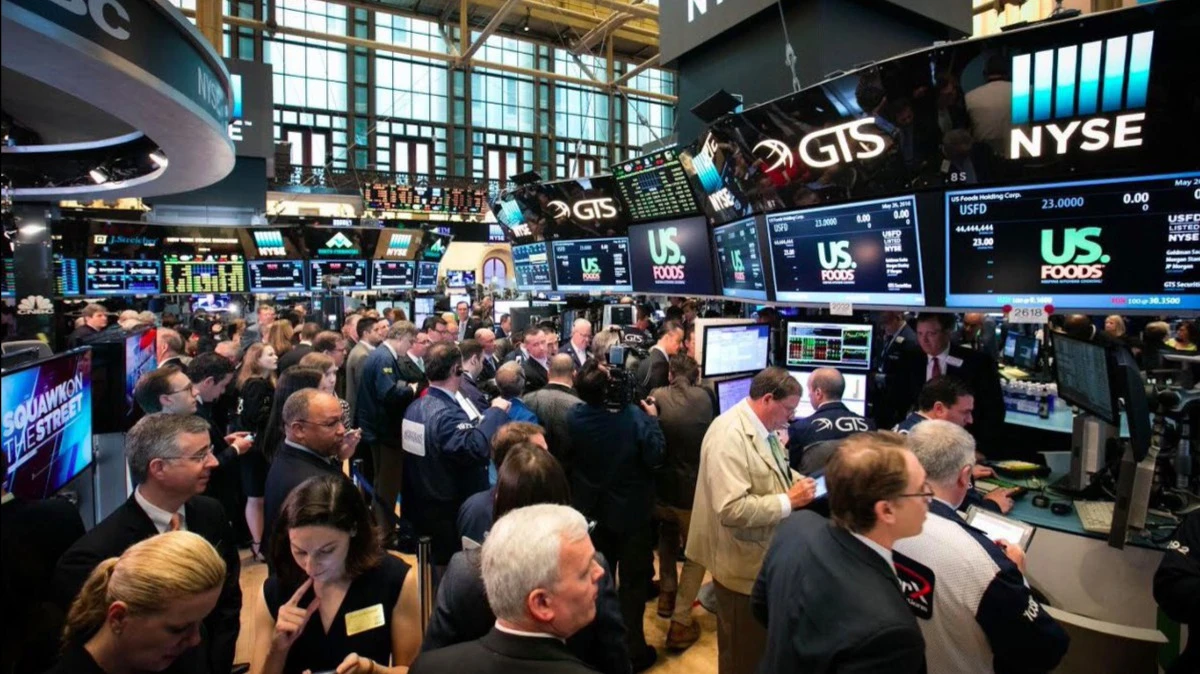
The U.S. stock market made new highs in the middle of last week despite a jump in oil prices / Photo: X/NYSE
The illusion of imminent peace in the Persian Gulf dissipated after the events of last weekend, bringing investors back to the uncertainty of the first days of the Iranian war. Analysts warn that hopes for a quick de-escalation in the Strait of Hormuz were premature, and the most likely scenario now looks like the resumption of active hostilities. To protect against inflation, experts advise maintaining positions in stocks, although they recognize that the escalation of the crisis in the Middle East has called into question the sustainability of the rally in the U.S. stock market.
Details
- Commodity Context founder Rory Johnston noted that the escalation in the Strait of Hormuz reached its peak last weekend. Statements from the parties about a willingness to negotiate and from Iran about allowing tankers to pass through the Strait of Hormuz unimpeded have created the illusion that the war is nearing an end, but in the end "we're right back where we started," he stated on CNBC. "If the strait had actually been opened, we probably would have seen an immediate collapse [of oil prices] by another $10 to $20 a barrel," as speculators would have started closing positions en masse, Johnston said. Then oil would have recovered its losses to $80-90, as hydrocarbon supplies will not be able to recover overnight, the expert added.
- Alan Eyre, a fellow at the Middle East Institute and a member of the U.S. team for the 2015 nuclear deal, pointed out that the Americans are not aiming for negotiations as such, but are waiting for Iran to capitulate. But there can be no resolution to the crisis until Washington gets rid of the delusion "that military victory equals strategic dominance." While a successful round of talks in Islamabad is still possible, "it is more likely that things will go the other way - toward renewed hostilities," Eyre suggested.
- Damien Bowie, a portfolio strategist at Sydney-based Wilson Asset Management, told Reuters, "The headline news looks bad. There are disagreements, which has led to a new round of tension." At the same time, the expert emphasized: "I think ultimately both sides want to come to an agreement - which is partly why the market is optimistic and is not staging a large-scale sell-off."
- "Our base case scenario - aka assumption - is still that the [Middle East] conflict will resolve. [U.S. President Donald] Trump is still as focused on the November midterm elections [in the U.S.]," Paul Chu, head of research at Singapore-based Phillip Securities, wrote to clients.
- As the weekend's events show that the war is still in an active phase, the continuation of the stock market rally will be jeopardized, warned Elias Haddad, investment strategist at Brown Brothers Harriman & Co. Nevertheless, the company believes that although the energy shock is not over, the peak of investor risk aversion was passed in late March and the worst is likely over.
- Martin Henneke, head of investment advisory for Asia and the Middle East at St. James's Place, believes that "investors may have started celebrating too early." He also believes that rising tensions around Iran over the weekend could trigger a partial correction on Wall Street, Bloomberg reports. U.S. businesses are already shifting increased costs to consumers by raising prices - as inflation devalues money and fixed-income instruments (bonds), it is now more prudent to maintain positions in stocks, the expert believes.
- Matt Maley, chief market strategist at Miller Tabak + Co LLC, noted that despite new all-time highs in the U.S. equity market, risks increase with each setback in the Strait of Hormuz negotiations. "We're approaching a point where the pressure factor will be not only high prices, but also a looming [energy-citizen] shortage," he summarized (quoted by Bloomberg).
Context
Iran warned over the weekend that ships approaching the Strait of Hormuz "under any pretext" would be considered truce violators, and new shelling has exacerbated the deadlock in talks. Iran's semi-official Tasnim news agency reported that Iranian authorities will skip the second round of talks in Islamabad, where a delegation led by U.S. Vice President J.D. Vance arrives on April 20. Washington is only letting ships carrying non-Iranian cargo out of the Gulf. The situation became even more heated on April 19 when U.S. naval forces seized an Iranian-flagged cargo ship by punching a hole in its engine room.
Futures on the U.S. stock index S&P 500 on April 20 are down about 0.5%. Shares of companies in Europe, which is an oil importer in contrast to the U.S., cheapen by 1%. Quotes of Irish low-cost carrier Ryanair collapsed in Dublin by 3.6%, while the securities of British supermajors Shell and BP jumped almost 3% amid rising oil prices. Brent with delivery in June is trading at $94.95 per barrel, contracts for North American WTI are worth about $88.
This article was AI-translated and verified by a human editor