Banks in Israel check repatriates for Russian tax residency: what are the risks?

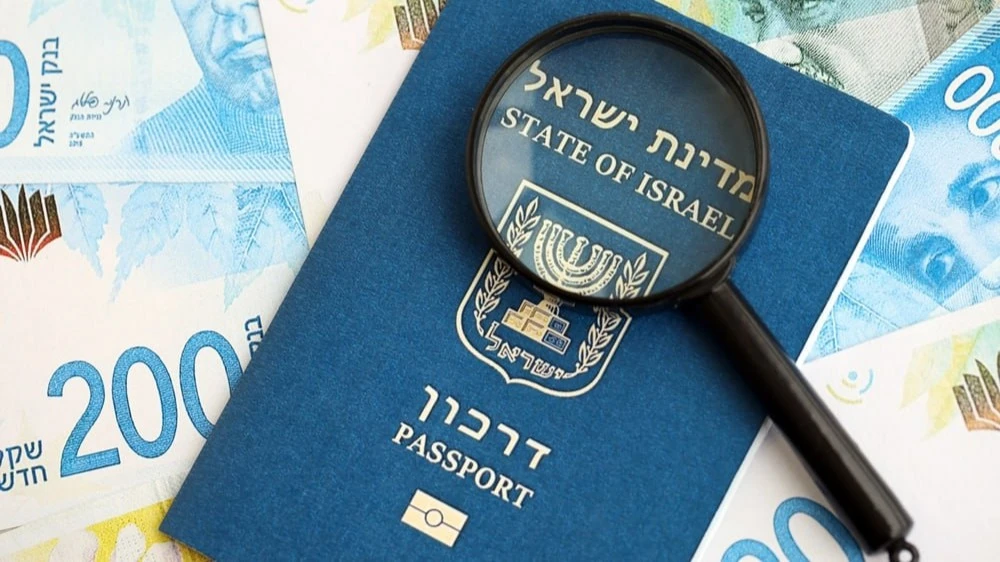
Israeli banks in early 2026 intensified checks of new relocants for Russian tax residency / Photo: Mehaniq / Shutterstock.com
Israeli banks have stepped up checks on the tax residency of repatriates from the Russian Federation. The banks either ask clients to prove that the center of their life interests is now in Israel, or independently recognize their Russian tax residency, inviting the client to appeal at once. It is not worth ignoring the banks' requests, otherwise data on Israeli accounts and cards will be received by the Federal Tax Service as part of an auto-exchange of information, financial advisers warn.
At the beginning of 2026, major Israeli banks, including Leumi, Hapoalim, Mizrahi-Tefahot and Discount, sent notices to Russian repatriates regarding their tax residency. In the cases studied by Oninvest, such letters were received mainly by new repatriates who moved to the country after 2022.
"Our Israeli bank [Mizrahi Tefahot] has suddenly decided that we are tax residents of Russia. Demands to come to the appeal with documents and prove that we are not. We have been in Israel since June 2022, 183 days have long passed, it is obvious that we are not residents of Russia," bank customer Ma Molina described her situation in the Pumpkin Latte Facebook group.
In a conversation with Oninvest, she specified that when she opened the account in 2022, Mizrahi-Tefahot required her to indicate her Russian individual tax number (INN) in a special column of the questionnaire, but assured her that this information "would not matter" if she continued to live in Israel. Maria claims that she has not changed her country of residence since then, and the bank had not previously requested tax residency documents from her. She says Mizrahi-Tefahot has now suggested she bring a certificate from a Russian accountant in Hebrew or English that she is not a tax resident of Russia, and has scheduled an appeal in two months.
Leumi Bank client Dmitry (who asked not to be identified) also received an inquiry regarding his current tax residency in 2026. In a conversation with Oninvest, he said that he had been living in Israel for two years, but this was the first time he had such a situation. To prove his tax residency in Israel, Dmitry filled out a declaration on the Leumi website and sent an e-mail to the bank. He attached a copy of his internal ID card and a receipt for his municipal land tax payment. According to the man, this helped change his tax status in the bank's system.
In the comments to Maria's post and in other communities (for example, here) dedicated to life and finance in Israel, Oninvest found eight more messages from Russians about similar bank checks and inquiries. In six of the cases, the letters were received by new wave returnees, while in two - by those who moved to Israel before 2022. Among the documents that helped Russians convince the bank of their Israeli tax residency, users mentioned apartment rental agreements, receipts for housing and utilities services, tax statements, and a certificate of the number of days of stay in Israel from the Population and Migration Registration Department.
Oninvest sent a request to all the banks mentioned.
What risks are there for customers?
Selective checks on the tax status of returnees have happened regularly before, and usually do not depend on the country of origin, Maxim Kvasha, director of development at Library Finance (a financial consulting and asset management company for returnees) and co-author of the Telegram channel "Here is not there" about finance in Israel, told Oninvest.
But, according to him, at the beginning of 2026 Library Finance had an increase in the number of requests for advice related to the banks' requirement to clarify the tax residency of repatriates from Russia. In all the letters with which he was familiar, the banks tried to find out whether their clients were tax residents of the Russian Federation and requested additional information.
Tatiana Berlin, the creator of the "Social and Information Assistance" community for repatriates, and Israeli tax consultant Tatiana Ioffe also write that tax residency checks are not a new phenomenon. According to Ioffe, the mere fact of receiving a letter indicates only that the bank has noticed in the client's data "markers" that may indicate a different tax residency from the Israeli tax residency. These could be a previous declaration, additional citizenship, place of birth, address, activities abroad, etc.
According to Kvashi, as a rule, most such requests are sent at the beginning of the calendar year and are related to the need to gather information for the Israel Tax Authority as part of the automatic exchange of financial information, a mechanism developed by the OECD. It aims to assist countries in identifying resident evaders. Israel actually joined the automatic exchange in 2019, transmitting data for the 2018 fiscal year to the tax authorities of the countries participating in the auto exchange.
Russia is also a participant in such an exchange. After 2022, in response to the outbreak of hostilities in Ukraine, a number of countries (e.g., Germany, the United States, and the United Kingdom) stopped exchanging financial information with Russia.
But with Israel, the auto-exchange has been preserved. And if an Israeli bank classifies a client as a tax resident of a foreign country, Israel can pass information about his account to that country's tax service as part of the automatic exchange, Ioffe explains.
In such a case, repatriates may face additional expenses, inspections and even fines for violating currency and tax laws in the countries of origin.
"In short, you will have the prospect of long-term difficult-to-predictable clarification of relations with the Federal Tax Service of Russia (FTS), accompanied by nervousness, fines (from pennies to gigantic), far from zero costs for consultants, translators, notaries and lawyers," says Kvasha.
In his opinion, Russian currency and tax legislation is now not adapted to the fact that millions of people can live in 2-3 countries and have bank accounts in them, and the practice of law enforcement is sometimes arbitrary. To avoid such situations, Kvasha advises that when opening an account, you should clearly identify yourself as a tax resident of Israel and not ignore the bank's request for information about your current tax residency.
Oninvest has referred questions to the FTS spokesperson and is awaiting a response.
What's going on with the transfers
Checks on the tax status of repatriates from the Russian Federation are taking place in parallel with the tightening of financial compliance with respect to holders of Russian passports. In the fall of 2025, the EU adopted the 19th package of sanctions against Russia, in which it banned interaction with the Mir national payment system and fast payment system, as well as the use of cryptocurrencies to circumvent sanctions.
And in January 2026, the European Commission included Russia in the blacklist on money laundering and terrorist financing. Since that time, financial organizations, including neobanks and payment services which conduct payments in euros, have been obliged to conduct enhanced checks on clients when opening accounts and their transactions from EU blacklisted countries.
The clarification of the Association of Banks of Israel, published on the website of the Bank of Israel, shows that Israeli banks continue to accept money transfers from Russia from banks not under sanctions, but conduct compliance checks.
This article was AI-translated and verified by a human editor