'Be prepared for anything': US stocks fall amid Trump's duties over Greenland

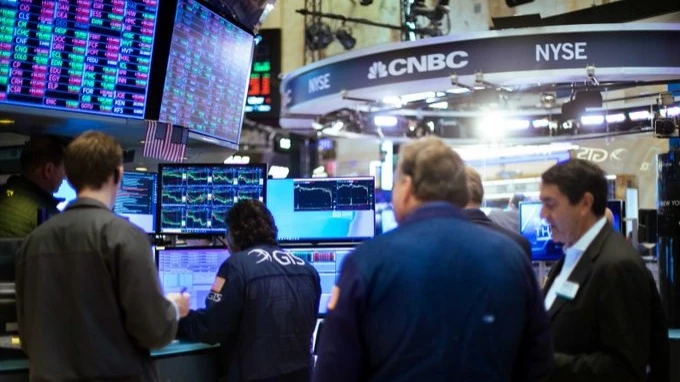
Photo: X / NYSE
U.S. stock markets opened lower on January 20 amid U.S. President Donald Trump's decision to impose new 10 percent duties on goods from eight European countries opposed to United States control over Greenland.
Jan. 20 was the first day that U.S. investors were able to react to renewed risks of tougher duties on goods from Europe, as trading floors in the U.S. were closed on Monday, Jan. 19, due to Martin Luther King Day celebrations, CNBC noted.
Details
The S&P 500 fell 1.4%, leveling off the gains it has made since the start of 2026, Bloomberg points out. The Dow Jones fell 1.4%. Nasdaq 100 lost 1.7%. Russell 2000 - an index of small and medium capitalization companies - on the contrary, added 0.12%.
At the pre-market on January 20, the largest decline in the U.S. stock market was demonstrated by the securities of technology companies. At the opening of trading, shares of Meta, Google's parent company Alphabet, Amazon and Tesla fell by more than 2%. Shares of Nvidia lost more than 3%. Quotes Apple and Microsoft lost 1.2% and 1.5%, respectively.
The VIX volatility index, known as the "fear index," jumped 27% on Jan. 20 and surpassed the 20 mark for the first time since November.
Investors returned to the so-called "Sell America" strategy, continuing to sell off the U.S. dollar and bonds. The dollar index, which reflects the performance of the U.S. currency against a basket of six major currencies, fell 0.9%. The yield on benchmark 10-year U.S. Treasury bonds, which moves in the opposite direction of prices, rose to 4.29%.
Gold prices on Tuesday, January 20, broke another historical record and for the first time exceeded the mark of $4,700 per ounce (+1.2%). Silver rose by 0.7% to $95.308 per ounce, after earlier updating the record, rising to $95.49, notes Reuters.
What are the analysts saying?
- "Recent events serve as a reminder that the U.S. economy is not immune to the uncertainty caused by Trump's policy changes. That said, lingering concerns about the Fed's independence - reinforced by the delay in appointing a new [U.S. central bank] chairman and the ongoing investigation into [current Fed chief] Jerome Powell - add another factor of caution to the U.S. dollar," said Convera's lead currency and macro strategist George Vessey. His opinion quotes CNN.
- "This is one of those weeks when you have to be prepared for anything: There are too many unpredictable factors for both U.S. and global markets - and most of them have to do with the U.S. president," CNN quoted Yardeni Research President Ed Yardeni as saying.
Despite the heightened nervousness, stock market losses have so far remained relatively limited compared to the turbulence seen in markets last April, which was triggered by Trump's announcement of duties ranging from 10% to nearly 50% on virtually all goods imported into the U.S., CNN noted.
- However, Wedbush analyst Dan Ives, Wall Street's chief techno-optimist, sees no reason for serious concern, CNBC writes. "Technology stocks will come under pressure amid investor flight from risky assets, which will hit AI companies first and foremost. Ultimately, however, we see this as an opportunity to build up positions in the technology leaders of 2026 and beyond," Ives noted. "The verbal skirmish" between Trump and the European Union, according to the analyst, will give investors another chance to enter the securities of tech companies "despite attempts by the 'bears' to sound the alarm time after time." "The AI revolution is still in its early stages, and this week's ongoing 'soap opera' does not, in our view, change the big picture: in 2026, the Fourth Industrial Revolution will reach the next stage of growth," Ives concluded.
This article was AI-translated and verified by a human editor