Between stool and TikTok: How former Tinkoff tops are building fintech in the Philippines

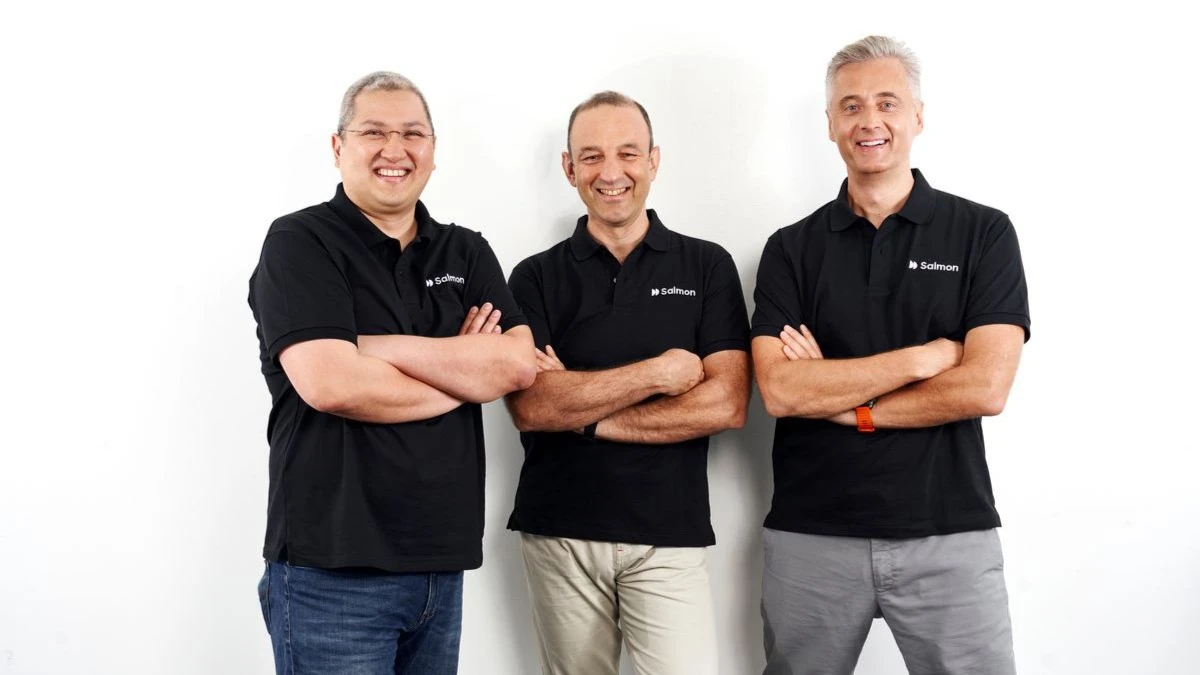
Former top managers of Tinkoff raised $200 mln through equity investments and debt instruments, built a bank in the Philippines and within 2 years became one of the five largest retail lenders in this country. In an interview with Oninvest editorial director Elena Tofanyuk, Salmon co-founder Georgy Chesakov described how to launch a neobank where there are no credit histories, scoring and financial literacy.
Beginnings: credits and stools
"Driving through the province, you see a bank branch, customers sitting on stools, waiting," is how Georgy Chesakov describes his first impressions of the Philippine banking system. Out of 5 employees, two are working - it's a crazy experience, especially for young people. They don't want to be on stools, they want it like TikTok. They don't want all these employees, they want things done quickly," he says. And he continues, "Good banking is like air. When it's there, you don't notice it. You only notice it when it's not there.
In 2022, Georgy Chesakov, Pavel Fedorov and Raffi Montemayor were looking not for a country for their startup, but for a window of opportunity - a market where they could build a full-fledged consumer fintech from scratch without having to compete with the big players. The choice fell on the Philippines. The country turned out to be a financial-technical paradox. On the one hand: food ordering, cabs, marketplaces - everything works through mobile applications. Smartphone penetration is 75%, internet penetration is almost 100%. But financial infrastructure lags behind: according to World Bank data for 2024, just over half of Filipinos over the age of 15 (50.2%) have an account - this includes accounts with banks, mobile operators, and microfinance institutions. The Philippines has the 4th highest number of adults without a bank account.
Only 35% of Filipinos believe they have access to credit; for most, the only financial solution in life is an installment plan for a motorcycle or a phone. With loans - the most difficult - Chesakov and Associates decided to start. It is loans, he says, that are the most difficult to launch, but they bring in revenue - without loans, a bank can hardly make money;
Chesakov recognizes that start-up lending is a challenge, but it allows you to build a business with clear revenue. In low-income countries, retail clients are not ready to pay for service, and it is practically impossible to scale up through commissions alone. The next step is to build a deposit base. This is both a solution to the tactical problem of funding the lending business and a way to establish relationships with clients;
Credit Opportunities Window
The retail lending market in the Philippines is underdeveloped. At one pole are microfinance companies operating in the payday-loan segment: short loans at high interest rates. At the other are large local banks. They issue credit cards to employees of companies with payroll projects. For new borrowers, the product remains inaccessible.
"Until recently, there was almost no one between these two extremes. Only Home Credit worked in the niche of lending through stores," says Chesakov. Salmon saw a window of opportunity here. The startup began issuing POS loans in a motorcycle helmet store. The applicant only needed to show a passport, and the decision was made in 3-5 minutes. Loans were approved virtually unselected, but the default rate was about 20%. Within the team, this was considered acceptable, Chesakov recalls. But as soon as Salmon tried issuing the same loans to electronics and appliance stores, the default rate rose to 60% of loans. "That's where it got uncomfortable," Chesakov says of the first days after New Year's Eve 2023.
It was impossible to scale such a business. The team began to tighten the rules step by step, launch a scoring model taking into account behavioral, mobile and alternative data, and build a decision-making system. According to Chesakov, the level of defaults was reduced almost tenfold within a year.
"We want to have a bank."
In January 2024, Salmon acquired a controlling stake (59.7%) in Rural Bank of Sta. Rosa, a Philippine bank operating primarily in rural areas. This gave the team access to full-fledged banking: Salmon began issuing deposit products and credit cards, and opening current accounts. By May 2024, the bank's total deposits grew by 439%. Salmon could now compete with traditional players not only in loans, but also in basic financial services.
"Competition here is still low, and the level of banking service is frankly weak," says Chesakov. - Just look at the ratings in the App Store: the top banks have less than 2, and the best fintech wallet has 4.7. In other countries, at least the leaders of the banking sector reach normal ratings - you can see that they are moving forward. This is not the case here yet";
The Rural Bank of Sta. Rosa has increased its profit by 76% from 94.5 million to 166.7 million Philippine pesos in the first nine months of 2024. Deposits grew 5.7 times, mainly driven by deposits from affluent customers, while the loan portfolio grew more than ten times, driven by POS and cash loans to the mass segment.
When the fintech model started to work, Salmon took the next step - it launched a mobile application with the functionality of a digital bank: multi-currency accounts, transfers, savings, payments. Neobank now offers four credit products: they can be applied for online or at one of the 3,000 offline points of sale located in retail stores across the country;
From survival to scale
In three years, Salmon has raised about $200 million in investment from outside investors: of that, $99 million is in equity investments and the rest is debt, Chesakov told Oninvest. This is in addition to the founders' own funds invested in the business;
Investors include the International Finance Corporation (IFC), Abu Dhabi's sovereign fund ADQ/Lunate, Singaporean private equity firm Northstar Group and others.
The co-founders raised their last round of funding in 2025 - $88 million, of which $60 million was a bond loan. This first tranche of $60 million was part of a three-year, $150 million program. Another $28 million was an equity investment. This round was led by Spice Expeditions, founded by Nick Huber. The latter also had time to work at Tinkoff - as an independent director. The partners do not disclose the value of their business, suggesting to wait for an IPO;
"The first three years were a struggle to survive. When you have $50,000 left in your account, as was the case before the Argent Creek Partners deal in July 2023, faith is all you have. Now we have moved to a different state: it is no longer a struggle for survival, but a struggle for scaling," says Chesakov.
The team expects to eventually reach 30-40 million customers - that's about a third of the Philippines' population - as well as launch in neighboring countries. "We're looking at all of Southeast Asia, but our idea is to build a real, infrastructure-built business in each country. That's especially important if you're in the lending business. Not a story of 'in and out' in ten countries, but a deep presence," says Chesakov. When asked if you want to be worth a billion, he says Salmon will be worth a billion, if not one.
In Russia, we have gone the way of building a fabulous business and changing the fintech industry," Chesakov recalls. - This experience and lessons can be applied to other markets. We are not copying models - we are copying approaches: how to understand the problem, how to find a solution";
This article was AI-translated and verified by a human editor