Big test: 19 of 20 major airlines cut flights due to fuel prices

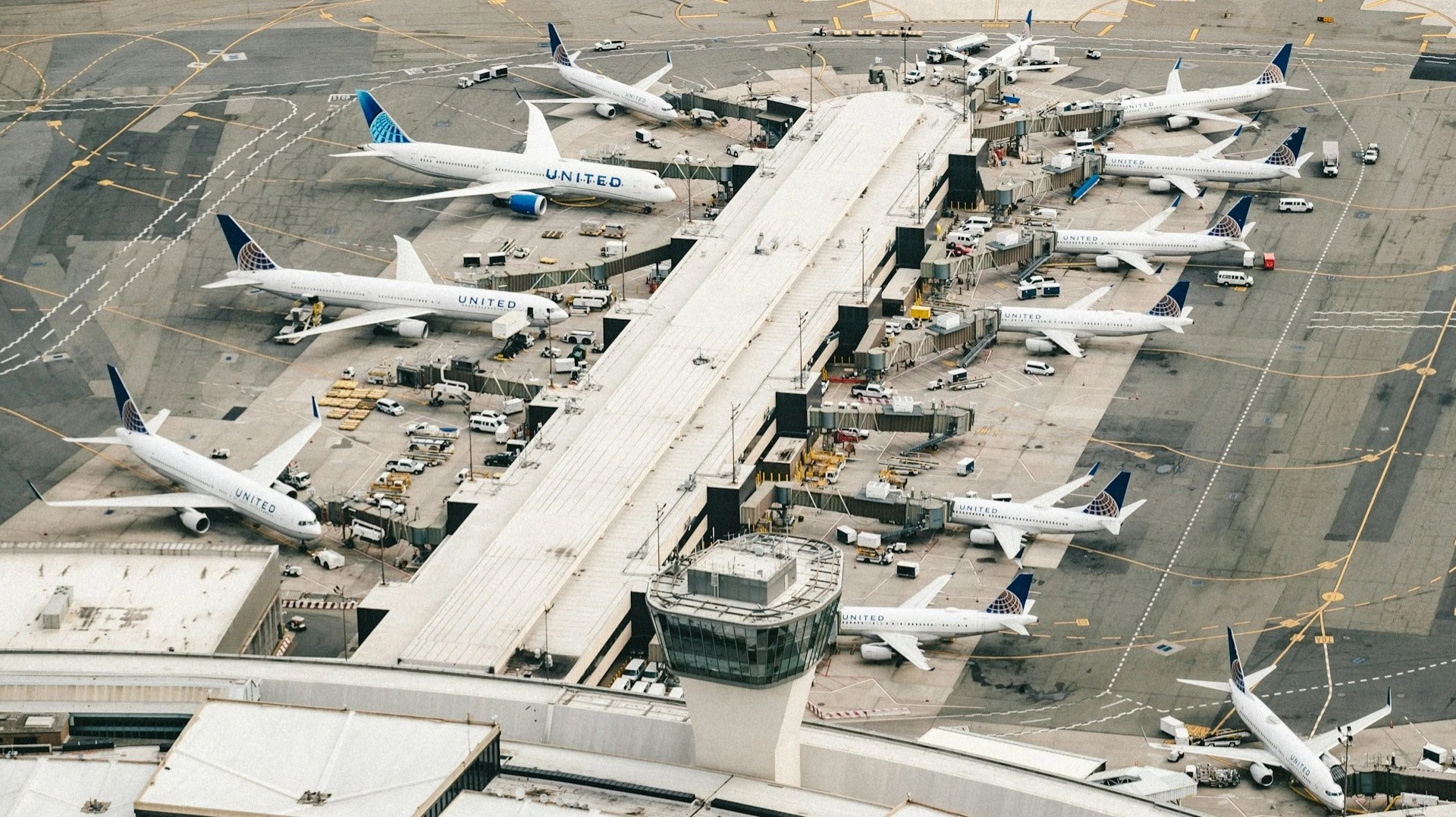
19 out of 20 major airlines have cut the number of flights due to high jet fuel prices / Photo: unsplash.com / Chris Leipelt
The war in the Middle East has disrupted energy supply chains, doubling jet fuel prices and forcing major carriers around the world to reduce flights ahead of the peak summer season.
Details
Airlines around the world have cut their planned traffic for Ma by about three percentage points since the beginning of Ma, and all but one of the top 20 airlines have already cut flights, according to data from analytics firm Cirium cited by Business Insider.
In the study, Cirium examined the plans of United Airlines, American Airlines, Delta, Emirates, China Southern, Qatar Airways, Southwest Airlines, China Eastern, Turkish Airlines, Air China, Ryanair, LATAM, British Airways, IndiGo, Air France, Air Canada, Singapore, Lufthansa, Cathay Pacific and Japan's All Nippon Airways (ANA). According to the analysts' findings, all of these airlines, with the exception of Turkish Airlines, have cut their schedules for Ma. Moreover, most of them cut the number of flights by 0-5 percentage points, which corresponds to a global change of 3%, according to the Cirium study. The contrast is particularly marked in the plans of Qatar Airways, whose schedule for May 2026 has been reduced year-on-year by 33%.
Air carriers have reduced their schedules in all regions of the world. And the dynamics of changes by major airlines in North America, Europe and Asia-Pacific are very similar. Two airlines specializing exclusively in short-haul flights - Southwest and Ryanair - appear to have suffered the least - they have reduced the number of their flights in Ma 2026 (compared to Ma 2025) by less than 1% so far, according to the Cirium study.
The original forecast of 4-6% growth in traffic in 2026 has been revised by the researchers: analysts now allow the number of flights worldwide to fall to 3% in an unfavorable scenario.
The scale of the crisis
Prices for jet fuel have doubled since the start of the war in the Middle East, reaching almost $200 per barrel, outpacing the rise in oil prices, notes Business Insider. Fuel is the second largest expense for airlines after labor - about 25-30% of total operating costs, MarketWatch notes, citing data from the International Air Transport Association (IATA). As the war drags on, aviation fuel is becoming increasingly difficult to obtain for countries that do not produce it or have limited stocks, Business Insider writes.
And Europe, which imports about 60% of jet fuel from the Middle East region, is in a particularly vulnerable position, MarketWatch notes, citing data from OPIS (Oil Price Information Service), a division of Dow Jones. Much of the supply passes through the Strait of Hormuz, a key artery for global energy increasingly destabilized by conflict.
Aviation fuel stocks in Europe have perhaps "six weeks or so" left, Fatih Birol, executive director of the International Energy Agency (IEA), said April 16. "By the end of Ma, flight cancellations in Europe could start to occur due to fuel shortages and this is already happening in several Asian countries," IATA director general Willie Walsh noted on April 17.
Aircraft fuel reserves at London Heathrow are at a "very, very low" level and are rapidly declining, said Paul Sankey, president of Sankey Research, as quoted by MarketWatch. According to him, at the current rate of consumption, the airport may exhaust reserves by July.
However, European Transport Commissioner Apostolos Tzitzikostas disagreed with such estimates: "All flight cancellations announced to date by European airlines are due to the high cost of jet fuel, not to a shortage of supply," he noted in X.
What the airlines are doing
Lufthansa on April 21 announced the reduction of 20 thousand short-haul flights until the end of October - this will save about 40 thousand tons of jet fuel, the airline expects. On April 21, the first 120 flights have already been canceled. In parallel, Lufthansa plans to cut 4 thousand administrative positions by 2030 and transfer some short-haul routes to cheaper subsidiaries - low-cost City Airlines and Discover, where personnel costs are up to 40% lower than at the flagship airline, notes Bloomberg.
The jet fuel problem is most acute in Europe and Asia, while it's "much less of an issue" for the U.S., United Airlines CEO Scott Kirby noted (quoted in MarketWatch). Even so, United Airlines cut its profit forecast for 2026 amid a jump in energy prices in its first-quarter report this week. The carrier now expects earnings of $7 to $11 per share on an adjusted basis this year, down from its previous, January forecast of $12 to $14 per share. United Airlines also lowered its capacity forecast for the second quarter of 2026 by 5 percentage points from its original plan.
AirAsia in turn cut 10% of its flights and raised ticket fares by 30-40% to cushion the rise in jet fuel prices. It has become "the most serious challenge" for the airline, Air Asia CEO Bo Lingam said in early April(quoted in Business Insider).
Against this background, MarketWatch points out, airlines are actively upgrading their fleets with more fuel-efficient airplanes, but supply chain problems have significantly slowed this process: the order queues at Boeing and Airbus have stretched for years.
This article was AI-translated and verified by a human editor