Boeing reported its best sales since 2018. How did the stock react?

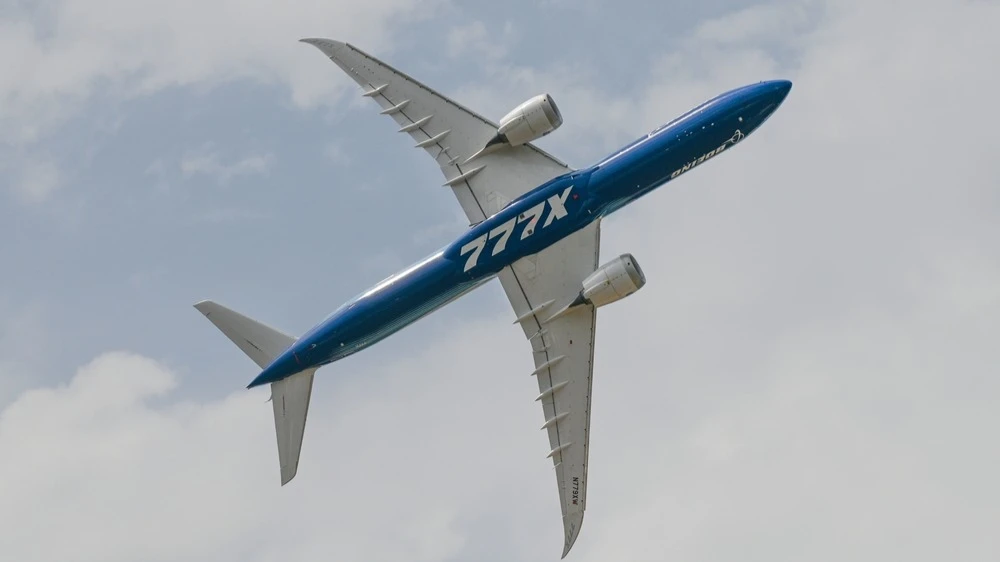
Boeing reported its best sales since 2018 / Photo: Aerospace Trek / Shutterstock
Boeing's deliveries of airplanes last year reached the highest since 2018. Against this background, the American aircraft giant reported positive cash flow for the second consecutive quarter and reported a 57% increase in quarterly revenue, notes Bloomberg. The market's first reaction to the company's report was a sell-off in shares: investors were alarmed by persistent losses in key segments. Nevertheless, then quotes recovered the fall.
Details
- Boeing's total order book through the fourth quarter of 2025 rose to a record $682 billion as the company's customers use airplane purchases to strengthen their position with the White House, Bloomberg explains. Boeing received 336 net orders and delivered 160 airplanes to customers during the quarter, and 600 for the year as a whole. Deliveries of airplanes last year were the highest since 2018.
The company increased production of the 737 narrow-body program to 42 airliners per month, and of the long-range 787 Dreamliner program to eight aircraft per month. The aircraft manufacturer stressed that it is now focused on stabilizing production rates.
- Revenue in the fourth quarter rose to $23.95 billion versus the $22.6 billion LSEG analysts had expected, CNBC writes.
- The company reported adjusted earnings per share of $9.9, the highest quarterly total in a decade or more, according to a Bloomberg estimate. The closing of the sale of the Digital Aviation Solutions unit in November boosted earnings for the period by $11.83 per share, the company said in a statement. Excluding that one-time effect, Boeing's loss per share of $1.9 was deeper than the $0.5 analysts had forecast, Bloomberg data show. Earnings were also positively impacted by a one-time $9.6 billion gain related to the sale last year of the digital aviation division to Jeppesen.
- The company reported fourth-quarter net income of $8.22 billion, or $10.2 per share, after a loss of $3.8 billion, or $5.5 per share, a year earlier.
- Free cash flow, an important metric that investors use to assess Boeing's ability to fund its capital-intensive operations, totaled $375 million in the fourth quarter, beating analysts' expectations.
- The company has not provided a financial forecast for 2026. But one of its goals for this year is to start generating more cash than it spends. During a call with analysts, Boeing Chief Financial Officer Jay Malave said he expects positive free cash flow of $1-3 billion at year-end, Reuters reports. For this purpose, the company needs to accelerate the pace of production of airplanes, writes The Wall Street Journal. At the same time, Boeing management has noted in recent weeks that a more ambitious goal - $10 billion of annual free cash flow - can be achieved only in a few years, the newspaper reports.
"We are making good progress, and there is much reason for optimism at the start of the year. At the same time, along with progress comes rising expectations: customers and shareholders will demand more from us this year," CEO Kelly Ortberg said in an address to employees. His quote is quoted by Bloomberg.
What are some of the problems Boeing has?
Boeing ended the year with negative free cash flow of $1.9 billion, underscoring continued pressure on cash generation despite a rise in annual revenue to $89.5 billion, SeekingAlpha notes. The debt load also increased following the purchase of supplier Spirit AeroSystems, with total debt reaching $54.1 billion at the end of the year.
In addition, Boeing still has a long way to go to deliver previously delayed airplanes to customers - some of which have yet to receive regulatory approval, CNBC notes.
Speeding up production would also help Boeing keep pace with Europe's Airbus, which in recent years has taken advantage of its U.S. rival's difficulties, the WSJ notes. Over time, deliveries of the A320 family of narrow-body jets have caught up with deliveries of comparable 737s, despite Boeing's roughly 20-year lead in that market. Last year, Airbus delivered more airplanes to customers than its U.S. rival, but was forced to postpone some A320 deliveries because of quality control problems with panels from a Spanish supplier.
Meanwhile, Boeing and Airbus aircraft deliveries are still 20-30% below the peaks of the end of the last decade due to post-pandemic shortages of components and labor.
What about the stock?
Boeing shares were falling by almost 4% at the beginning of trading on January 27, but then the securities recovered the fall and are now trading in the plus by 1.7%. Since the beginning of the year, the securities have risen 14%, becoming the best among the components of the Dow Jones Industrial Average, notes Bloomberg. Despite the formal earnings, investors remained cautious as the company continues to record losses in key business segments, SeekingAlpha explains. The commercial aircraft division recorded an operating loss of $632 million for the quarter. The defense, space and security segment also remained unprofitable, posting an operating loss of $507 million. The main factor was a one-time write-down of $0.6 billion on the KC-46A refueling aircraft program due to higher production support costs and supply chain issues.
This article was AI-translated and verified by a human editor