Boeing shares climb out of the hole after Alaska Airlines incident. Is the crisis over?


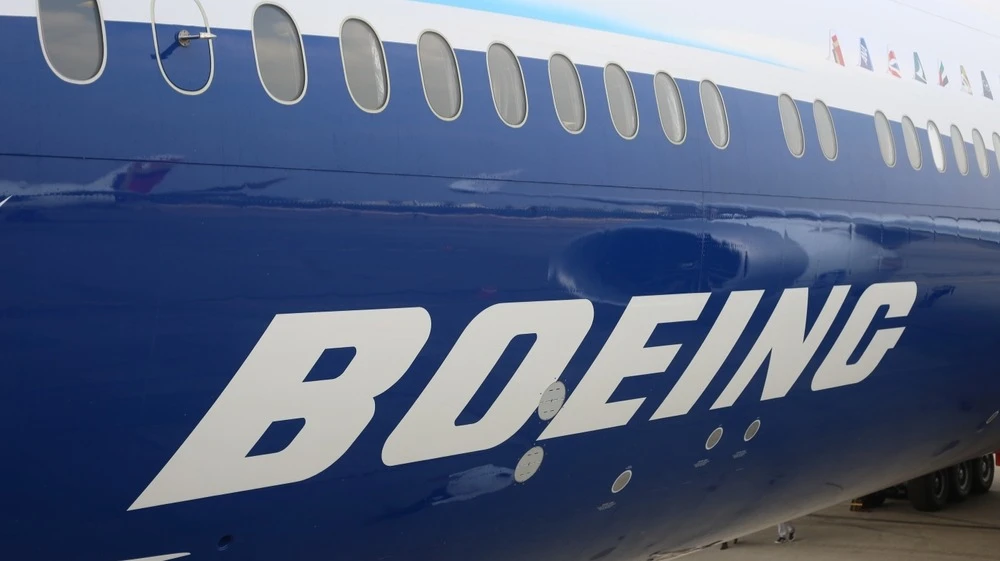
2025 was the best year for Boeing since 2018 / Photo: Elkins Eye Visuals / Shutterstock.com
Quotes of the aerospace corporation Boeing rose on Tuesday, January 13, by 2%, reaching a mark of $244.55 at the end of trading. This became the maximum since the first week of January 2024, when there was an incident with the 737 MAX Alaska Airlines: the fresh airliner during the flight ripped out the door plug, which led to the collapse of shares. As the investigation revealed, the airplane's design had a flaw in its assembly: several mounting bolts were missing. This event started a protracted crisis, which brought down the capitalization of the aircraft manufacturer by almost 50% over the next 11 months.
Boeing's market value has increased by more than a quarter over 2025 and has already added more than 12.5% since the start of the new year, allowing the company to become the top performer in the Dow Jones index, CNBC notes . However, the stock is still 45% off its peak in early 2019, Barron's reminds us.
What supported the quotes
Boeing's report on fourth-quarter 2025 deliveries was the reason for Tuesday's gains. While a strong 2025 completion isn't the main thing investors are excited about, it provides something that has long been missing: hope after tough years, Barron's notes.
The company delivered 160 airplanes during this period, compared to 57 a year earlier. Among them, customers received 115 airliners of the top MAX model, compared to 35 in the fourth quarter of 2024.
For all of 2025, Boeing delivered 600 airplanes - 72% more than the year before. That result slightly beat Wall Street analysts' expectations, according to FactSet, and was the best since 2018.
Also for the first time since 2018, the American aircraft maker has surpassed its European rival Airbus in terms of net orders, CNBC notes. Boeing has 1,173 airplanes, with more than a hundred 737 Max aircraft ordered in December by Alaska Airlines, whose aircraft suffered from poor-quality assembly. Airbus has 889. Nevertheless, Airbus is still ahead in terms of deliveries in 2025: it sent 793 airliners to customers.
2018 was the last time Boeing reported an annual profit rather than a loss. Since then, the company's shares have been under pressure: they have been dragged down by problems with MAX assembly control, production failures, pandemic and declining profitability of the defense business. The main impetus for the aircraft maker's stock, according to Barron's, could have come from CFO Jay Malave's comments in December. He actually confirmed the company's expectations to reach positive cash flow in 2026 and outlined a long-term goal of $10 bln.
What the analysts are saying
Jefferies analyst Sheila Kahyaoglu forecasts that Boeing will ramp up deliveries to 654 airplanes in 2026, including 491 of the MAX model. This assumes a further increase in the production rate of the narrow-body airliner. It is the increase in output that has a greater impact on quotations than the figures for the fourth quarter, the analyst emphasizes.
The Wall Street consensus forecast for Boeing's deliveries for 2026 is slightly higher - about 670 airplanes, Barron's writes. At the same time, the more airplanes will be shipped to customers, the higher the chance for a positive financial result and growth in free cash flow. According to analysts' forecasts, in 2026 the company may show free cash flow of $2 billion after the outflow of the same amount in 2025. By 2028, the figure could reach $10 billion with annual deliveries of about 875 aircraft, Barron's said.
Wall Street is increasingly optimistic about Boeing's prospects, according to MarketWatch data. Of the 31 analysts who track the aircraft maker's securities, 25 advise to buy them. At the same time a month ago there were 23 such recommendations, and three months ago - 21. Only one analyst suggests selling the company's shares, the rest are neutral. The Wall Street consensus price target is $254.7 per share, which implies a potential upside of 4% from the closing level of trading on January 13.
This article was AI-translated and verified by a human editor