Delta Air Lines has projected 2026 earnings growth of 20%. Why did the stock fall?
2025 brought record profits for the air carrier

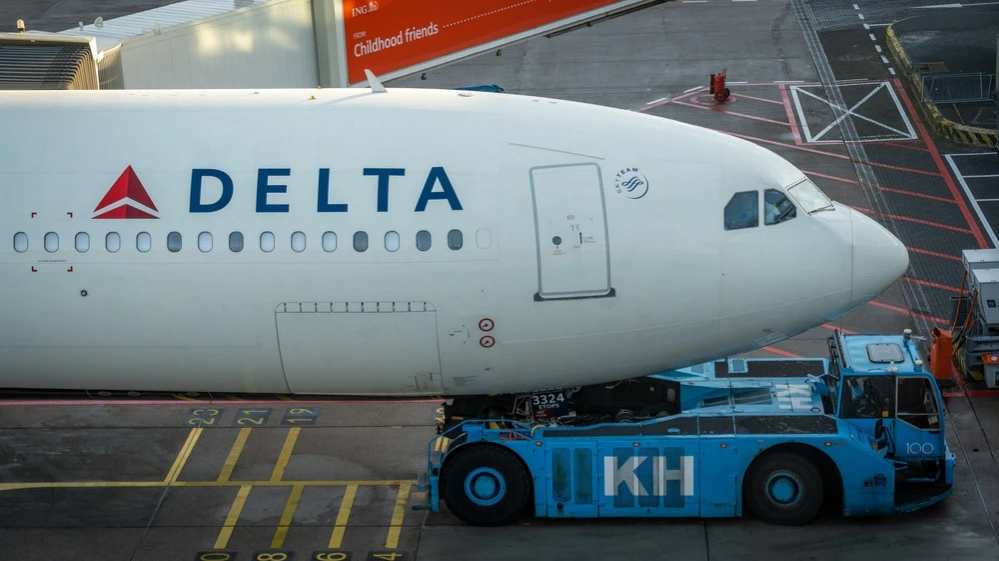
Delta sees a growth point in 2026 in premium service / Photo: Shutterstock.com/Milos Ruzicka
Airline carrier Delta Air Lines projected profit growth in 2026 of about 20 percent after 2025 was a record year for the company. Wall Street analysts, however, were expecting more. In trading on Jan. 13, the carrier's shares were down more than 4% at one point. The airline also announced that it would start buying Boeing airplanes, whereas earlier it relied more on Airbus. Against this background, Boeing's shares hit a two-year high.
Details
After posting record earnings of $5.82 per share in 2025, airline carrier Delta Air Lines projected the figure for 2026 to grow by about 20 percent more to a range of $6.5 to $7.5. This could come from demand from affluent customers and corporate travelers, despite continued difficulties in selling economy class seats, the company's management said at a conference call following the release of the financials, Reuters reports.
The company's expectations came as a surprise to Wall Street, which had expected more. Analysts, according to LSEG, had forecast earnings per share growth in 2026 by an average of 24% to $7.25, Reuters writes.
Shares of Delta fell in trading Tuesday after the report was released, down 4.1% to $68.1 at the moment. Over the past 12 months, they have increased in price by only 4.2%.
As Delta reported
Delta said last year was its best year ever in terms of premium and diversified revenue, with nearly 60% of sales coming from premium service, loyalty programs and other sources beyond tickets, including its longstanding partnership with American Express. Total passenger revenue grew just 1% in the fourth quarter, with revenue from economy class tickets down 7% year-on-year and premium products, by contrast, up 9%.
Adjusted fourth-quarter earnings came in at $1.55 per share, slightly above analysts' expectations, Reuters noted. Revenue of $14.6 billion is generally in line with Wall Street expectations. The quarterly result was negatively impacted by the U.S. government shutdown, which led to the cancelation of tens of thousands of flights in America and reduced the airline's quarterly profit by about $200 million, Delta management said. The industry was also pressured by a sharp drop in demand in 2025 due to the imposition of U.S. duties, which undermined consumer confidence, Reuters recalls. Delta's forecast for 2026 assumes that such shocks will not be repeated, the agency writes.
Boeing's order
Also Tuesday, Delta said it will purchase 30 Boeing 787-10s as part of its long-term fleet renewal strategy, with deliveries beginning in 2031 and an option for 30 more airliners. The model will be new to the airline's fleet.
Delta has relied on Airbus for the past 15 years, building a fleet of narrow-body A220s and A320s, as well as flagship wide-body A330s and A350s. The Boeing order, Bastian said, reflects the company's desire to diversify its supply and reduce its dependence on a single manufacturer.
Boeing shares in trading on Jan. 13 hit their highest since January 2024: they were up 3.2% to $247.4 at the moment.
Trends for 2026
Companies in industries such as apparel, automobiles and travel are increasingly targeting more lucrative premium segments, fueled by strong demand from affluent consumers, Reuters noted. Bastian said "the main strength of consumer demand is in the upper price segment," and Delta customers continue to prioritize travel and higher-end services. He acknowledged, however, that lower-income consumers are struggling right now, adding, "Fortunately, that's not our market." Nearly all of the seat growth in the airline's plans is in the premium segment, while there will be almost no expansion in the main cabin, the top executive added.
Uneven demand for business class and budget seats is changing the entire U.S. airline industry, Reuters notes. Budget and ultra-budget carriers targeting price-sensitive passengers are struggling with profitability and overcapacity, leading to consolidation and reduced operations. Allegiant, for example, has announced plans to acquire Sun Country Airlines, and Spirit Airlines filed for its second bankruptcy in one year in August.
According to Bastian, international demand is generally robust, but individual markets such as Canada and China have not yet recovered. Flight loads to China remain well below pre-pandemic levels. He said the upcoming World Cup could help revitalize inbound tourism and relieve pressure on international routes.
This article was AI-translated and verified by a human editor