Breaking down the disruptors: how robotaxis are breaking the Uber economy

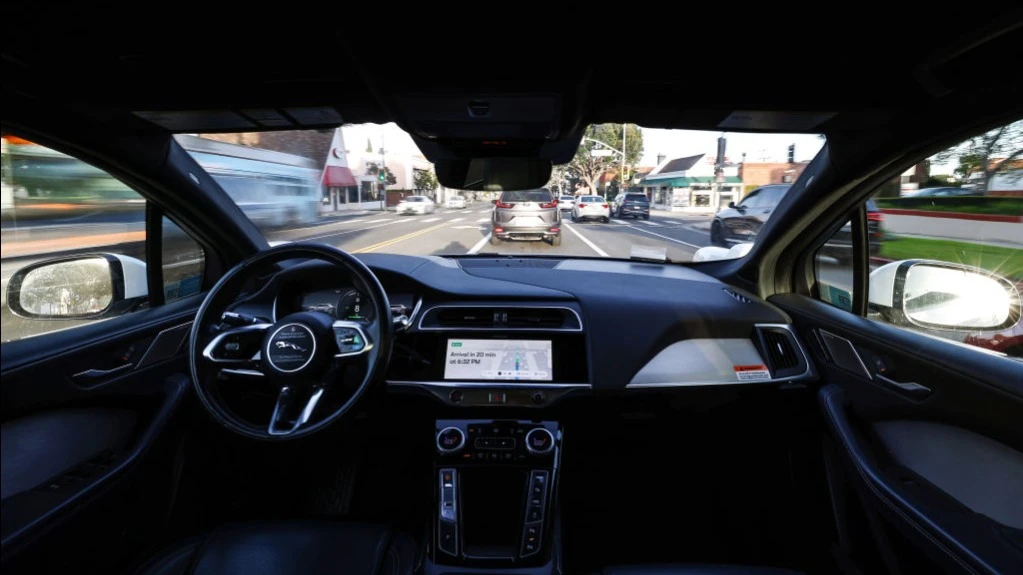
Uber destroyed the business model of traditional cabs with privileges for drivers, now robots threaten the Uber model. Photo: Mario Tama/Getty Images
Digital mobility platforms Uber and Lyft, which recently successfully disrupted the traditional cab market with new technologies, are now under pressure themselves. The value of their shares is declining - investors fear that the emergence of fully autonomous robot cabs will make past innovation leaders obsolete.
The birth of Uber: how technology defeated labor unions
In the early 2000s, while on a business trip to Ma with colleagues, we called a cab, but the driver refused to put four passengers in his five-seater car. Why? "The union won't allow it. If you want to travel with four people, call a second car," was the nonchalant reply. There was nothing to do - we called the second car, paying double the price.
So I'm not surprised that the idea to create the modern cab calling service Uber came to its founders Travis Kalanick and Garrett Camp after similar "adventures" in Paris, according to The Guardian.
Cab drivers by then had been a very close-knit group for many years, which controlled both transportation conditions and prices. If you don't like it, walk.
"If you live in San Francisco and haven't tried UberCab yet, definitely give it a try. This service... eliminates all the downsides of cab rides... You press a button and you see tons of options... You pick a car, a driver, and a price - you get exactly what you pay for. And you're helping to break the evil empire of cab licenses," TechCrunch co-founder Michael Arrington marveled in 2010. He also astutely noted that since all you need to connect a driver to Uber is a car and a smartphone, anyone can become a cab driver and earn money.
Another five years later in May 2019, the company went public with a $75 billion capitalization, but before that, a lot happened to it.
"If you're second, you're a loser first."
Back in 2015, Kalanick argued that Uber needed to pursue unmanned transportation - otherwise the company risked falling behind and being "disrupted" - just as it had itself disrupted the traditional cab business.
As part of this idea, in 2016, Uber bought Otto, an unmanned truck development company founded by former Google employee Anthony Levandowski, for $650 million. And immediately got sued by Google, which claimed that Levandowski stole 14,000 confidential files from Waymo - Google's autonomous vehicle development arm - in order to give them to Uber. The arguments at the trial included fragments of Kalanick's correspondence with Levandowski, in which the Uber founder and CEO wrote, among other things, that you have to win at all costs, because if you're second, you're just the first loser.
And in February 2017, a new scandal broke - a former Uber employee wrote a critical post about the company's corporate culture, in particular, about the lack of intolerance to harassment and sexism. As a result, in June 2017, Kalanick left the company he created, and Dara Khosrowshahi became CEO.
He announced a corporate culture overhaul, managed to settle a dispute with Waymo, even though it cost the company $245 million in stock, and took Uber to an IPO.
In 2020, Uber CEO Dara Khosrowshahi sold the high-cost robotaxi division to cut losses.
Thanks to the efforts of Khosrowshahi and the team, 2023 became the first profitable year for Uber - the company showed $1.1 billion in operating profit against a loss of $1.8 billion the year before. A year later, Uber's main competitor, Lyft, also announced that it had reached profitability. So is the new digital mobility platform industry doing well now? Not quite. Shares of Uber and Lyft are both down this year, the former by nearly 15% and the latter by more than 31%, despite good quarterly and annual reports.
Among other things, investors fear that the new technology will lose out to the newest technology - unmanned robot cabs.
Trendy, safer and soon cheaper - why people will choose robots
A year ago, Nvidia CEO Jensen Huang announced that the unmanned transportation revolution had finally begun, and the industry would soon reach multi-trillion dollar turnover. In March 2025, Kalanick said at a summit in Los Angeles that he believes Uber made a mistake when it sold its unmanned division in 2020.
Waymo, the current market leader in the U.S. drone market, raised $16 billion in investment in February 2026 at a total valuation of. $126 billion, which is almost comparable to the market valuation of Uber, which as of February 16 was $145.96 billion. And this is despite the fact that Uber will make 13.5 billion trips in 2025, and Waymo only 15 million, according to a report by J.P.Morgan (available at Oninvest's disposal). Such is the power of the charm of a fundamentally new technology, but it's not just that.
Privacy is an important point. My acquaintances from San Francisco say that they are willing to pay a little more for a ride on a robotaxi, just to get rid of the need to be in a closed space with a stranger, and also to maintain a polite conversation with him. An additional plus is the ability to customize the climate and music in the cabin exactly the way you want.
However, safety may be even more important. Just the other day, a federal jury in Phoenix, Arizona, ordered Uber to pay $8.5 million to a female passenger who claimed that one of its drivers raped her in 2023. The case could set a precedent for many similar lawsuits, The New York Times reports. Some law firms have already begun gathering information for class action lawsuits against Uber and Lyft for driver sexual harassment. Uber objects - 99.9% of rides are incident-free.
As for safety in terms of driving, Waymo claims that robotaxis have 84% fewer airbag deployment accidents and 73% fewer injury accidents compared to human-driven cars. However, analysts surveyed by Bloomberg believe that it's too early to draw independent conclusions about the higher safety of robotaxis.
And finally, potentially, robotaxis can become cheaper than conventional ones, because they can work tirelessly practically around the clock (excluding time for refueling/charging), and there is no need to pay a human driver. It's true that right now it costs Waymo about $100k to install unmanned equipment at a cost of $73k for a car, but it's clear that as production scales, the price of robotaxis will decrease, while live drivers already cost Uber about $2 per mile and are constantly demanding to pay them more.
Obi estimates that between April and December 2025, the prices of Uber and Lyft rides in San Francisco, USA, have increased while Waymo's costs have decreased. Robotaxi is still slightly more expensive (an average of $19.69 dollars per ride versus Uber's $17.47 and Lyft's $15.47), but the gap is small and trending downward. The cheapest at all was Tesla's robotaxi ($8.17 per ride), but it is not yet fully autonomous (humans monitor the robotaxi's behavior). In addition, the taxi fleet is small, and Elon Musk's company has the longest waiting time - more than 15 minutes.
Apparently, Tesla's prices are currently being subsidized by the company in order to popularize the service. "Elon Musk's company is showing us a preliminary scenario of the coming price wars in the robotaxi industry," believes The Verge.
Uber's plan: a human-robot hybrid
Uber and Lyft realize the potential threat. To reassure investors and show that the company has a strategy for survival in the new reality, Uber from 2024 began publishing special reviews of the autonomous car market along with its annual reports.
In the latest issue of the 2025 results, the company spoke in the style of "debunking five popular myths about robotaxis". In order not to dive into their enumeration, I will summarize briefly: according to Uber's management, the mass introduction of robotaxis will lead to the overall growth of the transportation market, which will benefit everyone - both the current car-calling platforms and the manufacturers of autonomous cars. Right now, robotaxis have a tiny share of 0.1% of the on-call transportation market. But even in the foreseeable future, they won't be able to close the entire market, or at least most of it, due to the fact that all regional markets are very different and characterized by strong fluctuations in travel demand, both within a day, within a week, a month, and so on. At the peak of demand, robot cars will be in short supply, resulting in long waiting times, and during downturns they will be idle, putting owners into losses.
The company sees a way out in combining the work of robotaxis and regular drivers, who, thanks to dynamic pricing, will be able to balance supply and demand by connecting at peak times.
As an example, we compare Waymo's robotaxi operation in Austin and Atlanta (where it is called from the Uber app) with settings in San Francisco, Los Angeles and Phoenix - where Waymo operates through its own app. According to Uber, where companies collaborate rather than compete, autonomous cars have 30% higher utilization and 25% shorter wait times.
"Unmanned vehicles will change the supply of rides, but will not change the way demand is aggregated," Uber summarizes.
In addition, the company hopes that in addition to the currently leading Waymo, behind which is such a whale as Google, as well as the giants Tesla and Amazon with its robot cab Zoox in the market will soon become noticeable small startups, and they will compete will be easier to rely on the already ready infrastructure of orders through Uber, than to build from scratch their own.
As Wired noted last summer, Uber has more than a dozen partnership agreements with developers of autonomous cars and delivery robots, using a "throw spaghetti everywhere and see what sticks" strategy. The company's partners include Baidu, Pony, WeRide, Nuro, Avride, Waabi, Wayve and others. By 2029, Uber promises to provide partner robotaxis in 15 cities, not only in the U.S. but also in the UAE, Saudi Arabia, Hong Kong, the U.K., Germany and Switzerland.
Lyft is generally moving in the same direction - in the summer of 2025, the company signed an agreement with China's Baidu to promote its Apollo Go robotaxi in Germany and the UK, and in September - c Waymo to operate in Nashville (USA).
But there's a big difference between Uber and Lyft. While Uber is the recognized leader in both the U.S. (76%) and global (46%) on-demand cab market, Lyft is still only #2 in the U.S. with about 20% of the national market. That's not insignificant, but is it enough to successfully enter the new era of autonomous vehicles?
According to Bloomberg in early February, the vast majority of analysts (51) maintained a "buy" recommendation for Uber, 11 "hold" and only one "sell" recommendation. "Overall, we believe the bullish scenario for Uber remains in place and we maintain a positive view on UBER stock," according to Morgan Stanley. However, Wedbush analyst Scott Devitt believes the market is "underestimating" the negative impact unmanned cars could have on the discounted cash flows of cab ordering platforms. And he explicitly advised Lyft in December to "stay away" because given its position in the market, attempts to forge partnerships with robotaxis are unlikely to be successful.
Of course, that's just his opinion. But I think Kalanick would definitely find a reason to bring up his favorite saying about coming in second and losing.
Incidentally, according to the NYT, in the summer of 2025, Uber began talks with its disgraced founder Travis Kalanick to jointly acquire the U.S. business of Chinese robotaxi company Pony.ai.
This article was AI-translated and verified by a human editor