Brent oil cheaper than $100, S&P 500 up 1%, fear index down: results of the 17th day of the war



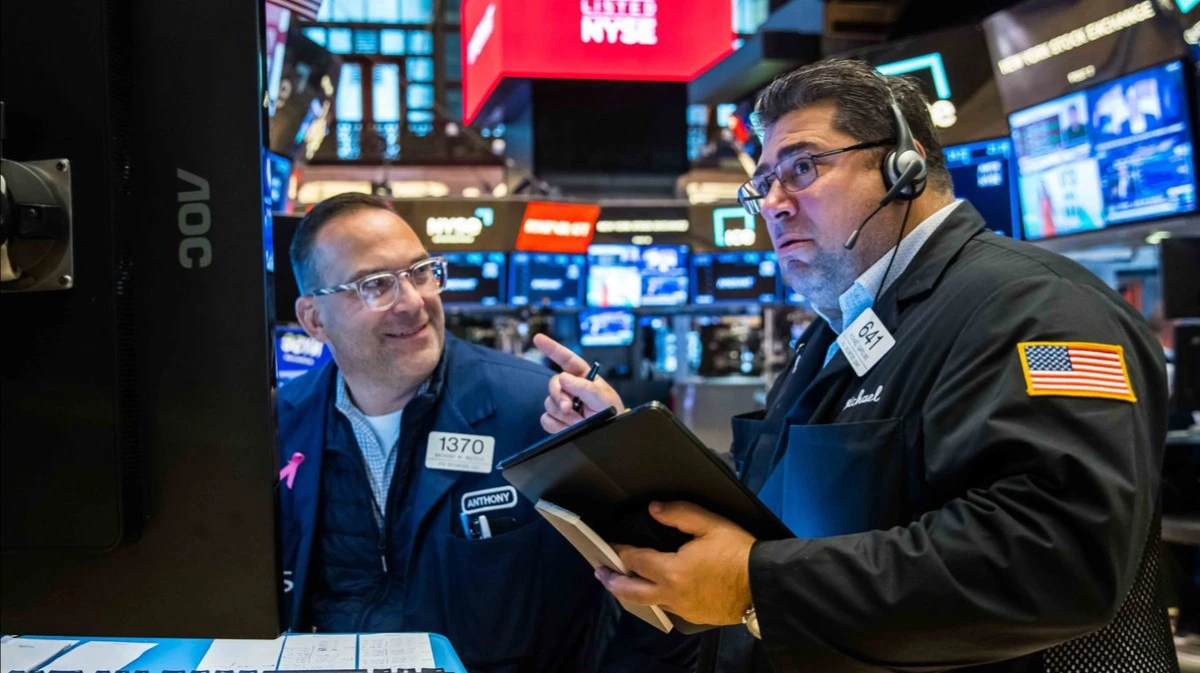
Photo: X/NYSE
All four major U.S. stock indices rose in trading on March 16 on the back of falling oil prices. The international benchmark Brent fell below $100 per barrel, losing more than 3% in price. Investors are cautiously hoping for the resumption of shipping in the Strait of Hormuz, which is key to oil exports from the Persian Gulf, and are also waiting for the arrival of raw materials from strategic reserves on the market.
Details
- The S&P 500 broad market index rose 1 percent.
- The blue-chip index Dow Jones Industrial Average added 388 points, or 0.83%.
- The Nasdaq Composite Technology Sector Index rose 1.22% on Monday.
- The Russell 2000 index of small and mid-capitalization companies was up 0.94%.
- By contrast, the CBOE Volatility index, known as the Wall Street Fear Index, fell about 13% to 23.6 points.
- WTI crude futures were down 5.6% to $93.1 per barrel at the close of exchanges in New York. Mark Brent crude oil fell by 3.1% and held below $100 per barrel.
- Spot gold prices fell slightly - by less than 0.1%. Silver rose by 0.5% to $81.
- Bitcoin jumped 3% and was worth about $73,900.
What's in the stock market
Although stocks ended the day in the plus, they finished below their intraday highs. At the peak, the Dow was up more than 600 points, or 1.3%, while the S&P 500 and Nasdaq Composite were up 1.4% and 1.6%, respectively. Monday's rebound was warranted after weeks of market pressure over the war with Iran, according to CNBC. However, the growth of indices was not accompanied by strong trading volumes - which is what the "bulls" usually want to see in order to consider the movement convincing, emphasizes the channel. Turnovers on both the New York Stock Exchange and Nasdaq on Monday were noticeably below average, CNBC says.
Meta shares rose more than 2% on Monday on the news that the company plans to cut more than 20% of its staff, CNBC notes. Meta itself called this information "based on speculation." In addition, Nvidia 's securities added 1.6% on the first day of its main annual conference GTC, which included a speech by the company's CEO Jaysen Huang. He said the chipmaker expects revenue of at least $1 trillion by the end of 2027 from orders for its Blackwell and Vera Rubin artificial intelligence GPUs.
Investors are watching the Fed's sentiments. The central bank is expected to leave interest rates unchanged on March 18, Bloomberg writes. However, the main intrigue is how the regulator will react if the consequences of the war in the Middle East begin to pull the Fed's goals - to curb inflation and support employment - in opposite directions, the agency notes.
Why oil got cheaper
Oil prices declined slightly on Monday after U.S. Treasury Secretary Scott Bessent told CNBC that the U.S. is allowing Iranian oil tankers to pass through the Strait of Hormuz, which connects the Persian Gulf to the open sea.
In addition, the US administration plans to announce the creation of a coalition of countries to escort ships through the strait, The Wall Street Journal reported, citing its sources. However, US President Donald Trump's mid-day comments showed that this coalition is probably not yet finalized as he called on other countries to join the process. After his words, oil recovered part of the fall, although at the end of the session it still remained in the negative.
On Friday, Trump ordered strikes on Iran's military facilities on Kharq Island, through which the country exports most of its oil. Although the attack did not affect oil infrastructure, Trump said Monday that the U.S. would consider strikes on those facilities if Iran continued to block the strait.
In addition, Trump told NBC over the weekend that Iran wants to make a deal, but Trump himself is not ready for that yet.
Bank of America raised its forecast for the average price of Brent crude oil in 2026 from $61 to $77.5 per barrel, while Standard Chartered raised its forecast from $70 to $85.5. Both investment banks cite the situation in the Strait of Hormuz as the main reason for the revision of forecasts.
What the analysts are saying
- "While oil prices may exceed $100 a barrel in the near term, we don't expect them to stay above that mark for long," Treasury Partners Investment Director Richard Saperstine told Bloomberg. - Oil prices will decline as tensions ease and supplies return to pre-crisis levels."
- "While markets may experience some relief if the situation in the Middle East does not deteriorate markedly, any rebound in equities risks being short-lived unless there are clearer signs of a path to de-escalation that would cool oil prices," Chris Larkin, managing director at E*Trade Morgan Stanley, explained in a conversation with Bloomberg.
- Fed governors will likely try to avoid bigger revisions to their forecasts as uncertainty remains around how long the energy shock will last and weak employment data underscore the need to continue balancing inflation and labor market risks, Evercore's Krishna Guha told Bloomberg. While there may be some hawkishness in the Fed's summary of economic projections, Guha expects the median forecast to still call for one rate cut this year and another in 2027.
This article was AI-translated and verified by a human editor