Britain's prime minister refuses to step down after a failed election. What's in the markets?

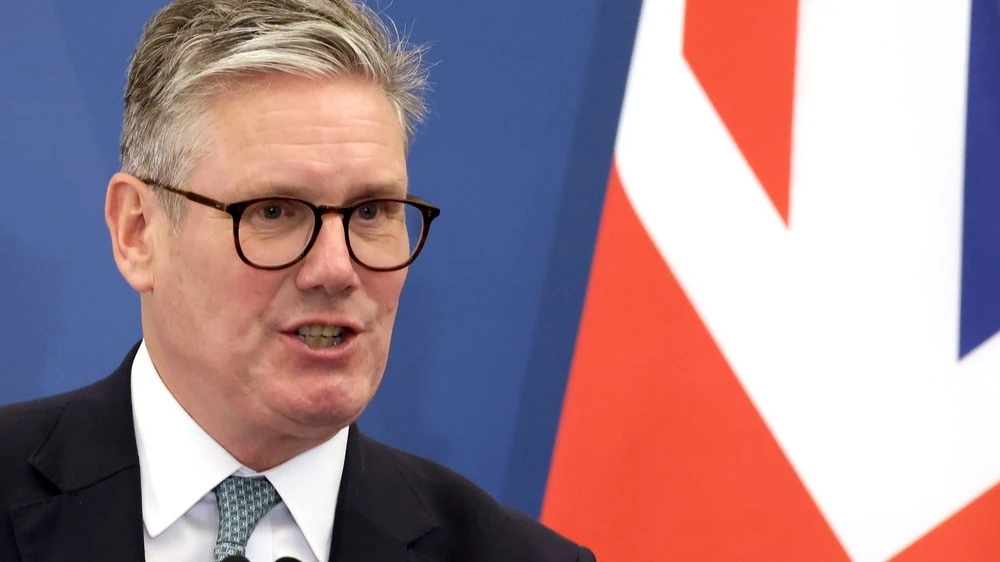
Starmer refused to leave office after Labor's election debacle / Photo: Alessia Pierdomenico / Shutterstock
British Prime Minister Keir Starmer has said he has no intention of resigning after preliminary results of local government elections in the UK pointed to major losses for the ruling Labor Party and increased doubts about his political future, CNBC writes.
Against this backdrop, the UK's FTSE 100 index trimmed its fall and yields on British government bonds declined after several days of sell-offs.
Details
"Voters have made it clear how important the pace of change is and how they want to improve their lives. Labor was elected to meet these challenges and I have no intention of leaving and plunging the country into chaos. I was elected for a five-year term and I intend to see it through," Starmer said, speaking to reporters after the first election results emerged.
Preliminary counting of votes at the May 7 municipal elections in Great Britain (voters voted for their representatives in councils in England and in the parliaments of Scotland and Wales) showed that Labor may lose hundreds of seats in local councils, and control over a number of municipalities will go to other parties. The main opposition Conservative Party of Britain may also suffer losses, CNBC writes, while the right-wing Reform UK and the left-wing Green Party of England and Wales may noticeably strengthen their positions.
Some rank-and-file Labor MPs are already preparing to hold Starmer responsible for the losses and demand his resignation, the TV station reported.
Final election results are expected by Saturday, Ma. 9, when all local councils complete their vote counts.
What's on the market
The yield on 10-year British government bonds (gilts) decreased by almost 6 basis points - to 4.888%. The yield on two-year Gilts fell by 5 basis points, while the yields on 20-year and 30-year securities fell by 9 and 8 basis points, respectively.
The pan-European index STOXX Europe 600 fell by 0.4% in trading on May 8, the British index FTSE 100 was losing more than 1% at the moment, but then - on the background of Starmer's statement - slowed down and now - 0.1% lower relative to the closing on Ma 7.
On Ma 5, gilt yields jumped to their highest since 2008 amid reports of a post-election "plot" within the Labor Party against Keir Starmer. At issue is the fact that Starmer and UK Finance Minister Rachel Reeves have been facing growing discontent within the party over budget policies in recent months, CNBC noted. Social Security reforms have caused additional tension, as well as the appointment in February of Peter Mandelson - a former associate of Jeffrey Epstein - as Britain's ambassador to the United States.
The cost of 30-year borrowing reached its highest level since 1998 on Ma. 5, the TV station noted.
It is the yield of 30-year British government bonds better reflects the attitude of markets to the political situation than the standard benchmark in the form of 10-year securities, because the UK government usually places long-term debt, explained the head of analytical department of AJ Bell Dan Coatsworth. His opinion is quoted by CNBC. "The yield on 30-year Gilts held [before the release of the preliminary election results] at 5.628% after climbing to 5.8% earlier this week from around 5% just three months ago," he noted.
Coatsworth said the election results have heightened concerns about the possible difficulties Starmer may face in trying to retain the post of prime minister. He took office in July 2024. Formally, his term of office runs until 2029.
"Bond markets are reacting nervously to the prospect of political change as the most likely challengers [to the UK prime minister] - [former deputy prime minister] Angela Rayner and [Greater Manchester mayor] Andy Burnham - could advocate higher government borrowing and increased budget spending, which could push gilt yields even higher," the analyst said.
Now, the UK already has the highest cost of government borrowing among G7 countries, CNBC notes.
Government bond yields actually reflect the interest rate that the government pays investors to raise funds.
What's next?
Investors will keep a close eye on the situation in the UK as the final election results emerge, said Deutsche Bank analysts led by Jim Reed. "It is important to watch statements from Labor Party MPs and cabinet members today as the UK government bond market focuses on whether Keir Starmer will retain his position as prime minister after the election result," the analysts said (quoted by CNBC).
They said investors fear that if an attempt is made to oust Keir Starmer as Labor Party leader, his possible successor may relax budget rules and increase the issuance of British government bonds.
"Policy does make a big difference to bond yields," said Freya Beamish, chief economist at TS Lombard. It will be difficult for the Labor Party to shift to a policy of stimulating economic growth through fiscal spending amid high inflation and limited fiscal space, she added.
Context
Inflation in the eurozone in April accelerated to 3% in annualized terms against 1.9% a month earlier, according to Eurostat data. This is the maximum rate of price growth since September 2023, notes Bloomberg. The war in the Middle East increases inflationary pressures in Europe - primarily through rising energy prices and at the same time restrains business activity, points out CNBC.
This article was AI-translated and verified by a human editor