Buffett, Volozh, Powell: Oninvest's heroes of 2025
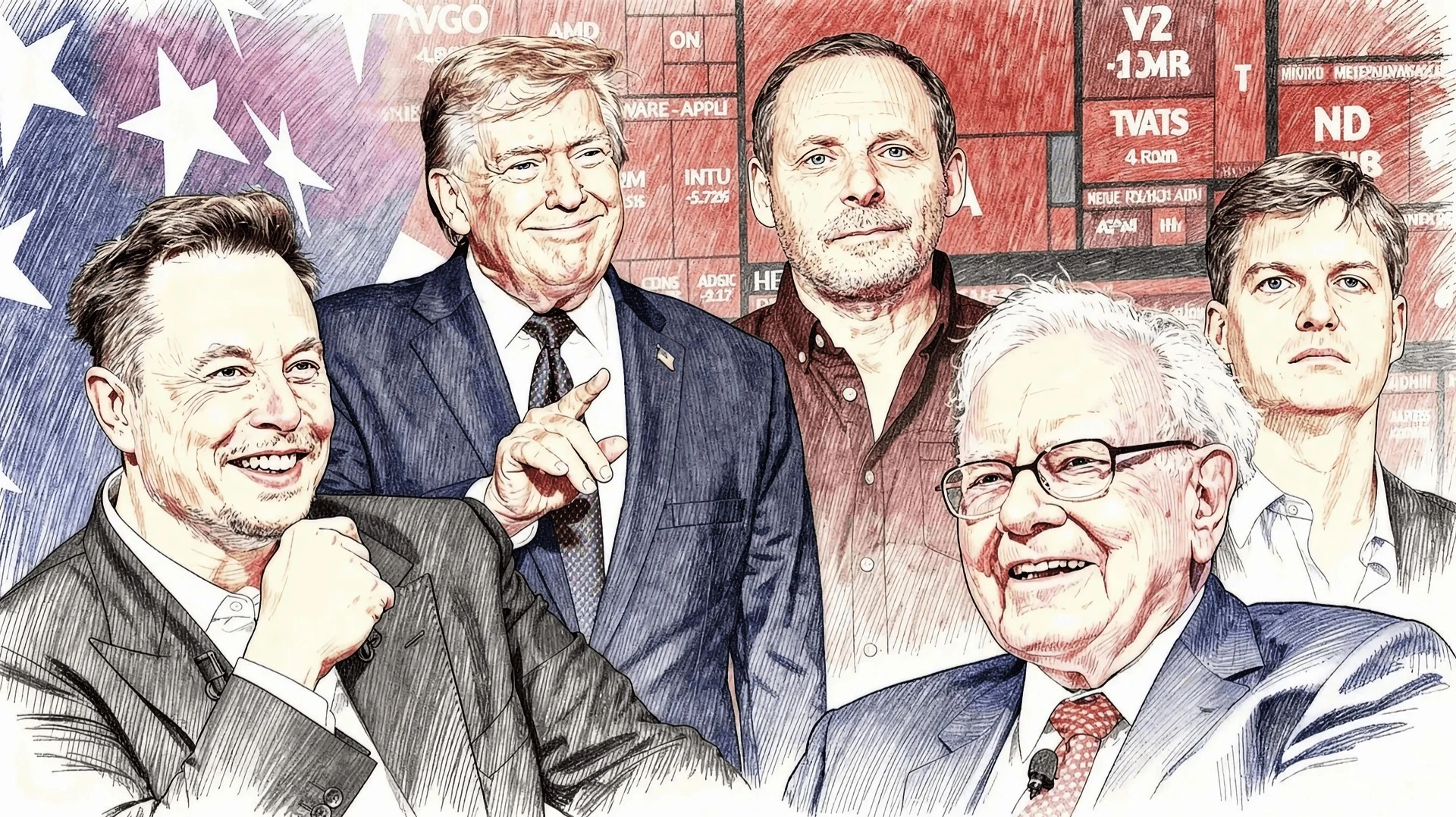
This year, we witnessed outbreaks of geopolitical tension, the threat of a global trade war, internal conflicts within the US administration, and the successes and failures of business leaders. In this article, the Oninvest team has selected the heroes of the year who managed to surprise investors in some way.
Donald Trump, President of the United States
— selected by Oninvest correspondent Yulia Petrova
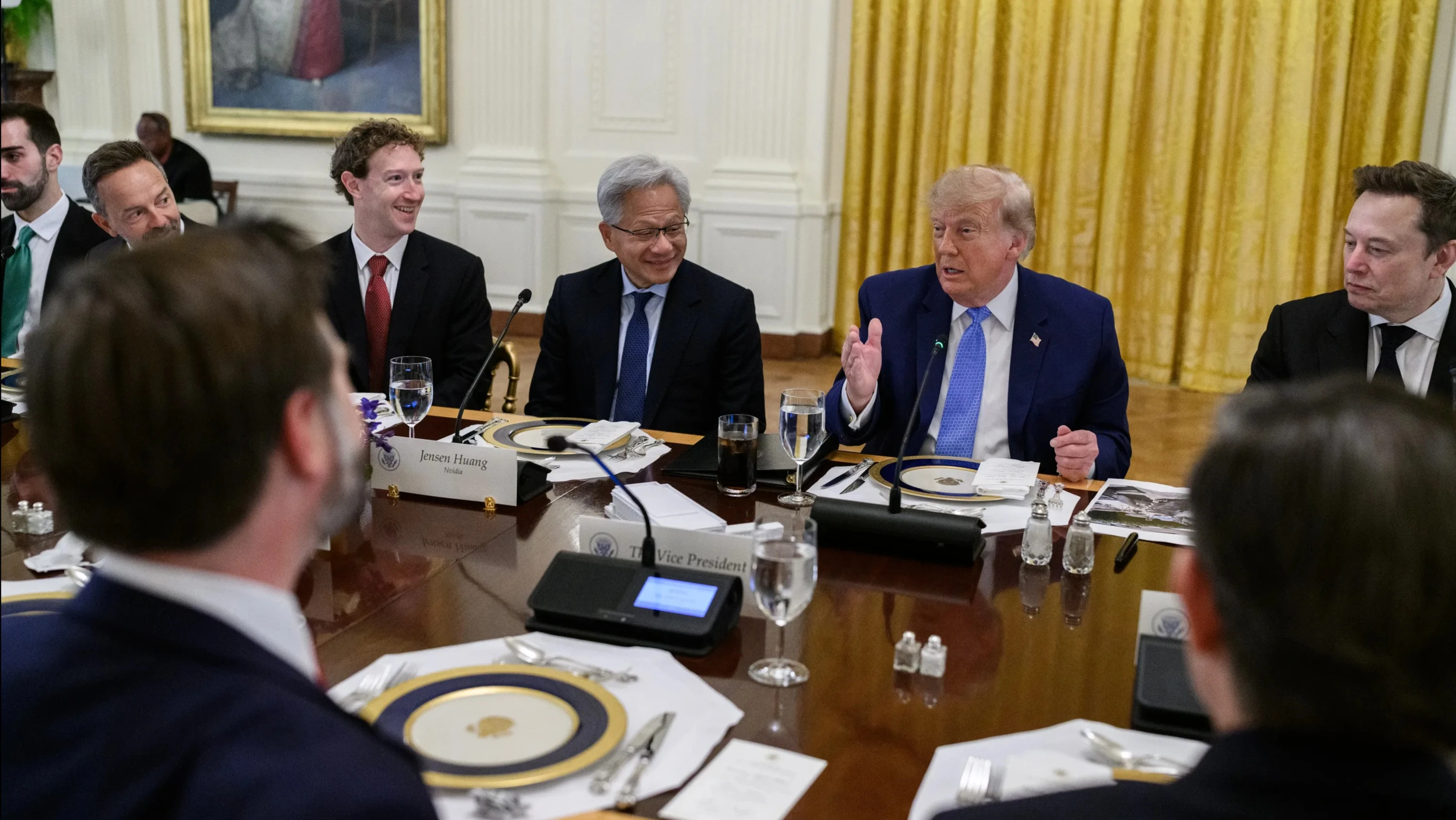
It is difficult to argue that Donald Trump was the main newsmaker of 2025. He began his second term in the White House by tightening immigration policy, closing USAID, withdrawing the US from climate initiatives, canceling the green agenda, banning diversity and inclusion policies, and confronting major American universities and Fed Chairman Jerome Powell personally. Trump actively involved himself in all geopolitical conflicts, bringing Armenia and Azerbaijan, Thailand and Cambodia, Israel and Hamas to the negotiating table, and forcing NATO countries to increase their defense spending. However, he failed to achieve the peace between Russia and Ukraine "within 24 hours" that he promised during the election campaign. Nevertheless, Trump turned his involvement in the Russian-Ukrainian settlement to the advantage of the US in the spirit of America First: he secured access for American businesses to rare earth metals, which are critical for high-tech industries, by signing an agreement with Ukraine, and made American majors the main contenders for the foreign assets of Russia's second-largest oil company, Lukoil, by imposing blocking sanctions against it.
His trade wars with literally the entire world, and above all with China, have caused the US stock markets to crash several times. In April, they experienced their worst slump in five years, when the VIX fear index — a barometer of investor sentiment — exceeded the panic threshold of 60 points. And in October 2025, his rhetoric on tariffs for China led to another Black Friday, when American tech giants lost $770 billion of their market capitalization in a single day. Having abandoned the idea of a digital dollar in favor of a strategic crypto reserve, launched the Trump and Melania meme coins, and signed the Genius Act, which regulated dollar-backed stablecoins, Trump contributed to both the unprecedented growth of the cryptocurrency market, with Bitcoin trading above $120,000, and its sudden and sharp collapse. Reformer or radical, businessman turned politician or politician turned businessman, Trump made investors experience the whole spectrum of emotions in 2025 — from euphoria to extreme pessimism, bringing ruin to some and new opportunities to others.
Warren Buffett, Chairman of the Board of Directors, Berkshire Hathaway
— Editor's choice by Oninvest's Rinat Tairov
Some things are trendy (AI), some have gone out of style (ESG), and some are forever—until they too come to an end. It seemed eternal that the UK would always have a queen, that the US would always be a responsible trading partner, and that somewhere in distant Omaha, the "oracle" and Wall Street legend Warren Buffett, head of Berkshire Hathaway, would always make his invariably wise and far-sighted decisions on stocks. However, on January 1, the 95-year-old Buffett will hand over his position to Greg Abel and, for the first time in more than 60 years, step down from active management of the company. In a world of "sources," leaks, and paparazzi, Buffett managed to cause a real sensation by suddenly announcing his retirement at a shareholders' meeting on May 3, surprising even his successor. "I didn't feel old until I was 90," he said, "but once you start getting old, it's irreversible." What lies ahead for Berkshire is an open question, although the billionaire has no plans to abandon the company (and all of us) just yet. I'm betting he'll make the "Heroes of 2026" list with some new, extremely successful deal.
Arkady Volozh, founder of Nebius
— selection by Oninvest editorial director Elena Tofanyuk
Arkady Volozh has achieved what seems incredible. After the division of Yandex's assets, he built a new successful business, which in 2025 equaled Yandex in terms of capitalization. In mid-December, both were worth $21 billion. After signing major contracts for the construction of data centers, Arkady Volozh became richer than ever before in his history — his fortune is estimated at almost $3 billion. In fact, he taught everyone a lesson by demonstrating his ability to not give up after catastrophic events, including the division of the company, to quickly find a new market niche, to fit into a hype trend, and to earn a new fortune from it.
Jerome Powell, Chairman of the US Federal Reserve
— Editor's choice by Yulia Kotova, Oninvest
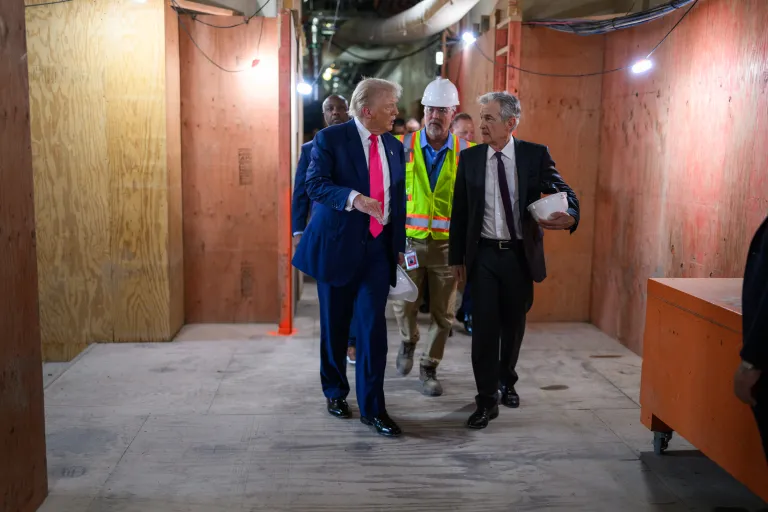
During his last full year as head of the US central bank, Powell had to withstand unprecedented political pressure. Donald Trump, who nominated him during his previous presidential term, threatened to fire Powell for refusing to sharply lower the key interest rate as soon as he returned to the White House. In an effort to subjugate the Fed, the president attempted to remove board member Lisa Cook (unsuccessfully) and installed his protégé Stephen Muran (successfully). Powell parried the attacks, promising not to leave voluntarily and to fight against dismissal. But when Trump arrived in person in the summer to inspect the renovation of the Fed headquarters and demonstratively took an estimate of expenses with inexplicable figures out of his pocket in front of the cameras, Powell's fate seemed sealed for a moment. Even the Fed chairman himself briefly lost his composure and shook his head in disbelief until he realized that the White House had included expenses for another, already completed project in the budget.
In the end, Trump decided not to dismiss Powell, opting for a scenario more favorable to the markets—allowing him to serve out his term until May 2026. In the future, Powell's legacy may be judged not by the level of inflation and economic growth, but by how he managed to preserve the Fed's independence at a tense moment.
Larry Page and Sergey Brin, co-founders of Alphabet
— selection of Elmar Murtazaev as CEO of Oninvest
"The score on the board": this old phrase, often irritating to me, is still the best way to reflect the outcome of any match. For the market, this score is a company's capitalization. This is because value, with all its caveats and conditions, is the main indicator of the effectiveness of a business and the efforts of its management and shareholders. In 2025, Alphabet was definitely the best performer among the Big Seven companies.
Since the beginning of the year, the company's value has grown by 112%, reaching $3.8 trillion (as of December 22). For comparison, Nvidia grew by 47% and Apple by 18%. It is not only the extent of the increase in capitalization that is significant, but also how it happened. The basis for the jump in value is the market's reassessment of the company's technological achievements in the AI race. In a recent lecture to Stanford students, Sergey Brin called the delay in investing in AI one of his biggest mistakes. As a result of three years of efforts to develop AI technologies, what was considered the company's weak point two or three years ago has become the main driver of its growth. According to analysts, the latest version of Gemini 3 (Alphabet's AI model) outperforms competitors' products, including GPT-5, in many respects.
Important addition: Alphabet is successfully integrating Gemini into search and other products. And this is not something that needs to be somehow adapted to the business, but an excellent tool that is already working to improve results. This is Alphabet's style. As was the case before in the race for internet search or cloud technologies, where Alphabet also has an excellent score on the scoreboard.
Michael Burry, the real-life inspiration for the book and film The Big Short, author of the blog Cassandra Unchained
— Editor's choice by Oninvest's Evgeniya Vatamanyuk
Michael Burry has a reputation as a lone investor who sees cracks in the market before anyone else. He attracts investors' attention not so much because of the scale of his capital, but because he is someone who stubbornly goes against the crowd. At the same time, Burry himself is not enthusiastic about either the book or the film The Big Short, which made him an almost mythical hero who predicted the 2008 mortgage crisis — he has always emphasized that the real work of an investor is much less cinematic and much more solitary. It is all the more interesting that in 2025, Burry re-emerged in the public eye: for the first time in a long time, he gave interviews and returned to blogging, where he openly discusses the risks of an overheated market and the AI boom. This mixture of skepticism, independence, and unwillingness to be an "icon" makes him one of the heroes of the 2025 investment market — people listen to him not because he craves attention, but because the market is afraid of missing the moment when Burry is right again.
Luca de Meo, the new CEO of Kering
— Editor's choice by Oninvest's Yana Milyukova
Luca de Meo came to the luxury sector from the automotive industry, with an impressive track record behind him. This decision impressed investors so much that Kering's shares rebounded from their low point and began to rise. De Meo decided to reduce the fashion empire's dependence on Gucci and sell some brands. Since his appointment, Kering's shares have risen by about 1.5 times.
Dan Ives, Global Head of Technology Research at Wedbush Securities
— Editor's choice by Oninvest Vesna Pedchenko
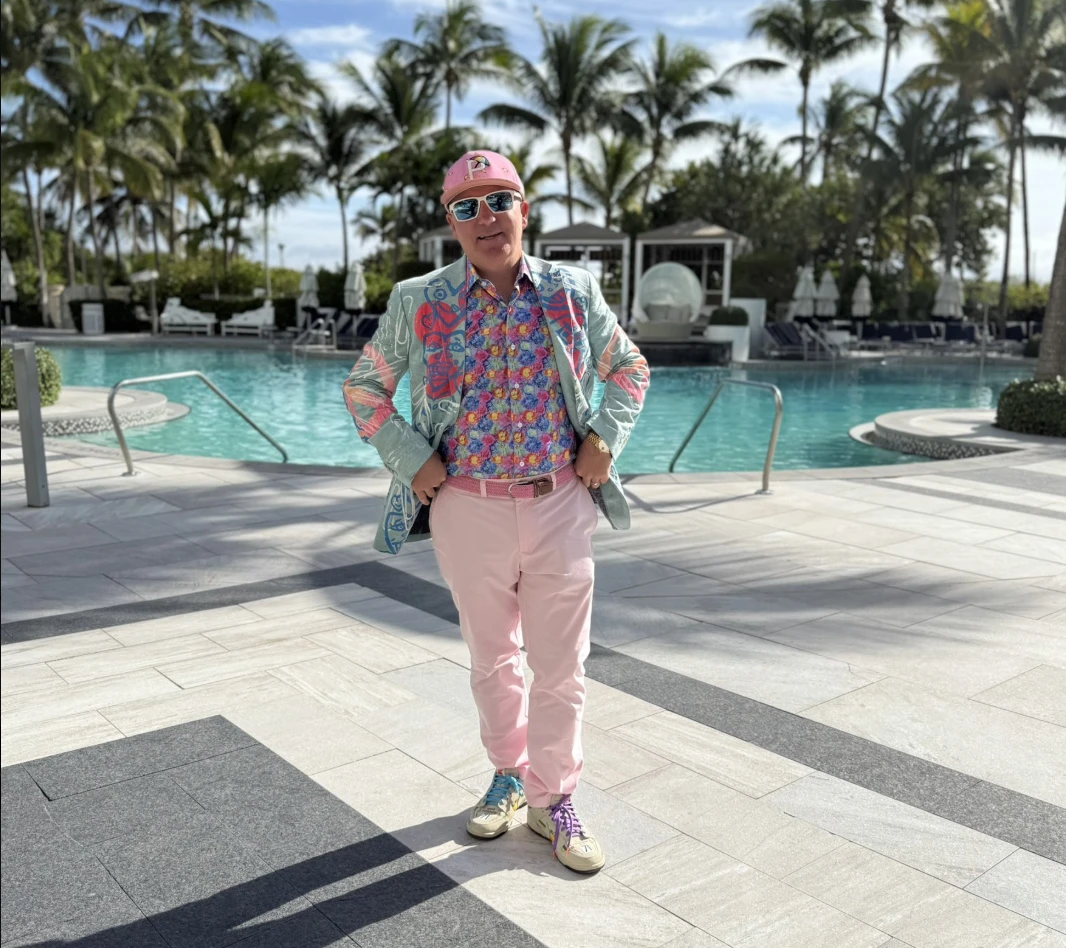
Throughout 2025, the Oninvest editorial team followed not only the investment assessments of Wall Street's chief technology optimist Dan Ives, but also his eye-catching shirts and jackets, which he invariably wore on air. Business Insider even called the analyst a fashion icon: "CNBC is used to guys in [strict Brooks Brothers suits], but when Ives shows up, it's a lot of bright pink." His analytical notes are no less colorful: "Messi in the world of AI" (as Ives wrote about Palantir), "The AI genie is out of the bottle" (about the sector's prospects). Perhaps most often, the analyst spoke about Tesla: he was one of the first to test its robotaxi in June and continued to believe in the company when its stock price fell due to Elon Musk's work in the White House. But even Ives could not avoid a public spat with Musk. "Shut up, Dan," the billionaire wrote on social network X when the Wedbush analyst suggested that the board of directors limit the influence of the businessman's political ambitions. In 2025, Ives launched the Dan Ives Wedbush AI Revolution ETF, a "named" exchange-traded fund, including companies that he believes will shape the future of artificial intelligence, as well as, of course, his own clothing line. Here you can explore the analyst's latest list of AI favorites.
Ted Sarandos and Greg Peters, co-CEOs of Netflix
— Editor's choice by Evgeniya Malyarenko, Oninvest
Ted Sarandos and Greg Peters, who took over the streaming giant nearly three years ago, decided in 2025 to make the biggest deal for Netflix — and one of the largest on the market. Challenging Paramount, headed by a billionaire close to Trump, Peters and Sarandos, who organized fundraisers for Barack Obama, expressed their desire to buy part of the business of Hollywood's oldest studio, Warner Bros. And although it is still unclear how exactly the deal under discussion will affect viewers, of which Netflix and Warner Bros. together have more than 450 million: whether it will be possible to find a balance and maintain healthy competition; and whether movie theaters, which Sarandos has already called "obsolete," will survive, it is quite obvious that Hollywood will never be the same after the change of ownership at Warner Bros. Whether Netflix, which once grew out of a DVD rental service, will bring about a new revolution in the film market depends on Sarandos and Peters. And they have already taken the first step in that direction.
Elon Musk, CEO of Tesla
— Editor's choice by Oninvest's Alfia Zivere
When we were discussing the heroes of the year at the meeting, I said that at least one woman should be included in this group of white cisgender men. Especially since there were many worthy candidates. Three made it onto my shortlist. The first was AMD CEO Lisa Su, who entered into a long-term partnership with OpenAI and made the company Nvidia's main competitor (where the CEO is her cousin). Then there was Lucy Gou, co-founder of ScaleAI, who took the title of youngest self-made female billionaire from Taylor Swift (also my heroine, but I am limited by the number of characters). And Luana Lopez Lara, a ballerina who graduated from MIT and co-founded the market forecasting company Kalshi. She is now on the Forbes list as the youngest self-made female billionaire.
But then came the news of Elon Musk's victory in court over his Tesla bonus, and my attempt to defend diversity failed. Symbolically, the reason was Musk himself — the most controversial figure of 2025. The man who sponsored Donald Trump, who made and then lost billions on political ambitions, became the first person in the world whose fortune exceeded $700 billion. That means Musk is now worth about three and a half times more than the manufacturer of Ozempic. From the point of view of moral attitudes and beliefs, he is my absolute antihero in saecula saeculorum, but in the categories of "visionary," "entrepreneur," and "employee," he is number one on my list.
This article was AI-translated and verified by a human editor