"The market is in for a tough few years": highlights from Burry's interview with The Big Short author
The legendary investor, in an interview with the author of the book that made Burry famous, explains the logic behind his investment decisions and gives a pessimistic outlook

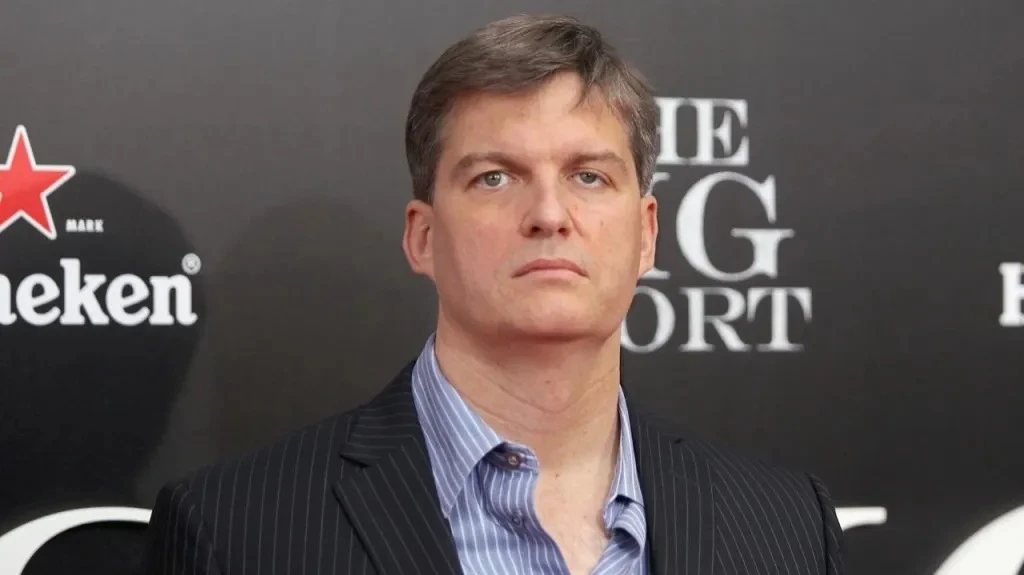
Michael Burry is tough on the market: bitcoin, he says, is "worthless," and the AI boom is comparable to the infrastructure mania of the early 2000s, a period when expectations grew faster than actual results.
For the first time in a long time, the investor was interviewed by writer Michael Lewis, author of The Big Short, a book in which Michael Burry himself was one of the heroes. In the Against the Rules podcast, timed to coincide with the 15th anniversary of the book's release, Michael Burry told us why he closed the hedge fund Scion Asset Management and why he bets against Palantir and Nvidia. And, of course, he gave his forecast about the AI bubble and the future of the market. Oninvest publishes a translation of the conversation with abbreviations.
About the closing of the fund
My investors were usually angry with me. And they were angry even when things were going well. For the last year and a half or so, no one came to me. There were simply no people willing to entrust me with money. And even when we made a profit, the reaction was more like, "Ugh, we don't want to go through this again.
I no longer manage that capital. I now intend to manage only my own money. I think we are in a bad situation in the stock market. I believe the market is in for a rough few years. I think it could be a prolonged "bear" trend reminiscent of 2000.
But the problem is that when the market goes down, it won't be like it was in 2000. Back then, there was a whole layer of stocks that the market ignored, and they went up even when the Nasdaq crashed. Now, I think it's just going to collapse all at once. And it's going to be very difficult to hold long positions in US stocks and still protect your capital. That's why I decided to get out: the structure of the fund obliged me to hold long positions in one way or another. And I didn't want to drag my investors through all that.
I closed the fund and immediately opened all the same positions for myself personally.
About Palantir
Palantir was a company that offered a suite of applications that were incredibly expensive to implement. Once you bought their software, you had to hire their consultants just to install the system and learn how to use it. This reputation was established for Palantir in government circles. Government contracts are a dirty business. But I think they have figured out how to play it and get orders.
Now the share of Palantir's revenue from government contracts has fallen dramatically. It used to make up the majority, but now the revenues are more evenly distributed. All because, in the wave of AI development, they have refocused on the corporate sector. More precisely, corporations themselves have come to them. The top management of any public company - board members, CEOs - they are all under pressure now: AI needs to be implemented urgently.
And so began this race. And now. they're not the only ones. They keep talking about their uniqueness, but IBM is doing pretty much the same thing. IBM's business is actually larger than Palantir's, and it's not as dependent on the government. And government contracts are generally not very profitable. And you know, IBM has a really great business inside, but the market doesn't give it the same generous valuation as Palantir, although it's growing fast too. At any rate, growing at about the same pace
About Nvidia
Nvidia was a good graphics chip company. I knew their CFO, by the way - we talked sometime in 2015 or 2016. I opened a long position at the time and said: "Look, you're doing a great job. I like the way you're doing share repurchases." Our kids played on the same basketball team.
I think I bought the securities a year or two after that. The stock went up... then they went from $20 to $90. Nvidia got lucky. They got lucky with cryptomining because miners needed graphics processing units (GPUs). These chips weren't built specifically for mining, they just happened to be on hand and suited the task.
Palantir and Nvidia are two of the luckiest companies on the planet, neither of which created a product specifically for AI.
About the "billion-dollar" shorts
When it comes to options, the public gets an absolutely crooked, ugly picture. Let's say I buy 50,000 put options (downside bets) on Palantir. Each such contract has 100 shares "stashed" in it. The stock is now worth $200. But I believe the company is worthless, so I bet that the price will fall to $50. This is called buying a "deep out-of-the-money" option - such options are worth pennies because the probability of such a drop seems low to the market. I buy them with a two-year term.
And what does the press do? I get to the gym, turn on CNBC, and there's a headline, "Michael Burry opens a billion-dollar short position against Palantir!". And I actually only spent $10 million on those options. Journalists and analysts take the number of shares I have contracts for and stupidly multiply it by the current market price of the stock. When in fact I only bought the right to sell them in the future, and I paid less than $2 per share for that right. And they count it as if I own those shares at $200 dollars. The difference in the calculations is a hundred times! Two orders of magnitude!
It's the same story with indices. I buy insurance for my portfolio in case the market falls. People say, "Oh, my God, he's shorting the S&P 500 by $1.5 billion." There's a lot of noise, but it's not true. That's the so-called "face value," not the real money I'm risking.
On the bubble in the AI market
The current AI bubble is eerily reminiscent of the dot-com bubble, which was actually an infrastructure bubble (fiber optics and routers). The market collapsed in Ma 2000, but Cisco's revenue was growing in 2001 - the peak of investment occurred after the stock crash.
If you correlate net capex (CapEx) to GDP, you can see clear "mania hills". History teaches us that the stock market peaks before the cost cycle reaches its midpoint.
Now we're in the hype phase: every dollar announced as CapEx on AI inflates the capitalization by three. We saw this with Oracle: a simple announcement of spending plans sent the stock skyrocketing. If you look at the volume of these investments relative to Ma, we are already in the zone of extremes: we have reached shale boom levels and are close to where the market was before the dot-com crash
So I think two years (the term of the options on Palantir and Nvidia - Oninvest) will be enough.
On the debt crisis
Predicting such things as a debt crisis, for example, is a thankless task. I always make this comparison: sitting around waiting for Castro to die is not a strategy. People live long lives, and states have enormous power and an arsenal of capabilities.
The US has Trump as its reserve currency. Obviously, Trump is now "building" the whole world, so the US remains the dominant force. And to bet that they will not get out of the situation, I would not risk it in the near future.
To the question "will the debt just go up and up and up", I would answer, yes, but you certainly wouldn't want to bet your money on when exactly this structure will collapse.
About the Fed
I have a very peculiar view of the independence of the Fed. I think if Trump takes control of the Fed, it could be the end of the Fed. Because if he starts running things, everybody will hate the Fed, not just me. So we'll see. I'm convinced that the Fed has done enormous damage over the last hundred years - since its inception in 1914. And I believe that we simply don't need it.
Unless they're going to... Why would they cut rates now? There's no reason to: inflation is rising, the economy, though creaking, is holding up. And our neutral rate is not 1% or 0% as Trump wants it to be. The real neutral rate is probably around 4%, which is about where we stand right now.
I don't think the Fed does anything particularly useful. I think it's the easiest job in the world. I think there could be a simple department in the US Treasury that would make these decisions.
About bitcoin
I think bitcoin at $100,000 is completely absurd. The same people sit on TV and talk about it so casually: "Well, yes, it is worth a hundred thousand. But it's worth nothing. And everyone took it for granted.
Bitcoin is the tulip bulb of our time. And even worse than tulips, because this thing has allowed a colossal amount of criminality to go deep underground.
Advice for investors
You know, if you're going to buy anything right now, go for health care stocks. This sector is totally out of favor with the market right now.
And if you have an asset that has grown a lot... If you have already made a very, very good profit on it, the quotes are flying upwards, and you yourself feel that the price is overvalued - I think you should sell such an asset.
About "The Downgrade"
You see, I am on the autism spectrum. So I'm quite comfortable alone with my thoughts, and I'm pretty good at shutting out outside noise. Take even this movie: I saw it at the premiere and haven't revisited it since. I read the book when it first came out and never opened it again. That's my attitude: I just move on. And, as you know, I don't do interviews because I don't think it's my forte. I don't think I've done a single one - I haven't talked to anyone in that format - probably since the interview I did for 60 Minutes about " Game of Thrones". And now it's the 10th anniversary of the movie, the 15th anniversary of the book. Yes, I can't believe it's been so long, but I just keep doing my job, and it (the movie and the book - Oninvest) doesn't really affect me.
This article was AI-translated and verified by a human editor