Burry holds 5 stocks because of Venezuela and China. Should we follow his example?

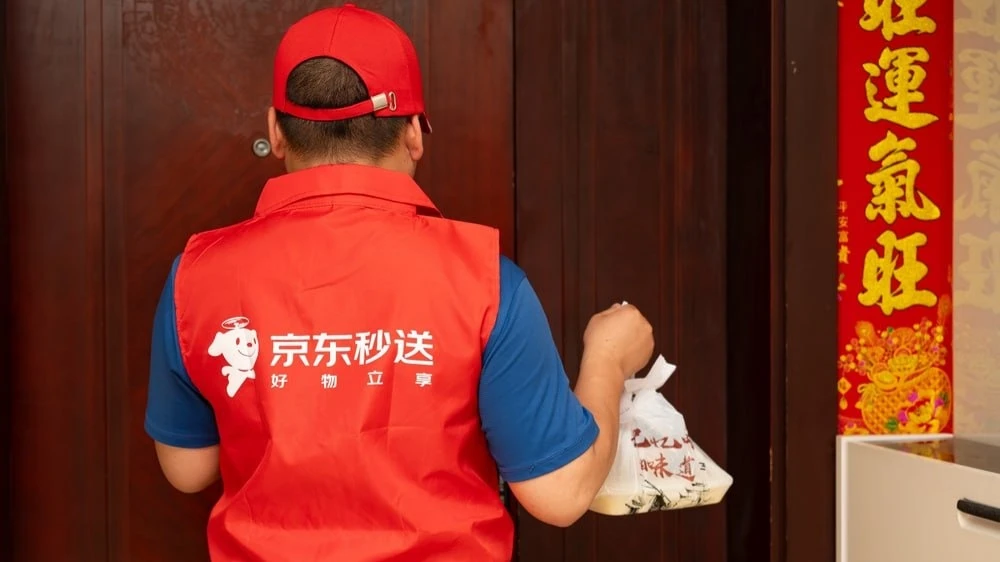
JD entered the food delivery market in China in 2025, where it is trying to compete for market share with Meituan. Both companies have shares in investor Michael Burry's portfolio. Photo: Freer / Shutterstock.com
Legendary investor Michael Burry, who predicted the mortgage crisis of 2007-2008, has named five companies from his current portfolio that could become beneficiaries of the collapse of Venezuelan President Nicolas Maduro's regime and allow him to painlessly survive the new round of aggravation of relations between the United States and China. Oninvest with the help of analysts analyzed whether his bet will work for private investors.
The U.S. operation in Venezuela and the collapse of Nicolas Maduro's regime have not led to volatility in U.S. markets. But, as Burry wrote in his January 5 blog post, the lack of immediate market reaction should not be misleading: in the long run, the "rules of the game" have changed.
The events in Venezuela will have consequences, he writes. On the one hand, Maduro's capture right after China's assurances of support for him should be seen as a warning from the United States to Beijing. China has been buying Venezuelan oil and investing in its oil industry in recent years, and has been increasing its influence in the region through the massive Belt and Road project. For example, in neighboring Colombia. On the other hand, Trump's "outrageous arrogance" and "decisive force" could inspire China to take action against Taiwan, Burry fears.
In such a case, the risks to Chinese stocks would increase, but Burry has found several securities that he believes are safe from a possible escalation of the U.S.-China conflict.
Chinese trio
Burry admits he has shares in three Chinese companies in his portfolio, JD, Meituan and Kuaishou. JD is the second largest e-commerce platform in China after Alibaba. Meituan specializes in product delivery and booking services. Kuaishou is a media platform with short videos and streaming services that also offers shopping.
The reason to keep this trio in the portfolio is the low chances of being hit by U.S. sanctions in case of a new crisis in Washington-Beijing relations, Burry believes. At the same time, he does not bet on the "Chinese Amazon" - Alibaba. According to the FT, the US suspects this company of supplying data and AI solutions (Alibaba has its own chatbot Qwen) to the Chinese MIC and army. The US Department of Defense maintains a list of companies allegedly linked to China's military-industrial complex. If a company is included in the list, it could face trade restrictions and compliance risks, Bloomberg warns.
JD, Meituan and Kuaishou are rivals in the highly competitive Chinese e-commerce market and are investing in AI. JD is fighting Meituan for a share of the delivery market. The former launched ready-to-eat food delivery in February 2025, challenging segment leader Meituan. As a result, both companies, which posted an operating profit in fiscal Q1, posted an operating loss in the second quarter and also saw their net profit drop significantly: JD's net profit halved year-on-year, while Meituan's adjusted net profit plummeted 89% year-on-year. In July-September, JD remained loss-making operationally, while Meituan recorded negative EBITDA and net loss.
JD CFO Su Shan attributed the July-September failure to increased investment in new businesses. Due to the struggle for market share, the company was actively "burning cache": its free cash flow for the period fell by half compared to the quarter before. Meituan CEO Wang Xing also blamed it on competition: in the struggle to maintain its leadership, Meituan abandoned price dumping in favor of cost increases to improve service quality and continued its regional expansion. Meituan's results in fiscal Q3 2025 were markedly worse than in previous quarters this year and last year. The company in its latest reporting did not even bother to indicate the performance trend in percentages if it was negative. Earlier reports have such data.
Kuaishou, on the contrary, increased revenue and profit in fiscal quarters I and II, with net income only slightly slowing down by July-September. In Q2, net income was $780 million, and was 10% lower in Q3. The decline in profits was due to the higher cost of media platform products, increased investment in AI and expansion outside China, as well as one-time events - deferred income tax expense for the third quarter.
U.S. sanctions are unlikely to affect these three companies, as they are focused on the domestic market, but this does not mean that their operational performance will not suffer from a possible escalation of the U.S.-China conflict, warns independent analyst Mikhail Zavaraev. Export-oriented and debt-burdened Chinese economy is unlikely to pass without losses a new round of crisis in relations with the United States, the domestic Chinese market will also be under attack. At least, weak consumer spending in the last few months of last year has already affected the quotations of these companies as well, Zavaraev reminds.
JD shares fell 9% to HK$117.4 (as of Jan. 13) on the Hong Kong bourse over the year, Meituan fell 23.65% to HK$104.9, while Kuaishou jumped more than 102% to HK$78.45.
JD's expected dividend yield is 3.3% with an industry median of 1.54%. Kuaishou has a dividend yield of 0.62% with an industry median of 0.84%. Meituan does not pay dividends.
At least two companies on Burry's list - JD and Meituan - are undervalued, with P/S (Price to Sales) multiples of 0.24 and 1.62, respectively, over the past 12 months. Kuaishou 's is 2.26. In comparison, Alibaba has 2.72, and another competitor PDD (owner of the Temu platform) has 2.66.
In terms of multiples, the companies look relatively cheap, but they are not showing mind-boggling growth rates either, says Zavaraev. "At least from the point of view of potential upside, all three companies are not very attractive," he concludes.
Wall Street is in solidarity with Burry. Out of 42 analysts 36 recommend JD shares to buy (recommendations "buy" and "above the market"), follows from the data of WSJ. The same story with Kuaishou securities: 38 out of 41 analysts give "buy" and "above market" recommendations. And Meituan has 30 analysts out of 45 recommending to buy its shares ("buy" and "above market"), 12 more "hold".
Oil duo
The main beneficiaries of Venezuelan President Nicolas Maduro's collapse will not be American oil and gas corporations Chevron and Exxon Mobil, which are already present in Venezuela or are suing for nationalized assets, but oilfield service giants SLB Ltd (ex-Schlumberger), Baker Hughes and Halliburton, Burry believes. Restoration of production in Venezuela will provide them with new orders.
"I own Halliburton stock and will probably buy more securities or long-term options," he wrote.
Halliburton is one of the world's largest oilfield services companies that specializes in formation evaluation, drilling and production optimization throughout the entire well life cycle. It is one of the leaders in the application of hydraulic fracturing technology to shale oil and gas production. The company has long been active in South America, but, unlike SLB, it has no projects in Venezuela.
Halliburton's financial performance has been declining for several years due to spending cuts by oil and gas corporations amid volatile oil prices. In 2025, oilfield service companies also had to face the consequences of rising prices for rare earth metals from China, which are used in the production of drilling rigs.
In September, Reuters learned about staff cuts at Halliburton, and the company itself reported a sharp - 26 times - drop in net income in the third quarter of 2025 compared to the figure a quarter earlier, to $18 million. But this result still exceeded the expectations of analysts, who after the release of the report positively assessed the policy of cost-cutting companies.
The value of Halliburton securities has grown by about 4.8% over the past year. But since the beginning of this year they have jumped in price by more than 15% on the news about the US military operation in Venezuela.
However, a sharp rise in quotations of American oil companies may be replaced by an equally sharp fall in anticipation of weak results for the fourth quarter of 2025. The average price of WTI crude oil in the fourth quarter of 2025 fell quarter-on-quarter by 9%. Therefore, the current growth in quotations of oil and gas companies should be used only for profit taking, warns Sergey Pigarev, Senior Analyst at Freedom Finance Global.
"We view Halliburton negatively at current quote levels. Pressure on the company's results will continue into 2026. Upstream companies are likely to reduce capital expenditures this year due to falling oil prices," he said.
Halliburton consistently pays a quarterly dividend, and its dividend yield is 2.09% with an industry median of 3.87%. The company does not appear to be undervalued. Its P/S multiple as of Jan. 13 (past 12 months and forward) were 1.27 and 1.25, respectively. This is close to the industry median of 1.39 and 1.47. However, the same ratios are found in the company's main rivals. Baker Hughes has a P/S multiple over the past 12 months of 1.75 and forward P/S multiple of 1.76, while SLB has 1.82 and 1.92, respectively.
Out of 31 analysts, 19 recommend the company's shares to buy ("buy" and "above market"), 11 - "hold", one - "sell".
Another of Burry's Venezuela-related ideas is to invest in U.S. refining. The Gulf of Mexico refineries were designed specifically for heavy Venezuelan oil, and they are not suitable for Mexican and Canadian crude, he explains. Venezuelan oil could return to the market in the next 5-7 years. Burry holds refiner Valero Energy in his portfolio in that eventuality and advises his newsletter subscribers to look at the securities of other refiners as well. For example, PBF Energy and HF Sinclair.
Valero Energy is one of the largest refiners in the United States, producing and distributing fuels, including ethanol and diesel.
Refining in the U.S. has also experienced problems in recent years. Companies have faced declining utilization of their refineries. In such conditions, they had to learn to manage liquidity, Fitch said.
2025 Valero Energy started the year with a net loss ($595 million), but by the second quarter it returned to net profit and by the third quarter brought it to $1.1 billion. The decline in oil prices last year had a positive impact on the company's results, as the purchase of oil is the main cost item for refiners.
Its securities have risen nearly 14% since the beginning of the year through Jan. 13, to $183.65. All thanks to Trump's statements that the U.S. will have up to 50 million barrels of Venezuelan oil at its disposal. Most of that volume may already be shipped, Bloomberg wrote.
Dividend yield of Valero Energy securities is 2.44% with the industry median of 3.87%. Valero Energy is still formally undervalued on a P/S multiple of below 1. In the last 12 months, the multiple was 0.49 and the forward multiple was 0.46. But PBF Energy and HF Sinclair, Burry's proposed alternatives to Valero Energy, are even lower. For example, HF Sinclair has a past 12-month P/S of 0.35 and a forward-looking P/S of 0.34, while PBF Energy has both multiples of 0.13.
Opinions of Wall Street regarding Valero Energy securities are divided: out of 23 analysts 12 have "buy" and "above market" recommendations, 10 have "hold" and one has "below market" recommendations.
Freedom Finance Global expects that the excess of oil on the market will negatively affect its price until at least the second half of 2026. In the seasonally weak April-M Ma period for the oil and gas market, WTI quotations can be expected to fall to $50 per barrel. This is negative for oil producers and oilfield service companies.
This article was AI-translated and verified by a human editor